
This Earth Day, my feeders look unusually quiet.
The sunflower seeds have barely dipped all week. Even the suet, normally carved down to a thin smear by noon, hangs mostly intact. For many backyard birders, a scene like this can feel discouraging: Where did everybody go? But if you step away from the feeders and tune in to the rest of the yard, a different story emerges—one that’s at the heart of spring bird life and a perfect lesson for Earth Day.
The birds haven’t disappeared.
They’ve simply moved to the real banquet.

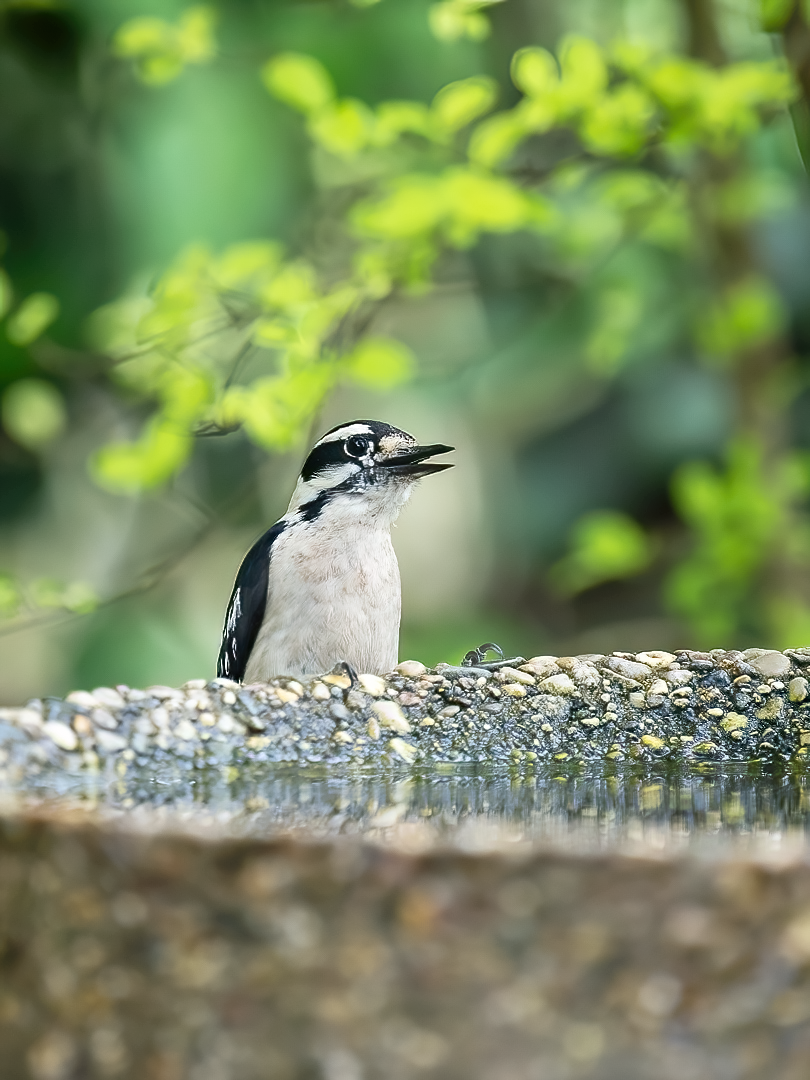
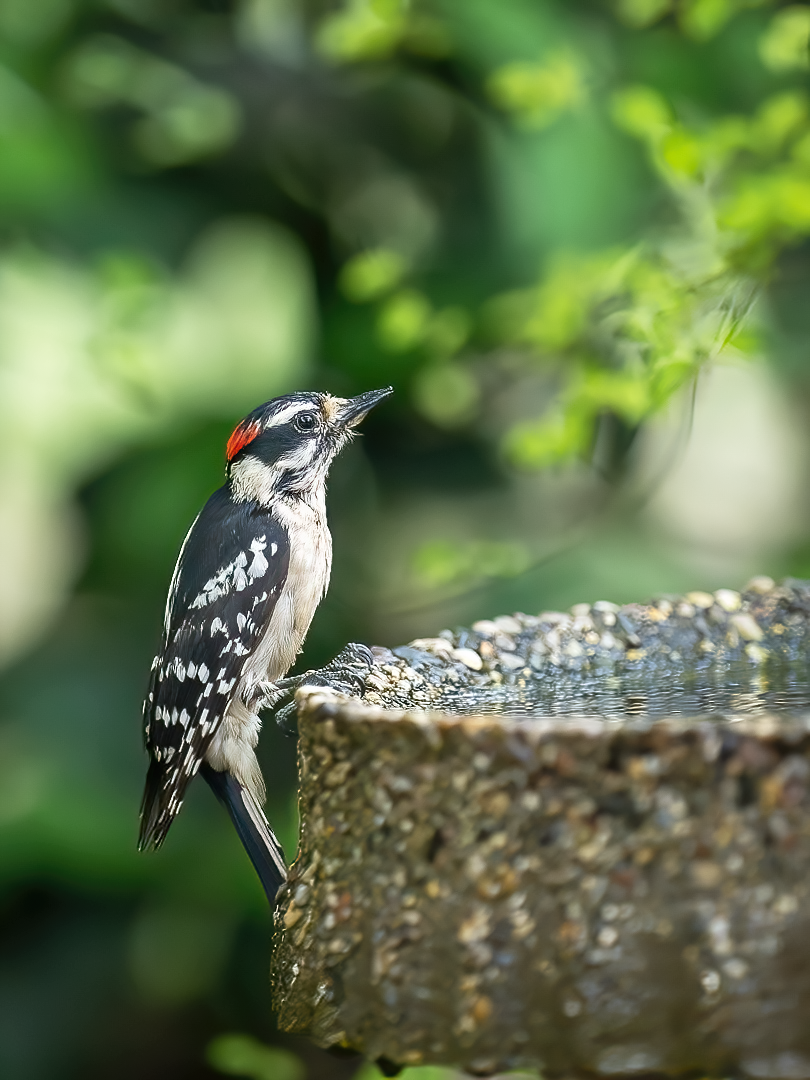
Female Downy Woodpecker
The Invisible Feast in the Trees
A few mornings ago, I dragged the hose across the yard to water some shrubs. As the spray hit the foliage, a cloud of tiny white insects lifted off the branches—those delicate flies or aphid‑like bugs we usually ignore. Under the live oaks and sweetgum, fuzzy tussock moth caterpillars have appeared, inching along twigs and leaves like wandering little paintbrushes.
To us, these are small details. To birds, they are the difference between success and failure in the nesting season.
Tussock moth caterpillars are native larvae with wild, toothbrush‑style tufts of hairs that make them look more intimidating than they are. Many species are generalists; they feed on a wide range of hardwoods, and oaks are particular favorites. In a yard like mine—with live oaks, sweetgum, pine, and a black‑walnut‑type tree—the spring canopy becomes a layered buffet of caterpillars and other soft‑bodied insects.
This is the food that truly powers spring.
One of the most striking things I’ve learned from entomologist Doug Tallamy’s work is just how many caterpillars a single pair of chickadees needs to raise a brood. The estimate runs in the thousands—roughly 6,000 to 9,000 caterpillars for one nest of young. Imagine that: two tiny parents ferrying hundreds of caterpillars a day, for more than two weeks, just to bring one family of nestlings to the point where they can fly.
Once you know that number, the quiet feeders make sense. Insects—not seeds—are the currency of the breeding season.
If we want to understand spring bird behavior, and if we want to help birds, we have to start thinking beyond feeders and look closely at what’s happening in our trees, shrubs, and even in the leaf litter under our feet.
Two Ways We Feed Birds
I recently read about the concept of “unmediated wildness” and how it plays out in my own backyard. It’s comforting to imagine that some encounters with birds are purely wild while others are obviously “helped along,” but the line between the two is much blurrier than it looks.It’s tempting to sort my encounters into neat boxes: the birds at the feeders as the “assisted” ones and the birds calling from the treetops as purely wild. But the truth, looking at my own yard, is more complicated than that.
On paper, I do the obvious things. I hang seed and suet, I keep a hummingbird feeder filled, I top off the birdbaths. The male Ruby‑throated Hummingbirds have stitched my little offerings into their regular circuit—feeder, red salvia, shrimp plant—long before any females arrive. A male Downy Woodpecker still claims first rights at the suet and the birdbath, while the female shadows him a few steps behind and waits in the shelter of a shrub until he’s finished. Those scenes feel clearly “mediated”: I can point to the hardware, the hooks, the food I’ve put out.
But most of what I’m watching this spring is happening off the feeder poles. The Great Crested Flycatchers that returned last week are loud and insistent, calling from live oak to sweetgum, mostly heard rather than seen as they hunt insects high in the canopy. One pre‑dawn morning they were drowned out altogether by a pair of Black‑bellied Whistling‑Ducks scrambling noisily up into the sweetgum and finally settling on a high perch, the very picture of “tree ducks” using my yard as part of their wild wetland circuit. On the ground, a Gray Catbird slips in and out of the palm hammock, feeding in the leaf litter and debris, then appearing suddenly at the birdbath to drink and bathe before vanishing again. Overhead, Blue‑gray Gnatcatchers and a Northern Parula add their buzzy, insect‑like calls to the soundscape, telling me that the live oaks, sweetgum, pine and walnut are full of tiny things to eat.
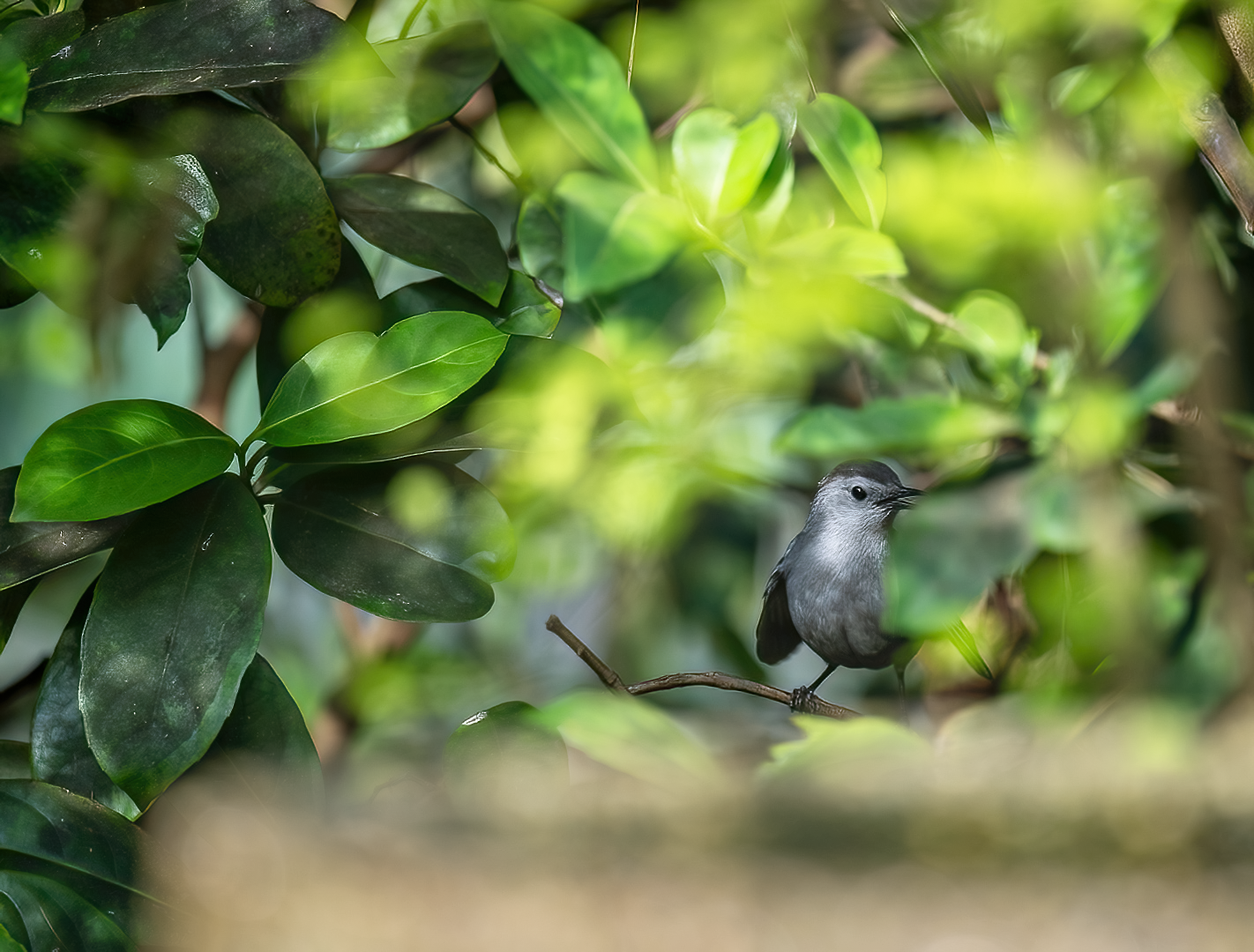
Gray Catbird
That is the second way I feed birds here, and it’s quieter—and ultimately more important—than anything I pour into a feeder tube. Every time I let the live oaks host their full crop of tussock moth caterpillars, every time I notice small white insects lifting off a shrub when I water, every time I choose not to rake the yard down to bare soil, I’m shaping how birds can use this space. We don’t strip away the leaf litter; we let the mix of leaves, pine needles, and small debris rest or lightly mulch it in place. That layer isn’t mess. It’s habitat. It holds moisture, feeds the soil, and shelters the invertebrates that ground‑feeding birds—catbirds, warblers, sparrows—spend their days searching for.
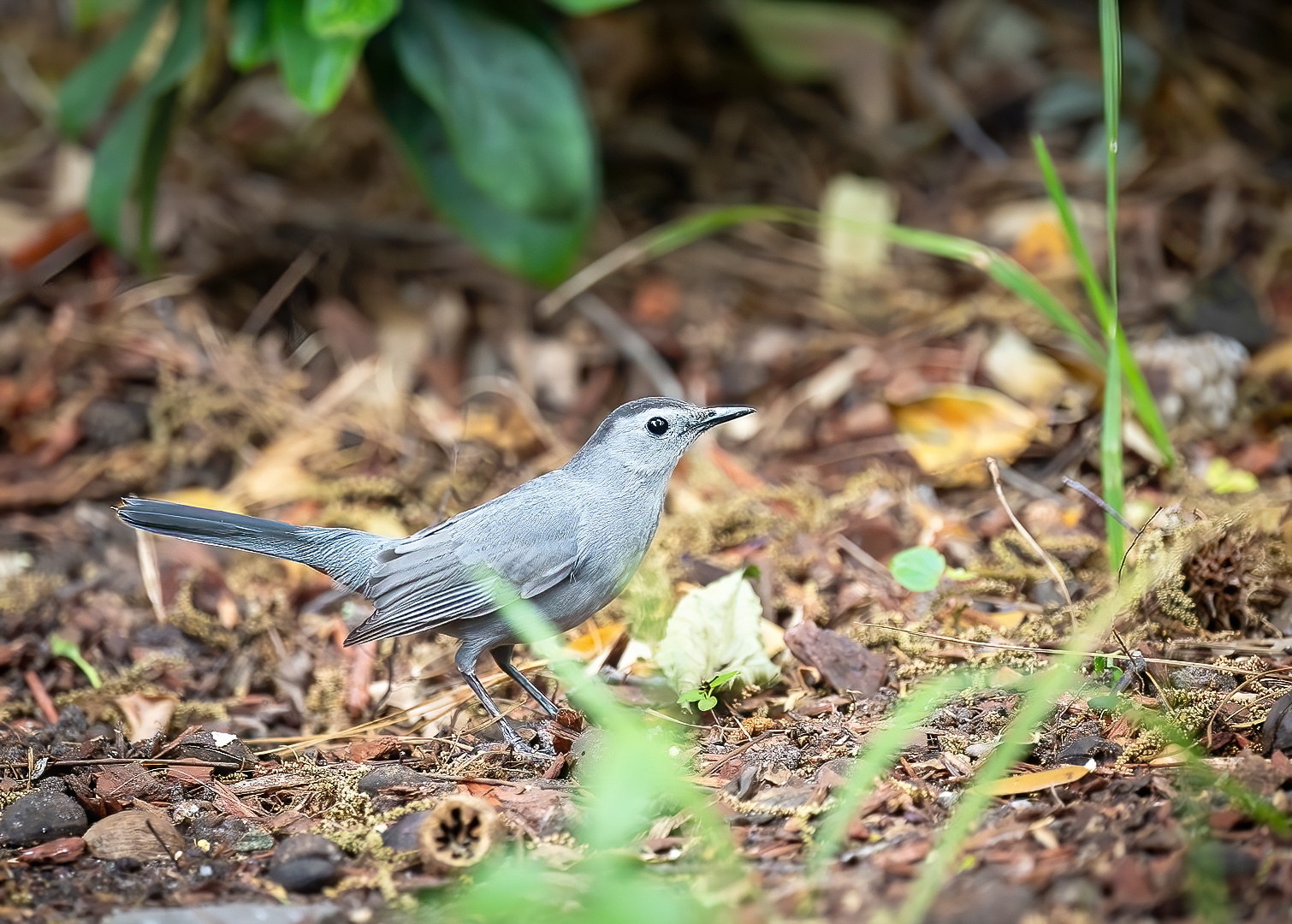
Gray Catbird feeding on ground
So yes, I feed the birds with a feeder. But I also feed them by leaving some things deliberately undone. In that sense, there are really two ways I care for the birds here: I let the native habitat do the heavy lifting, and I add a little supplemental food around the edges. The first is subtle and long‑term—the plants I choose, the cavities I leave for flycatchers and ducks, the leaf litter I allow to accumulate for catbirds and warblers. The second is immediate and visible—the seeds, suet, and nectar that bring woodpeckers and hummingbirds into easy view. Both matter, but they are not equal
Water: The Constant Invitation
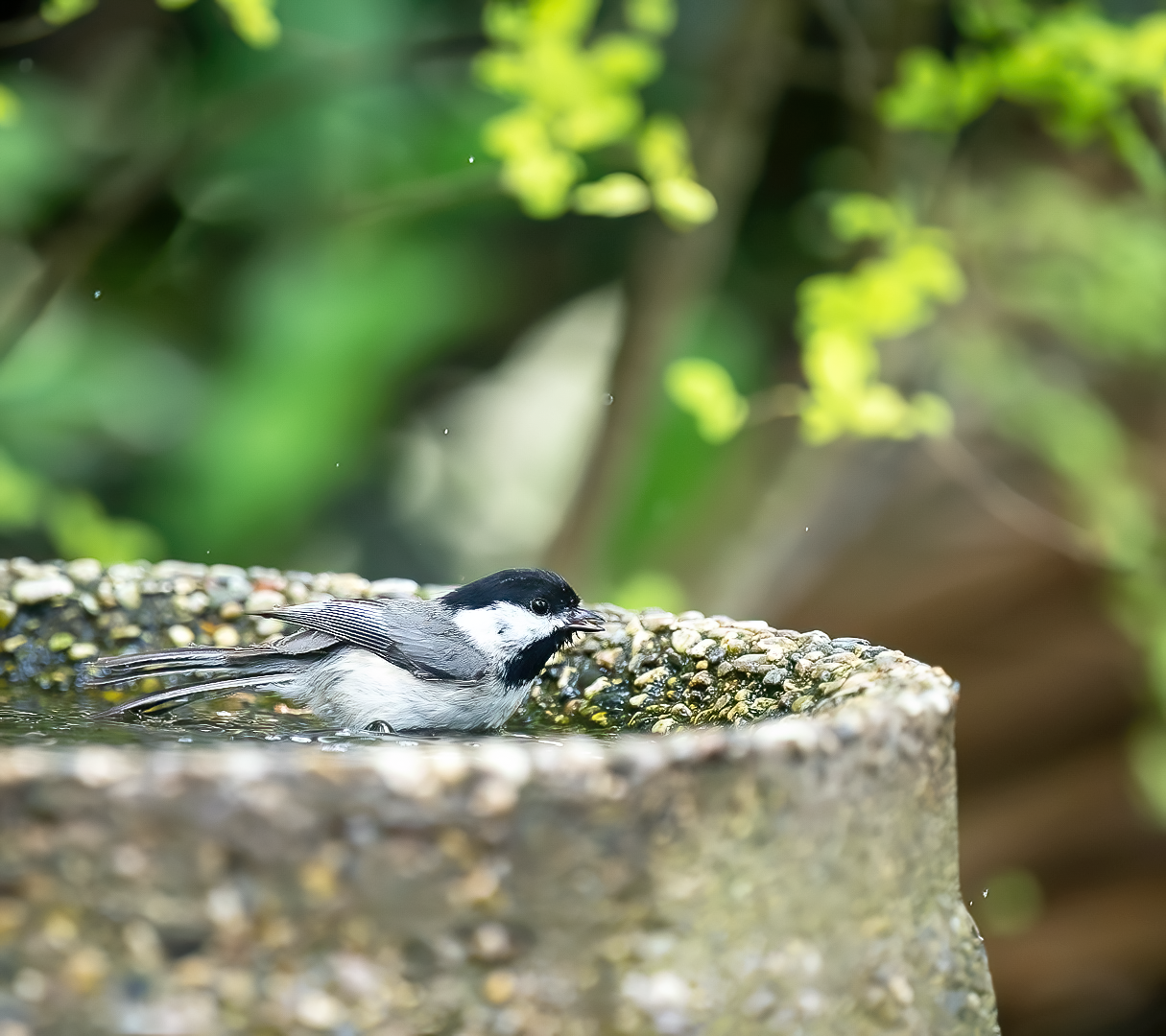
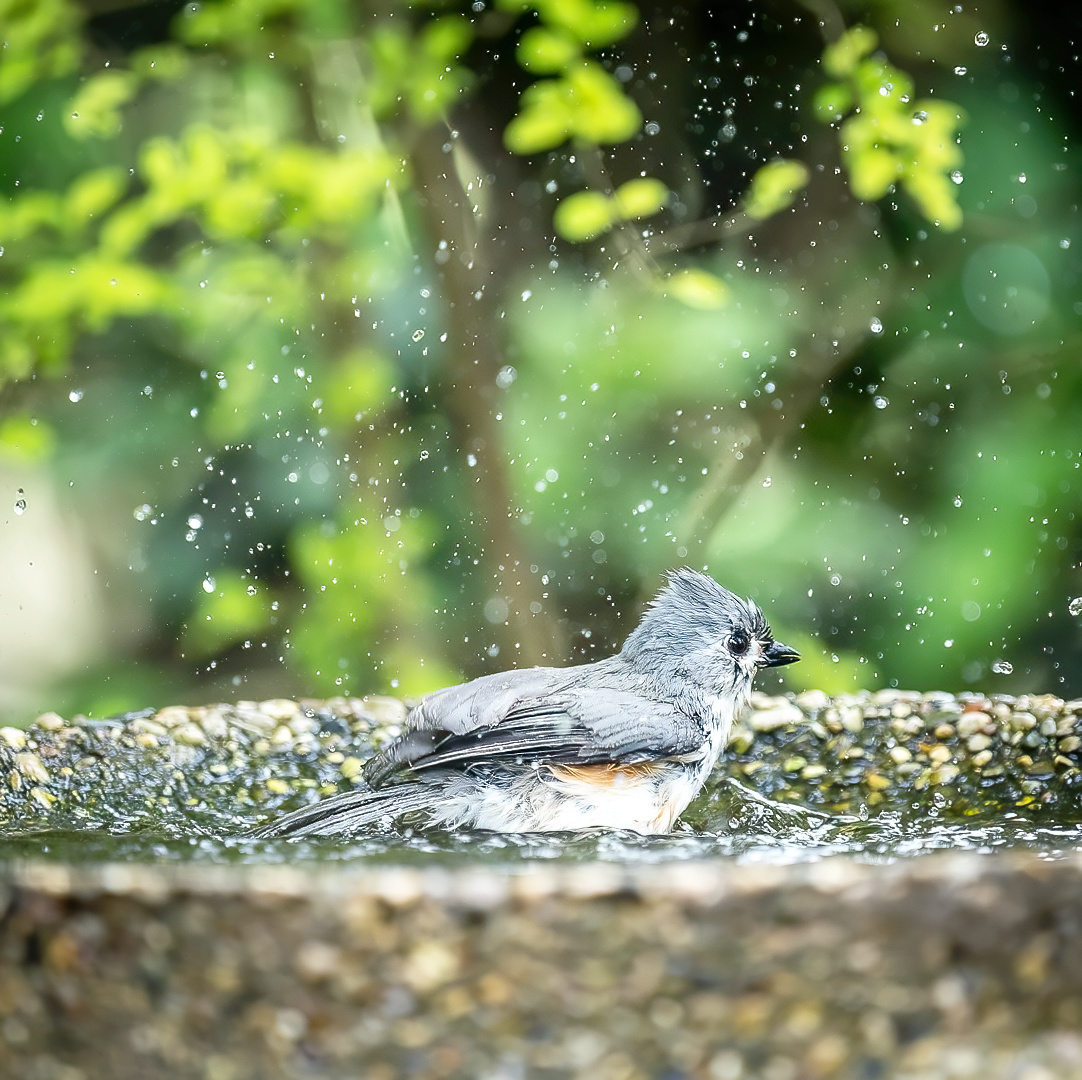
There is one “feeder” that remains busy no matter how many caterpillars are in the trees: the birdbath.
In my yard, birdbaths are the stage where shy birds briefly become visible. The Northern Parula, which I mostly hear high overhead, tends to show up at the bath in late afternoon—a pattern I’ve noticed year after year. The Gray Catbird, the Downy Woodpeckers, and the hummingbirds all use the baths as rest stops and grooming stations. Clean feathers are as essential to survival as a full stomach, and water can be scarce even in green neighborhoods.
If you do nothing else for birds this Earth Day, offering clean, shallow water might be one of the simplest and most effective gifts you can give.
Earth Day Lessons from a Small Yard
So what does all of this mean, beyond a nice checklist and a few memorable mornings?
For me, this Earth Day is a reminder that:
Feeders are optional; habitat is essential. Seed and suet feeders are wonderful tools for observation and connection, but in spring they are a side dish. Native trees and shrubs—especially oaks—provide the caterpillars that fuel nesting season.
A “messy” yard is a generous yard. Leaf litter, fallen branches, and a little understory tangle create hunting grounds for ground‑foraging birds and shelter for insects. When we rake everything bare and mow every corner, we remove vital layers of habitat.
Water connects everyone. From catbirds to warblers to woodpeckers and hummingbirds, water remains important even when natural food is abundant. A simple birdbath can bring these invisible lives into view.
Listening is a form of conservation. When you learn the voices of your local flycatchers, warblers, and gnatcatchers, you begin to notice patterns—who’s arriving late, who’s missing altogether. That awareness is the first step toward caring, and caring is the first step toward action.

Male Northern Cardinal
This Earth Day, I’m celebrating not just the species count—those 30 or 40 birds that pass through my yard each day, with surprises like a Kentucky Warbler and a Rose-breasted Grosbeak tucked in among the regulars—but the relationships that support them. The relationship between a live oak and the thousands of caterpillars its leaves host. Between a seemingly “messy” layer of leaf litter and a catbird’s quiet breakfast. Between a shallow bowl of water and a parula’s late‑afternoon bath.
If you’re a nature lover or birder, I’d invite you to step outside today and do three simple things:
Look up into the canopy and imagine the caterpillars and other insects hidden in the leaves.
Look down at the understory and leaf litter, and notice who is flipping leaves and probing the soil.
Listen to the soundscape of your yard or local park, and try to match a few voices to their owners.
Your feeders may be quiet. But if you pay attention, you’ll discover that spring is anything but.