
Read the Bird: Field Notes on Bird Photography — an ongoing series on bird photography in the field. Real situations, real light, real challenges. Each installment focuses on a specific compositional or technical problem and how I work through it. Whether you're shooting with a smartphone or a professional camera, these are approaches you can put to use the next time you're out. Read about How to Compose Bird Photos That Tell a Story.
Working high tide, first light, and a single lens to build environmental shorebird images.
One of the most effective ways to improve your bird photography isn’t in the moment—it’s before you ever get to the field. And this early morning was built on that idea. I went out with a clear plan—timed for near high tide, positioned for first light facing east, and grounded in a mental shot list I’ve been building for an upcoming presentation on Photographing Spring Migration.
My goals were twofold.
First, to capture how high tide compresses shorebirds into a tighter feeding zone along the wrack line—behavior you only really see when the water pushes them up and limits their space.
Second, to begin documenting the seasonal transition from winter plumage—grays and muted browns—into the richer tones of breeding. Black-bellied Plovers just starting to show mottling, Ruddy Turnstones and Dunlin picking up deeper color, and Least Sandpipers shifting more subtly. There was also a teaching purpose behind it—this was as much about understanding overwintering shorebirds and early migrants as it was about photographing them. The kind of session where birding and photography are working together in the same frame.
I made one deliberate gear choice: I brought a single lens—the 70–200mm f/2.8. That decision shaped everything. It gave me enough width to include the shoreline and the structure of the beach, while still allowing me to separate the subject through shallow depth of field and positioning. The goal wasn’t to isolate a single bird. It was to build the frame using the shoreline and natural elements, and the colors of dawn and sunrise in the background..
Image 1: Dunlin Flock — Working the Diagonals
At first glance, this looks like a simple flock lifting off the shoreline. But what holds the frame together is the structure underneath it—three distinct diagonals, each moving in a different direction. The most visible is the line of the breaking wave on the right. It cuts diagonally down through the frame, carrying your eye inward toward the birds. It’s soft, but it’s the entry point into the image.
Running against that is the line of the flock itself. The birds lift and move left, creating a second diagonal—more dynamic, more active. That opposing direction introduces tension and keeps the frame from feeling static. Then there’s a third, quieter diagonal—the shift in color and tone between the warm shoreline and the cooler water and sky. It’s not a hard line, but it separates the frame and adds another layer of movement from lower left to upper right.
Those three diagonals—wave, birds, and tonal shift—intersect without competing. One leads you in, one carries you across, and one holds the space together. That’s why I stayed wider with the 70–200. I needed enough room to include all three. A longer lens would have isolated the birds, but it would have removed the structure that makes the image work.
Getting the composition and color tones right in camera also meant very little work on the back end. I cropped to a 16:9 aspect ratio to reinforce that horizontal flow and give the image a more cinematic feel, but otherwise the frame held as it was seen.
When the landscape gives you lines, the job is to align with them
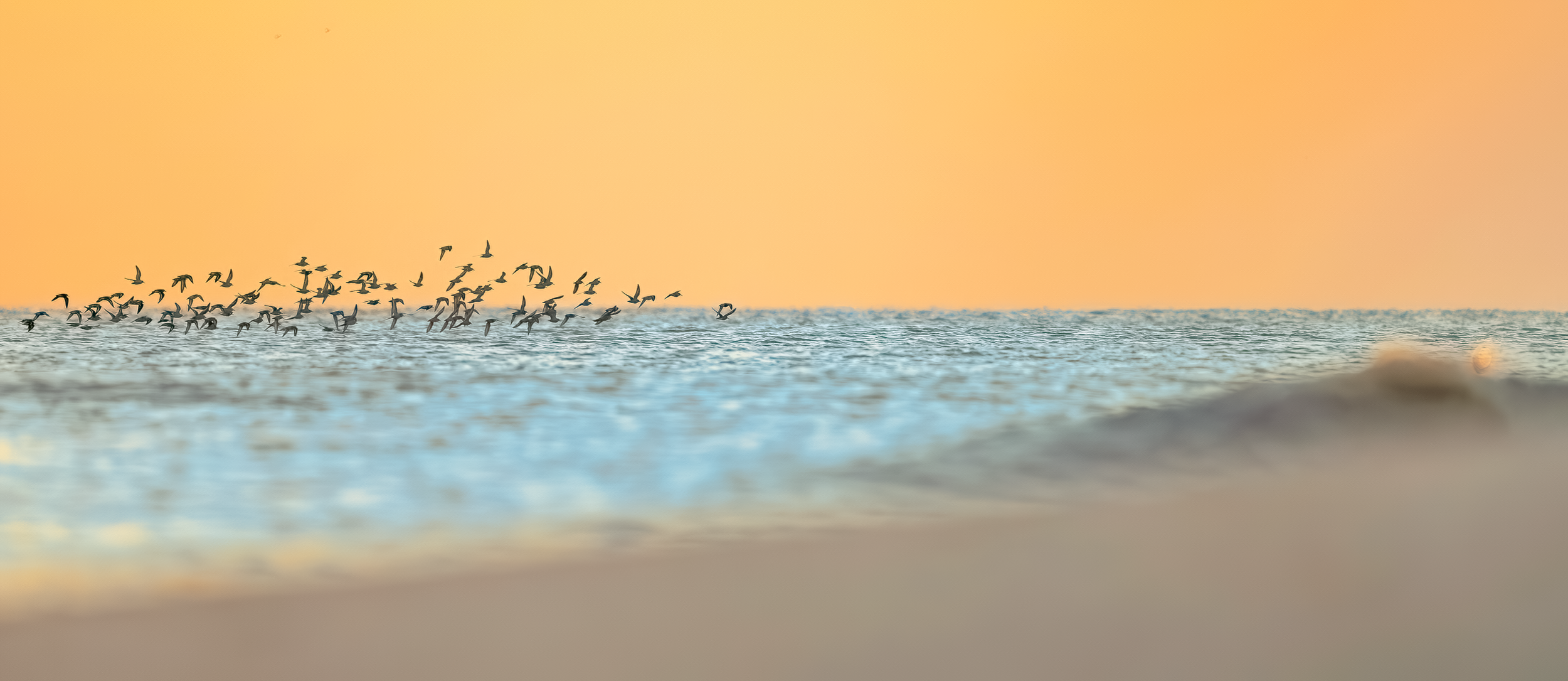
Flock of Dunlins
Image 2: Least Sandpiper — Layers, Direction, and Breaking the Frame
This frame came together very differently. There aren’t strong, defining lines like in the flock image. Instead, the structure comes from stacked bands of color and space—the beach, the surf, the water, and the sky—each sitting on top of the other.
The shoreline creates a series of horizontal layers:
the soft, warm foreground of the sand
the blurred but textured edge of the surf
a thin plane where the bird stands
and then the muted transition into sky
At first glance, it feels simple. But those layers are what give the image its depth. I dropped low to exaggerate that effect—letting the foreground and background fall away, so the bird sits cleanly in that narrow middle plane.
There’s also a subtle directional pull in the frame. The small rise of the surf and the texture of the water create gentle diagonals that move toward the bird. And the bird itself leans into that space—head down, feeding, following the line of the shoreline.
That’s where I made a deliberate compositional choice.
Conventional guidance would suggest leaving more negative space in front of the bird—giving it room to move into. Here, I did the opposite. I placed the bird closer to the right side of the frame, letting it move toward the edge. That decision creates a different kind of tension. The bird feels anchored in its environment rather than moving through open space. It reinforces the idea of feeding along a boundary—working the edge of the water, not traveling across it.
The 70–200 at f/2.8 allowed all of this to come together. The shallow depth separates the layers without losing them, and the wider field keeps the shoreline present as part of the image.
As with the first frame, getting the tones and structure right in camera meant very little adjustment later. The color transitions—warm sand to cooler water to soft sky—were already there. This isn’t a frame built on a single line. It’s built on space, layers, and restraint.
Not every composition needs more room—sometimes it needs a boundary

Least Sandpiper
Image 3: Black-bellied Plover — Front-Facing and Intentional
The next image represents one of the moments I went out looking for. The Black-bellied Plovers are just starting to transition—early signs of breeding plumage coming through on the chest. Not fully developed yet, but enough to tell the story if you can show it clearly.
That dictated the composition. Instead of working a profile or action shot, I waited for the bird to turn head-on. That orientation brings the chest forward and centers the change in plumage—it becomes the focal point rather than a detail along the side.
The structure of the frame is quieter than the previous images. The beach rises slightly in the foreground, creating a soft, warm base. Behind the bird, the water and sky fall into a smooth gradient—cooler tones that keep the background clean without feeling empty. There are no strong lines here, just separation through tone and depth.
Shooting low was critical. It allowed the foreground to blur into a soft layer while lifting the bird cleanly against the background. The 70–200 at f/2.8 gave just enough compression to simplify the scene, while still holding onto the environment.
The placement is deliberate as well. The bird sits slightly off-center, but because it’s facing directly toward the viewer, it holds the frame without needing additional space. This isn’t about movement or direction. It’s about presence.
When the story is in the bird, the composition steps back and lets it be seen

Black-bellied Plover
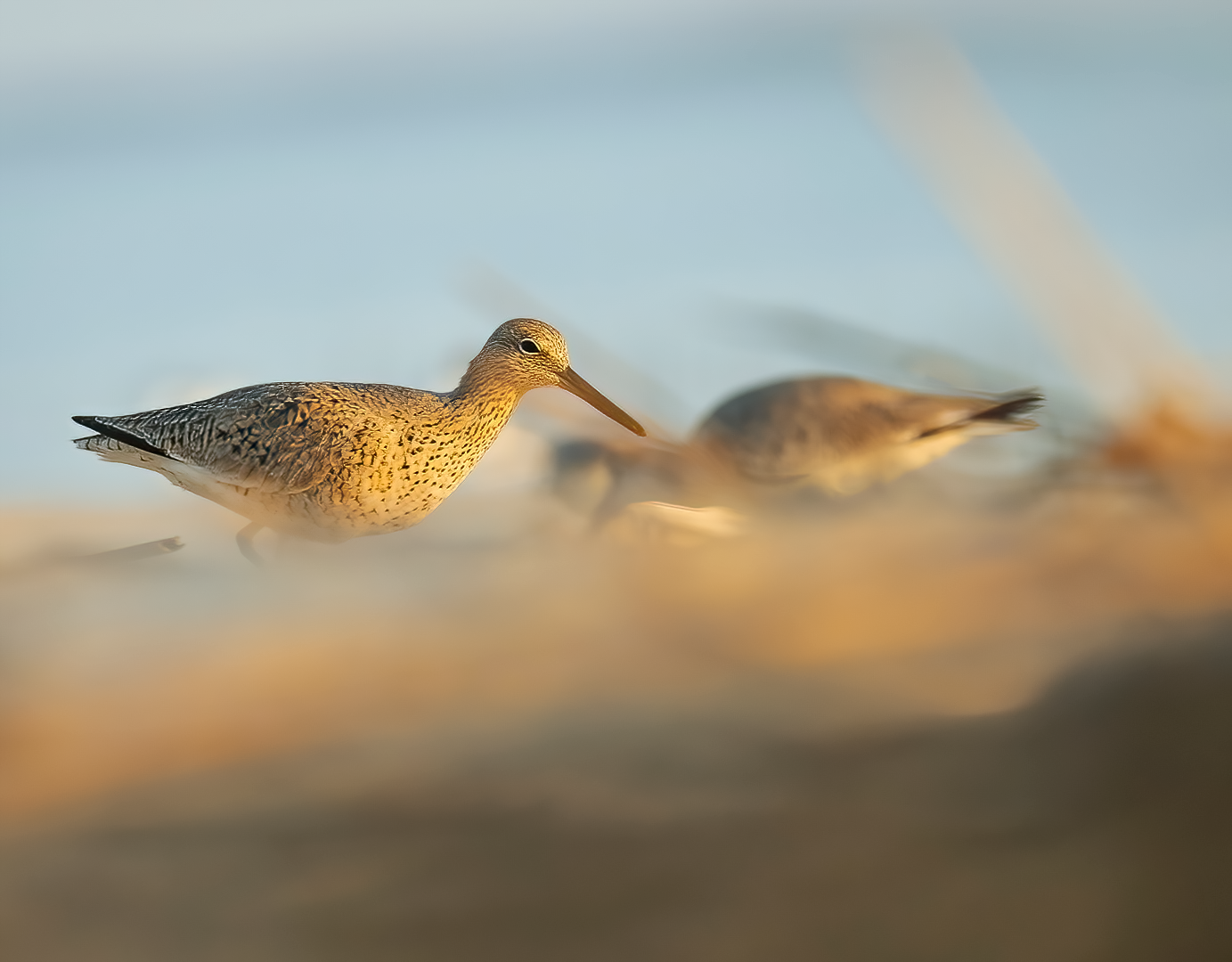
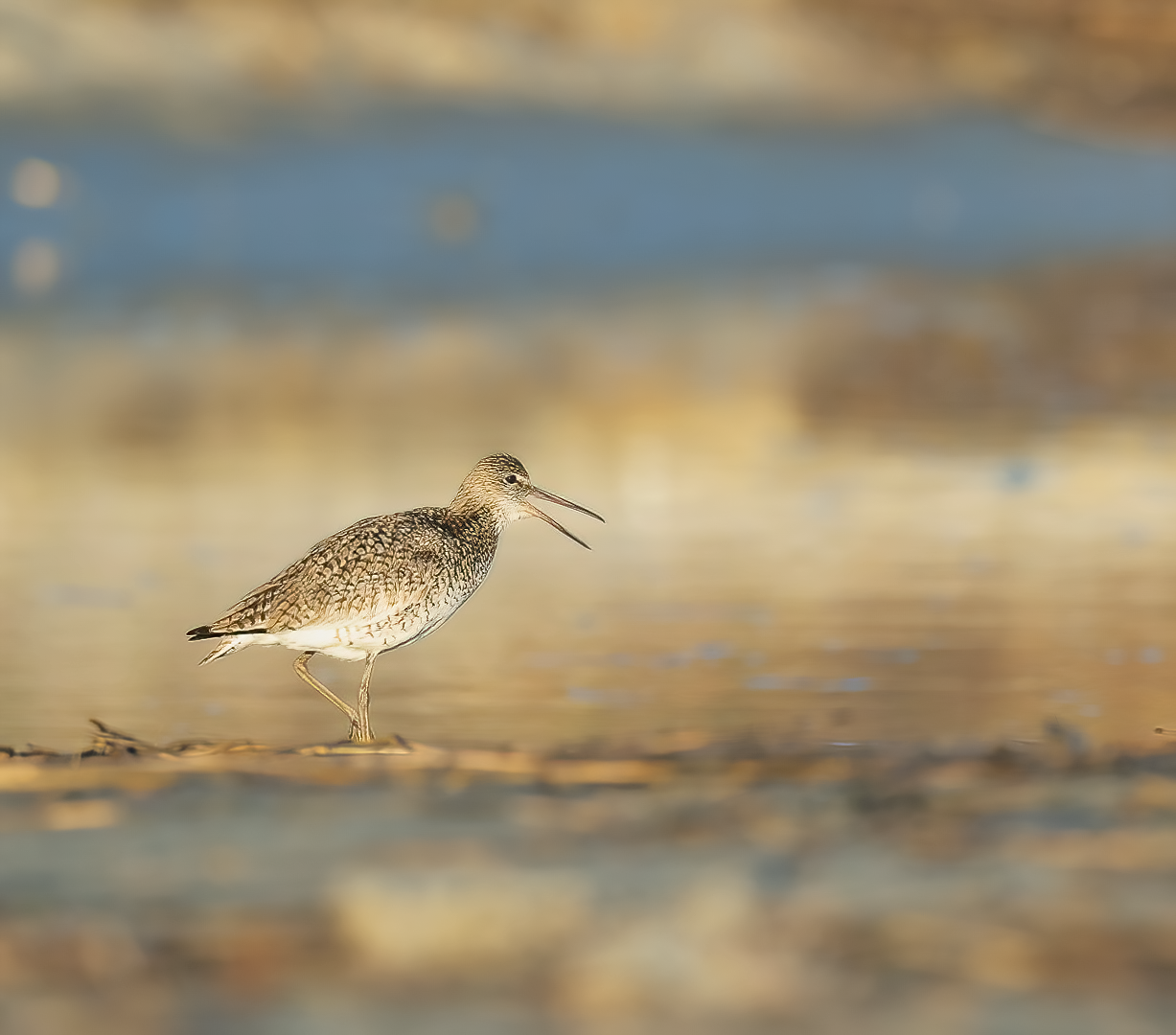
Image 4: Willet — Two Sides of the Shoreline
These two frames came within minutes of each other, but they tell two very different stories about the same bird and the same place.
In the first image, I’m positioned behind the wrack line, shooting slightly upward. The tide has reached its highest point, and the waves are now just beyond that line of debris. A mixed flock—Willets, Laughing Gulls, Ring-billed Gulls—is actively feeding.
The foreground is layered with soft blur from the wrack—shells, sticks, and seaweed—while the background opens into sky. You can see the faint shapes and shadows of other birds moving behind the Willet, which adds context without pulling focus.
This is a busier frame, but intentionally so. It reflects the energy of the shoreline at high tide—compressed, active, and layered. The Willet holds its place within that activity rather than being isolated from it.
The second image is what happens when I turn around. Behind me, the marsh side is beginning to fill. A tidal creek is rushing in, and the birds have started to shift their feeding in that direction. This Willet was one of the first to move—standing slightly apart, vocalizing, likely calling back to the flock.
The composition simplifies immediately. The background becomes a soft, painterly blend of beiges, browns, and blues—mudflat, water, and reflected light. The Willet almost disappears into it at first glance, perfectly camouflaged in tone and pattern.
This is where the 70–200 really shows its strength. The compression pulls those layers together just enough to create that painterly effect, while still keeping the bird distinct.
There’s no strong line here, no obvious structure—just color, tone, and subtle separation. What I find most interesting about these two images is how quickly the scene changes. Same tide cycle. Same stretch of beach. Same lens.
But one frame is built on layering and activity along the shoreline, and the other on tone, compression, and quiet isolation in the marsh.
That shift is part of the rhythm of working these environments—watching not just the birds, but where the water is going next.
Sometimes the composition changes not because you moved—but because the landscape did.
In the end, it was just a beautiful morning with shorebirds—watching their behavior, following the tide, and capturing a small part of their story to share
Here are two pieces of gear that make this type of photography easy for me:
NatureScapes Skimmer Ground Pod
Wimberley RB-100 Riser Block for Wimberley Head II
Benro GH5C Carbon Fiber Gimbal Head
Disclosure: This post contains Amazon affiliate links. As an Amazon Associate, I earn from qualifying purchases.