
Birding Northern Greece: Thessaloniki to the Kalochori Wetlands
A winter bird photography trip in northern Greece, beginning in Thessaloniki and moving quickly to the wetlands of the Thermaic Gulf.
This is the first post in a blog series documenting a winter bird photography trip to northern Greece, centered on Lake Kerkini and its Dalmatian Pelicans. The journey began in Thessaloniki, the primary gateway city for northern Greece and the wetlands that ring the Thermaic Gulf.
The flight from Amsterdam to Thessaloniki tracked south over the spine of the Balkans. From the air, we crossed interior Slovenia, Croatia, Bosnia and Herzegovina, and Albania before descending toward northern Greece. The route traced a continuous chain of mountains, river valleys, and basins—landforms that connect central Europe to the eastern Mediterranean and shape both human settlement and bird migration.
Thessaloniki: Location, History, and the Modern City
Thessaloniki is Greece’s second-largest city and a working port rather than a resort destination. It sits along the Thermaic Gulf, an open bay of the Aegean Sea, at sea level and backed by low hills and broad agricultural plains that extend north and west. Its location places it between southern Greece, the Balkans, and the eastern Mediterranean.
Founded in 315 BCE, Thessaloniki has passed through Roman, Byzantine, and Ottoman periods. While that long history remains visible in isolated landmarks—most notably the White Tower of Thessaloniki, built during the Ottoman period in the 15th century—much of the city feels distinctly modern. That impression reflects a series of disruptions and rebuilding phases rather than a single moment of change.
In 1917, a catastrophic fire destroyed much of the city center. Instead of rebuilding on the old street pattern, Thessaloniki was redesigned with wider streets and new urban blocks, permanently altering its layout. A generation later, during World War II, the city was occupied by Nazi Germany beginning in April 1941. Thessaloniki suffered wartime damage, including Allied bombing aimed at German transportation and logistics infrastructure. Most significantly, the city’s historic Jewish community—one of the largest in Greece—was nearly destroyed, with mass deportations beginning in March 1943.
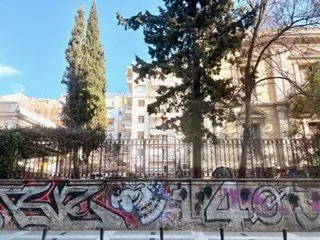

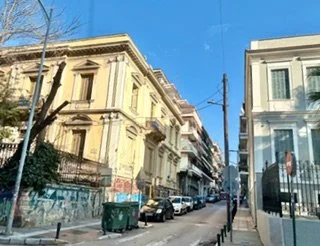
After the war, rapid population growth and housing demand reshaped the city again. From the 1950s through the 1970s, reinforced-concrete apartment buildings became the dominant form of urban housing. These mid-century structures now define much of Thessaloniki’s waterfront and residential districts and are what many visitors notice first when moving through the city.
Thessaloniki’s geography helps explain both its urban form and its ecological setting. The city lies approximately 300 miles (480 km) north of Athens and about 310 miles (500 km) west of Istanbul, placing it at a long-established crossroads between Europe and the eastern Mediterranean. That same position, combined with extensive lowlands and river deltas nearby, supports the wetlands that serve as wintering and migration corridors for birds moving between Europe, North Africa, and the eastern Mediterranean.
Birding Field Notes — Kalochori Lagoon (Western Thermaic Gulf)
Kalochori Lagoon is a coastal wetland on the inner Thermaic Gulf, approximately 8 km west of Thessaloniki. It forms the northern gateway to the Axios–Loudias–Aliakmonas Delta National Park, one of the most important wetland systems in Greece. Straight off the plane and a quick lunch later, this was our first stop after leaving Thessaloniki.
The dirt road that forms the gateway into the wetlands is utilitarian. It appears to function as a shortcut, bypassing more urban areas to the east. Garbage lines parts of the roadside. Wooden fishing boats sit nearby—painted in traditional Greek blue and yellow, some bearing tattered Greek flags. A few appear active; others look abandoned. It is not a scenic approach, and it is not curated.
And then the birds assert themselves.
A brief flash of electric blue and a call from a Common Kingfisher changes everything. Out in the bay and lagoon, the movement and sound of Great Flamingo dominated the scene—hundreds, likely thousands, spread across the shallow water. The setting receded. Attention shifted fully to the birds.
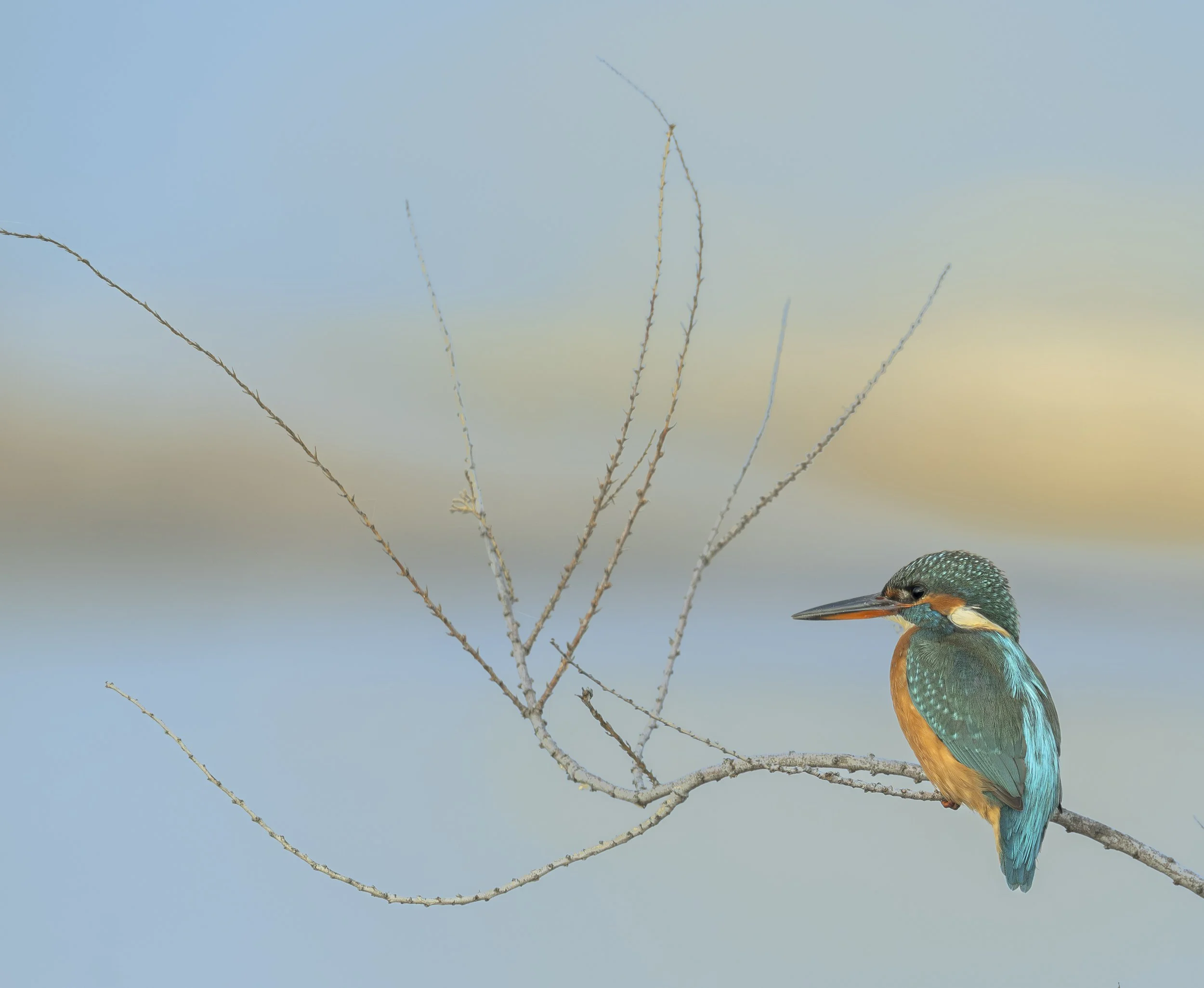
Common Kingfisher
Head-Swivel Moments While Birding
Once on the road, attention split immediately in both directions. Birds were present on either side—on the water, along the margins, and lifting off unexpectedly. It was a constant head-swivel, with new species appearing before there was time to settle. Many were new birds for me—more than 25 life birds over the course of afternoon.
Deciding where to settle and take images was secondary to simply observing. Most of the photographs I made here were documentary—a visual record of what I saw and where I saw it, rather than composed images. Identification and context mattered more than aesthetics at this stage of the trip.
Among the most notable species for me were Great Flamingo, Eurasian Spoonbill, Pied Avocet, Great Crested Grebe, Water Pipit, and Common Redshank. Mixed among them were more familiar species: Dunlin, Little (Snowy) Egret, Grey (Great Blue) Heron, Great Egret, and Mallard.
Environmental Compositions — Great Flamingos and Wooden Boats
As the sun dropped lower in the late afternoon, I walked farther down the dirt road toward a small lagoon where the wooden fishing boats were moored. The boats were painted in traditional Greek blue and yellow, their surfaces worn and uneven, paint clearly peeling. The water was completely flat, producing clean reflections—yellow deepening toward ochre as the light faded.
In the distance, Thessaloniki rose behind the lagoon. White apartment buildings formed a horizontal band partway up the hills, separated from the road by the open water of the gulf.
I moved in this direction after spotting a group of Great Flamingo resting and preening in the shallow lagoon—adults and juveniles together, long legs clearly visible. As they shifted position in front of the boats, their pale bodies were backed by the reflected ochre yellow in the water. The light continued to deepen, strengthening color rather than flattening it.
These were not images framed against a uniform or isolated background. I chose instead to make environmental compositions: flamingos set within the elements that defined the place—the aging wooden boats, faded paint, saturated reflections, and the city rising behind them. The setting mattered as much as the birds.
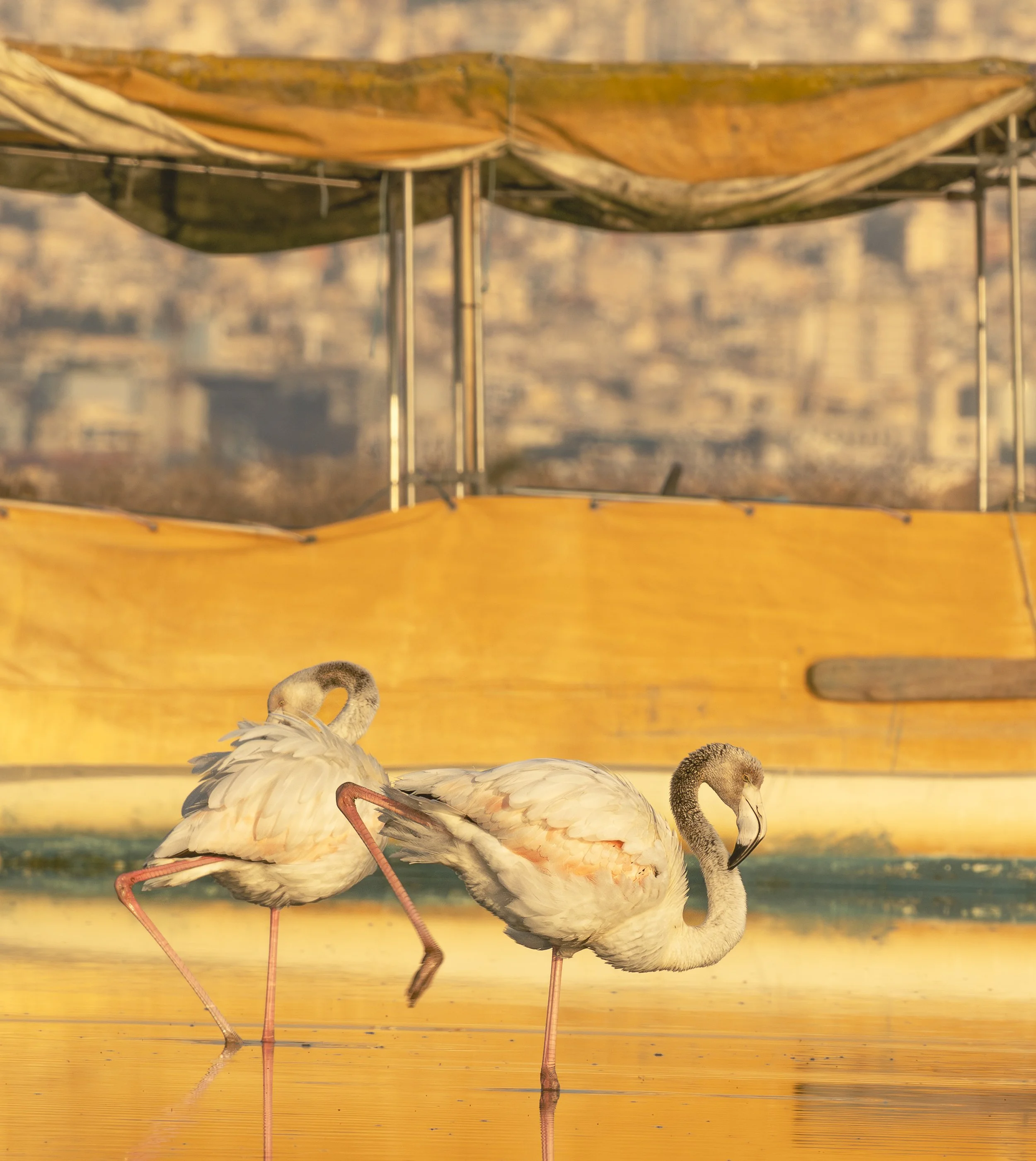
Great Flamingo
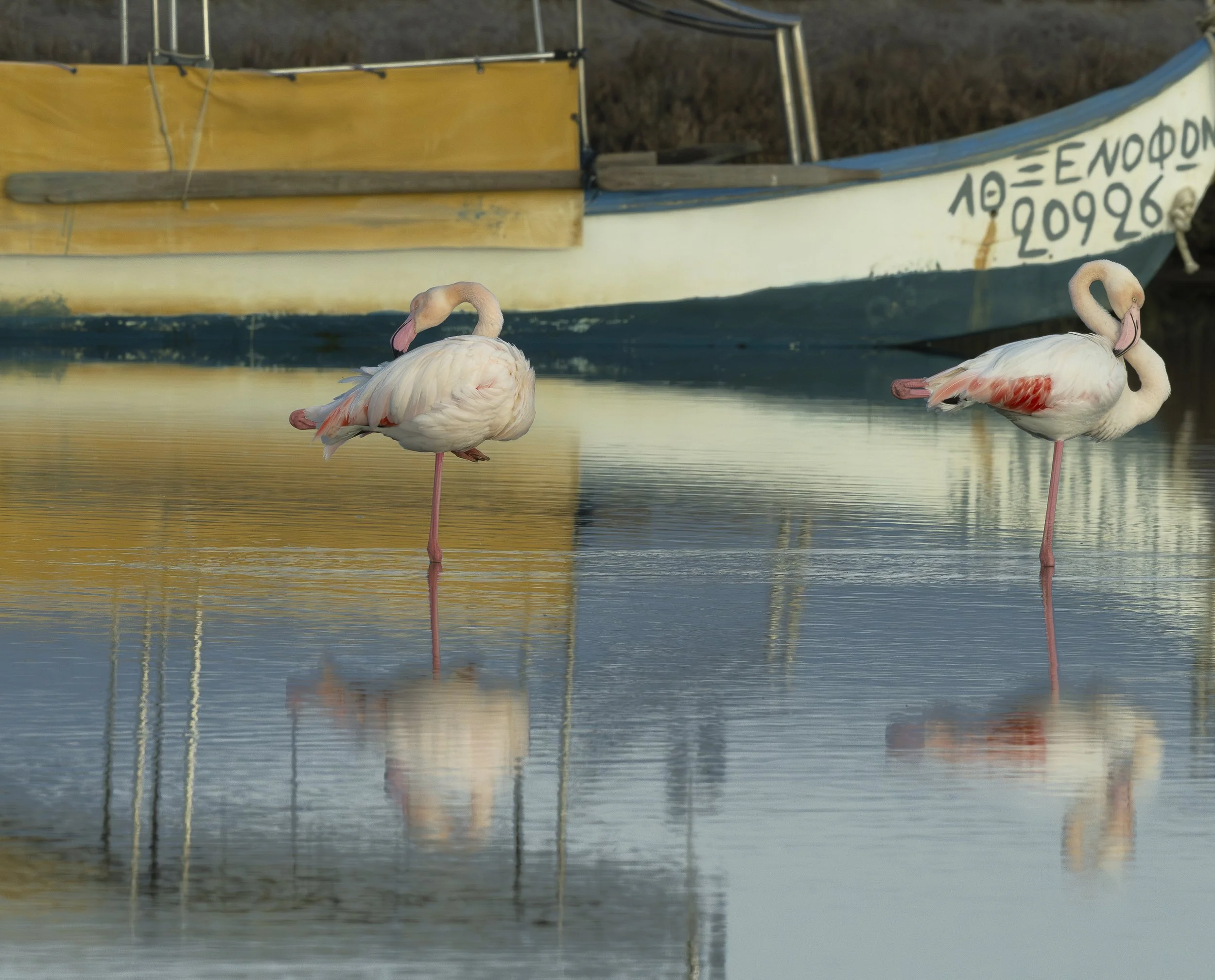
Great Flamingo
We spent close to four hours in the wetlands. As the sun set, flamingos began moving out across the bay in loose waves. We packed up and drove north to Lake Kerkini, where the focus of the trip—the Dalmatian Pelicans—waited.
Read the blog post in this two-part series: the Dalmatian Pelicans of Lake Kerkini.