
Central Florida: Birds, Burrows, and Back Roads
I am spending the cusp of the old and new year in central Florida, in Auburndale, about forty-five minutes from Orlando. Close enough to feel the pull of its attractions, far enough to escape their noise. Here, the pace slows, and you can still catch glimpses of what many refer to—fondly and accurately—as Old Florida.
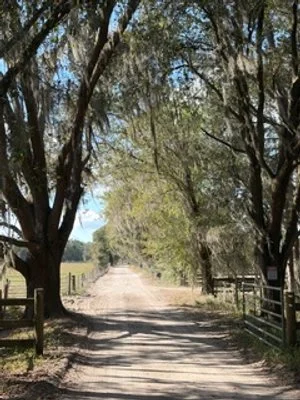
By that, I mean a working landscape. Pasture and citrus. Rail corridors repurposed rather than erased. Small towns shaped by agriculture and proximity rather than spectacle. It is a place best experienced without hurry.
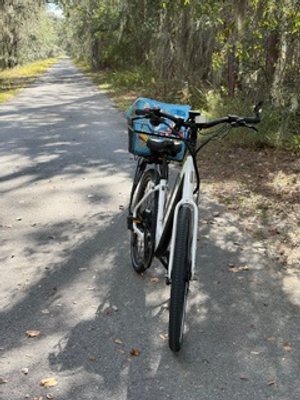
My preferred way to move through it is by bicycle.
Birding the Van Fleet Trail at Human Speed
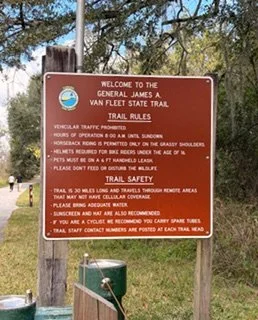
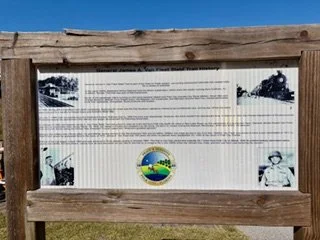
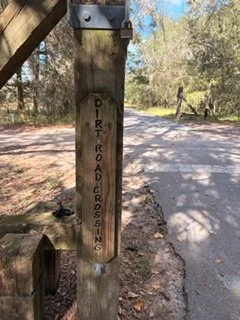
From where I am staying, I have direct access to the Auburndale–TECO Trail, which connects north to the General James A. Van Fleet State Trail. Together, they form nearly 40 miles of continuous paved trail—80 miles round trip—cutting through rural Polk County.
Birding by bike changes scale and attention. You move slowly enough to hear birds before you see them, fast enough to move through changing habitats, and quietly enough that wildlife often continues what it was already doing.
The day was clear, temperatures in the seventies—perfect weather for meandering. My camera rode in the backpack. By the end of the ride, I would record 36 bird species, a mix of year-round residents and winter visitors.
Central Florida’s Working Land and Winter Birds
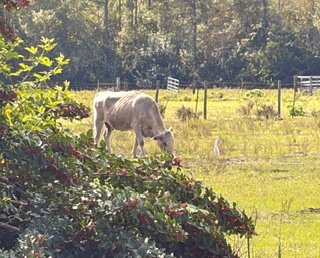
Much of the Van Fleet Trail passes through working land. Cows graze in open pasture, accompanied—as expected—by Cattle Egrets, stepping through the grass with practiced attention. Near homes, backyard chickens scratch in sandy soil; roosters announce themselves without regard for hour or audience.
Farther north, the trail parallels a narrow slough or slow stream. After months of drought, water does not always show itself clearly. Instead, you learn to read the land by its trees. Cypress domes mark where moisture lingers. Tupelo stands signal the same. Even dry, the land remembers.
This stretch of trail cuts through the Green Swamp East Tract, part of the larger Green Swamp—one of Florida’s most important ecological systems. Flat and easily overlooked, the Green Swamp serves as the headwaters for four major river systems and plays a critical role in recharging the Floridan Aquifer. It absorbs rainfall slowly, releases it gradually, and buffers extremes quietly.

Part of the Green Swamp Eastern Tract
Warblers, Waterbirds, and a Life Bird
Winter birding here is subtle rather than dramatic. Palm Warblers darted low across the bike path, feeding constantly in brush and scrub. Yellow-rumped Warblers shared the space, steady and familiar. While in the background is the buzzing of Blue-gray gnatcatchers and Ruby-crowned Kinglets.
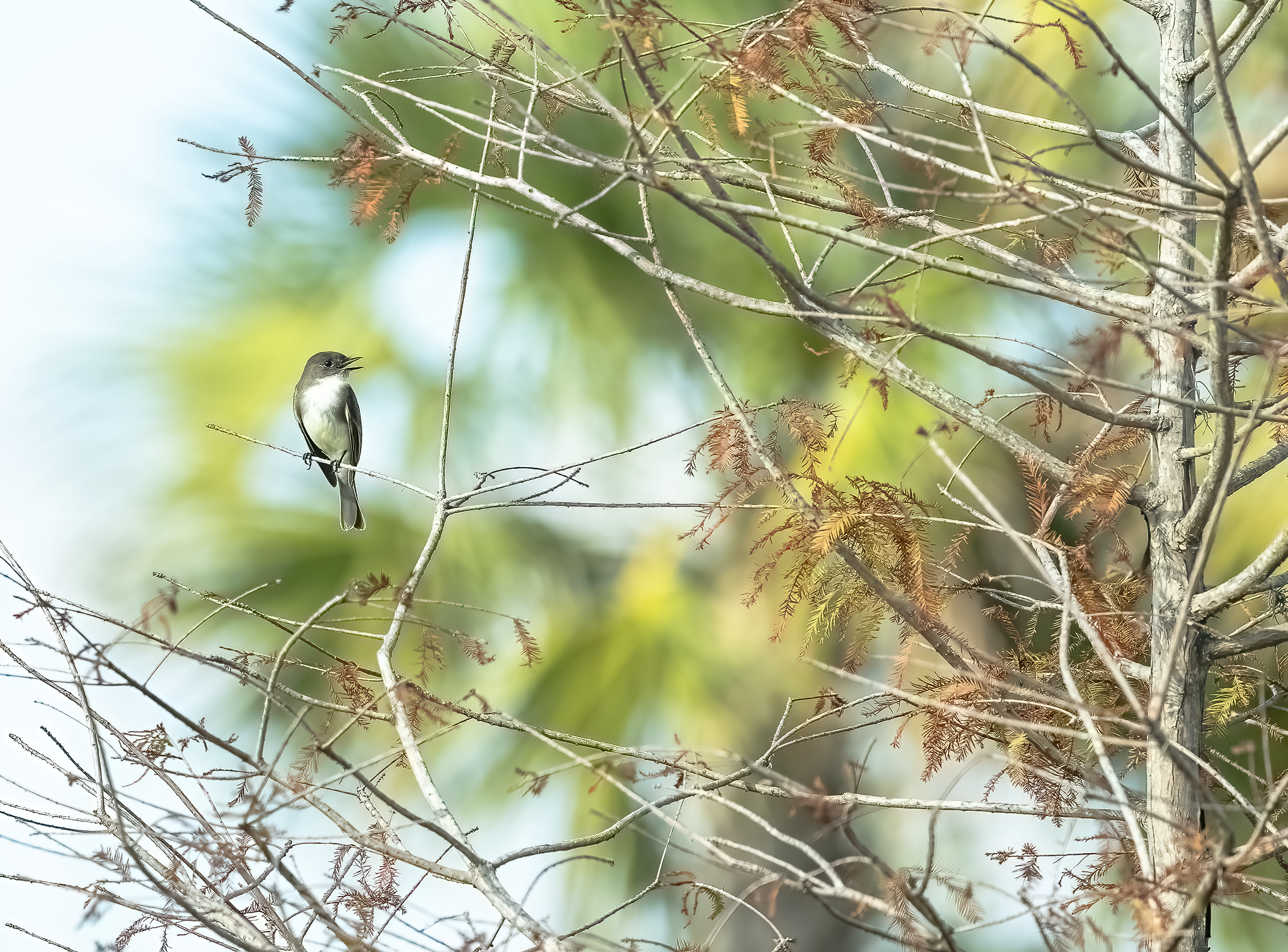
Eastern Phoebe
On nearby lakes, American Coots rafted together. Hooded Mergansers skimmed the surface—males in sharp contrast, chasing females with distracted urgency. Gadwalls worked the edges. Double-crested Cormorants appeared in numbers, dark punctuation marks against sky and water.
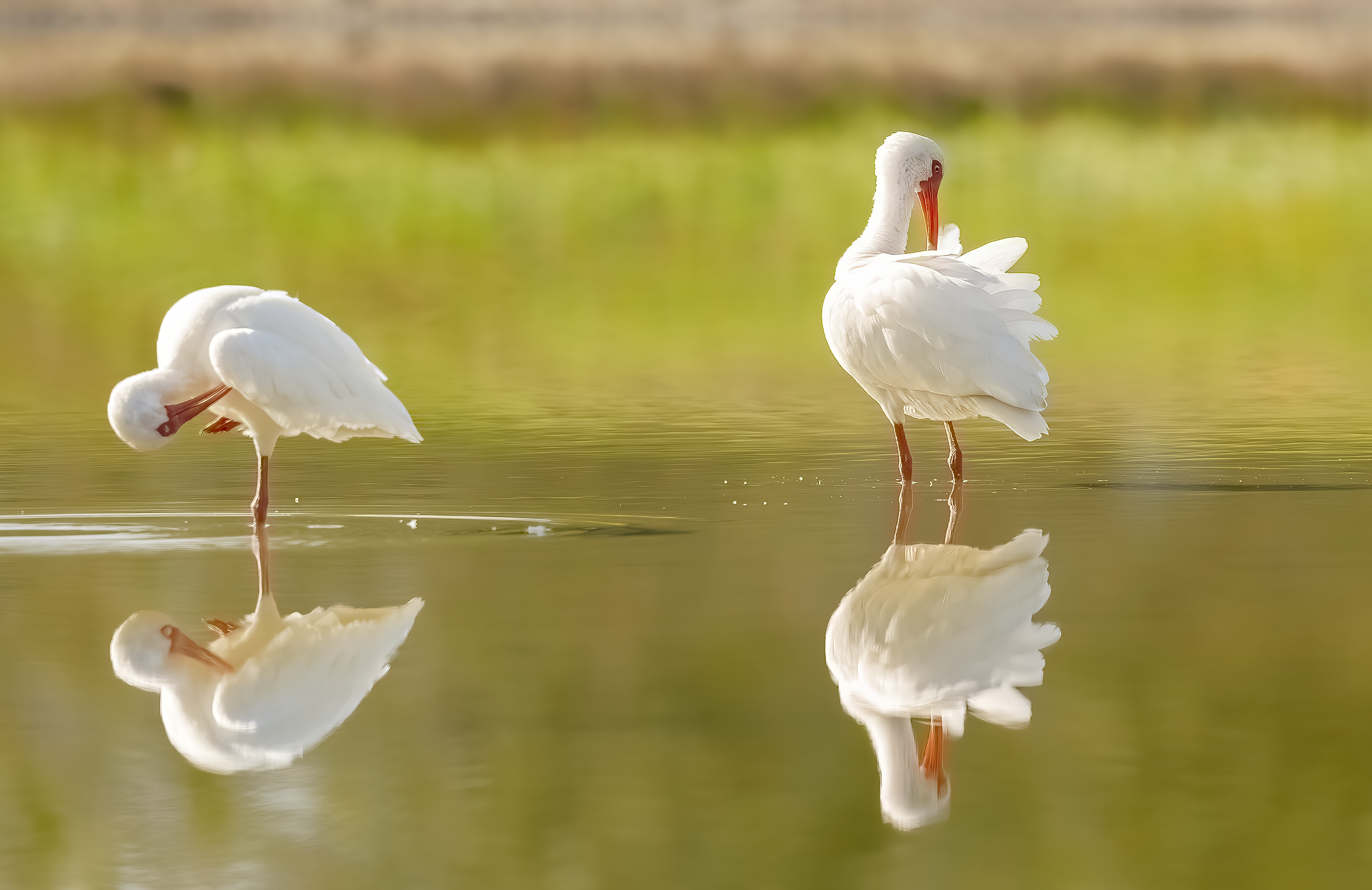
One bird stopped me outright: an Egyptian Goose, alone and unmistakable and loud! Likely an escapee or introduction, it felt provisional—passing through rather than belonging.
Late in the ride, I heard a sound that didn’t quite fit: a rapid, dry cascade of notes. It belonged to a Northern House Wren, a life bird for me. Its song—dense, mechanical, and insistent—stood in contrast to the loud, rolling calls of the Carolina Wrens I hear at home. This one required listening closely.
Gopher Tortoises
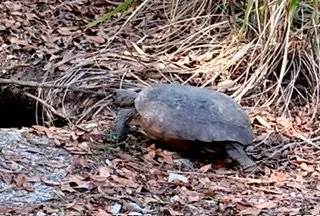
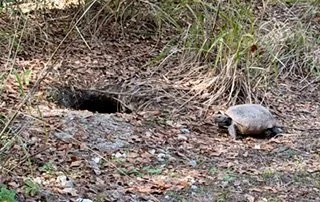
Farther up the trail, attention shifted downward. Gopher tortoise burrows appeared first—wide, half-moon openings edged with pale sand. Then the tortoises themselves emerged, moving deliberately, shells dusted with soil.
In Florida, gopher tortoises are a protected keystone species. Their burrows provide shelter for dozens of other animals, quietly supporting entire communities. Seeing them in number was a reminder that this landscape, though threaded with pavement, still functions on its own terms.
Where the Bike Trail Returns to Town
At the southern end of the Auburndale Trail, pasture gives way to modest neighborhoods and small commercial pockets—places built for locals.
Three stops stood out.
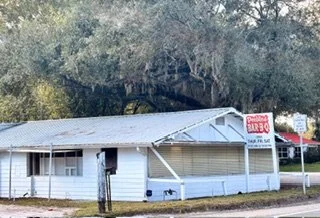
Peebles Bar-B-Q, family-run for 47 years, sits in a small white wooden stand. Open only Thursday through Saturday, smoke rising from the back, it signals confidence by restraint.
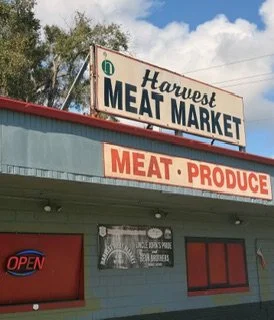
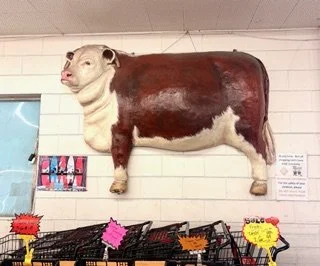
Harvest Meat Market looks forbidding from the outside, but inside it is immaculate. Two women behind the counter wore pristine white aprons, selling local Florida beef and carefully chosen provisions—pickles, staples, food meant to be cooked.
Nearby, Mike’s roadside produce stand offered local fruits and vegetables, jars of honey, and bright Plant City strawberries. Birds and burrows, smoke and strawberries—different registers of the same working landscape.
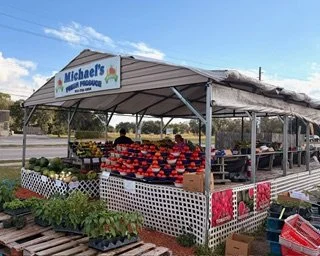
This, too, felt like Old Florida. Not preserved. Not themed. Simply continuing.
Central Florida Bird List — 37 Species Observed
Roseate Spoonbill
Northern Mockingbird
Gray Catbird
Boat-tailed Grackle
Fish Crow
American Crow
Blue Jay
Common Yellowthroat
Gadwall
Northern House Wren
Red-bellied Woodpecker
Downy Woodpecker
Yellow-rumped Warbler
Palm Warbler
Northern Cardinal
Ruby-crowned Kinglet
Blue-gray Gnatcatcher
Eastern Phoebe
Killdeer
Cattle Egret
Great Blue Heron
Little Blue Heron
Tricolored Heron
Snowy Egret
Great Egret
White Ibis
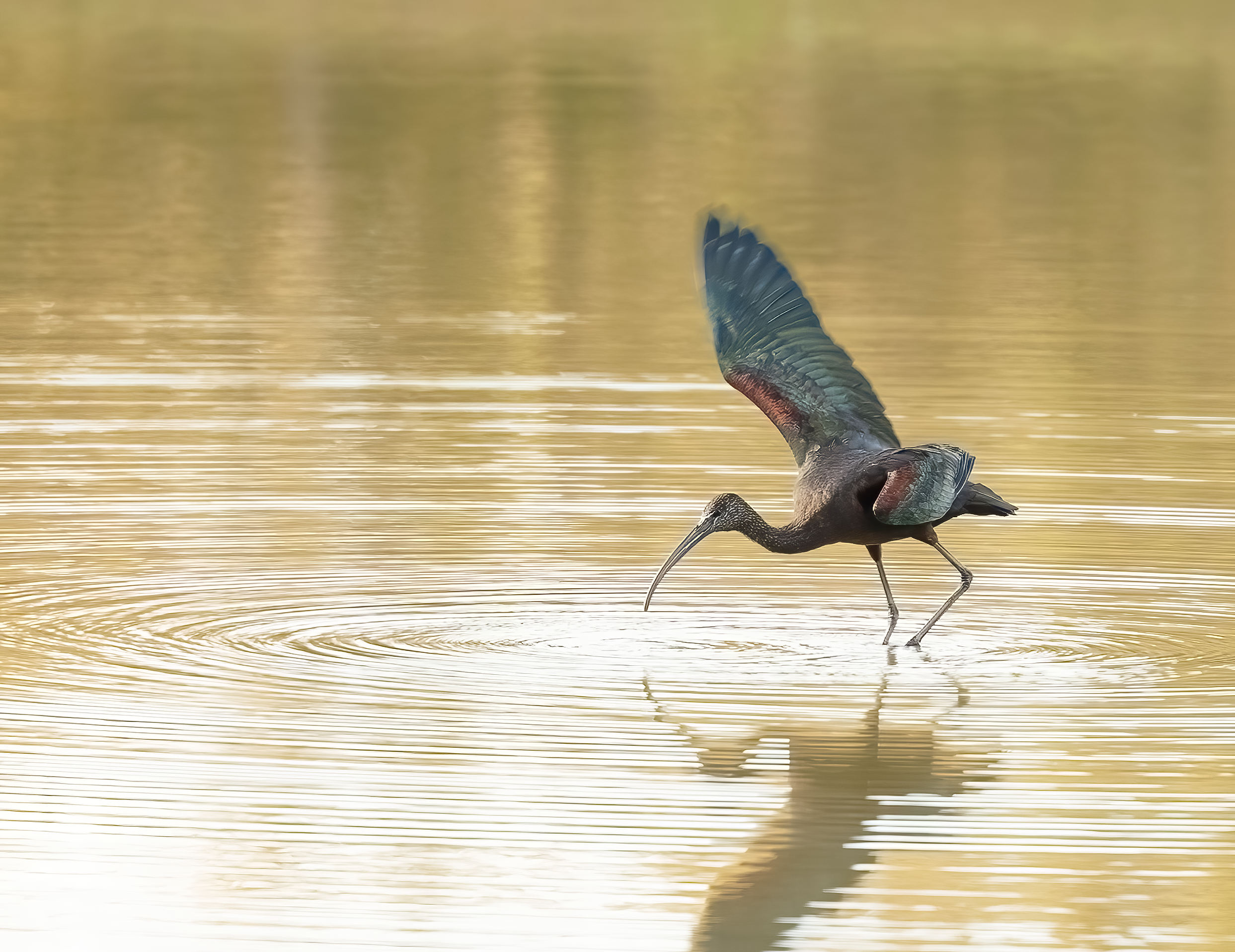
Glossy Ibis
Hooded Merganser
Turkey Vulture
Anhinga
Double-crested Cormorant
Pied-billed Grebe
American Coot
Swallow-tailed Kite
Osprey
Egyptian Goose
Red-shouldered Hawk
If you’d like to explore Hilton Head Island habitats with a local guide, you can learn more about my guided birding and bird photography outings click here.
Hilton Head Island and the surrounding Lowcountry offer some of the best coastal birding on the Atlantic Flyway, and I’m always happy to help visitors and local residents discover the birds and habitats that make this region so special.
You can learn more about Hilton Head’s birds, habitats, and photography in my book Flight Through the Seasons, available on Amazon.
Disclosure: This post contains Amazon affiliate links. As an Amazon Associate, I earn from qualifying purchases.