
My mother turned 90 this year.
She has lived in the same townhouse in Harbour Town on Hilton Head Island since the early 1980s. Her home sits across from the Harbour Town Golf Links clubhouse and is a short walk from the harbor, lighthouse, and waters of Calibogue Sound.
Over the years, the outdoor patio behind her home has become a small refuge for wildlife. White-tailed deer regularly pass through. On one memorable occasion, a bobcat sheltered beneath her deck. Songbirds move through the surrounding live oaks and shrubs, bringing their voices to the patio throughout the day.
One of my mother's favorite pastimes is simply sitting outside and listening.
On a warm spring afternoon during an early-season heat wave, we sat together on the patio enjoying the songs of Northern Cardinals and House Finches from the nearby trees. Years ago, she maintained a couple of bird feeders, but they eventually attracted more squirrels and rodents than birds and created more challenges than enjoyment.
Instead of bringing back the feeders, I suggested something simpler - "Let's try a bird bath." The birds would have a place to drink and bathe, especially during the unusually hot weather. Water is often harder for birds to find than food during dry periods, and a shallow source of clean water can quickly become one of the most valuable resources in a backyard habitat.
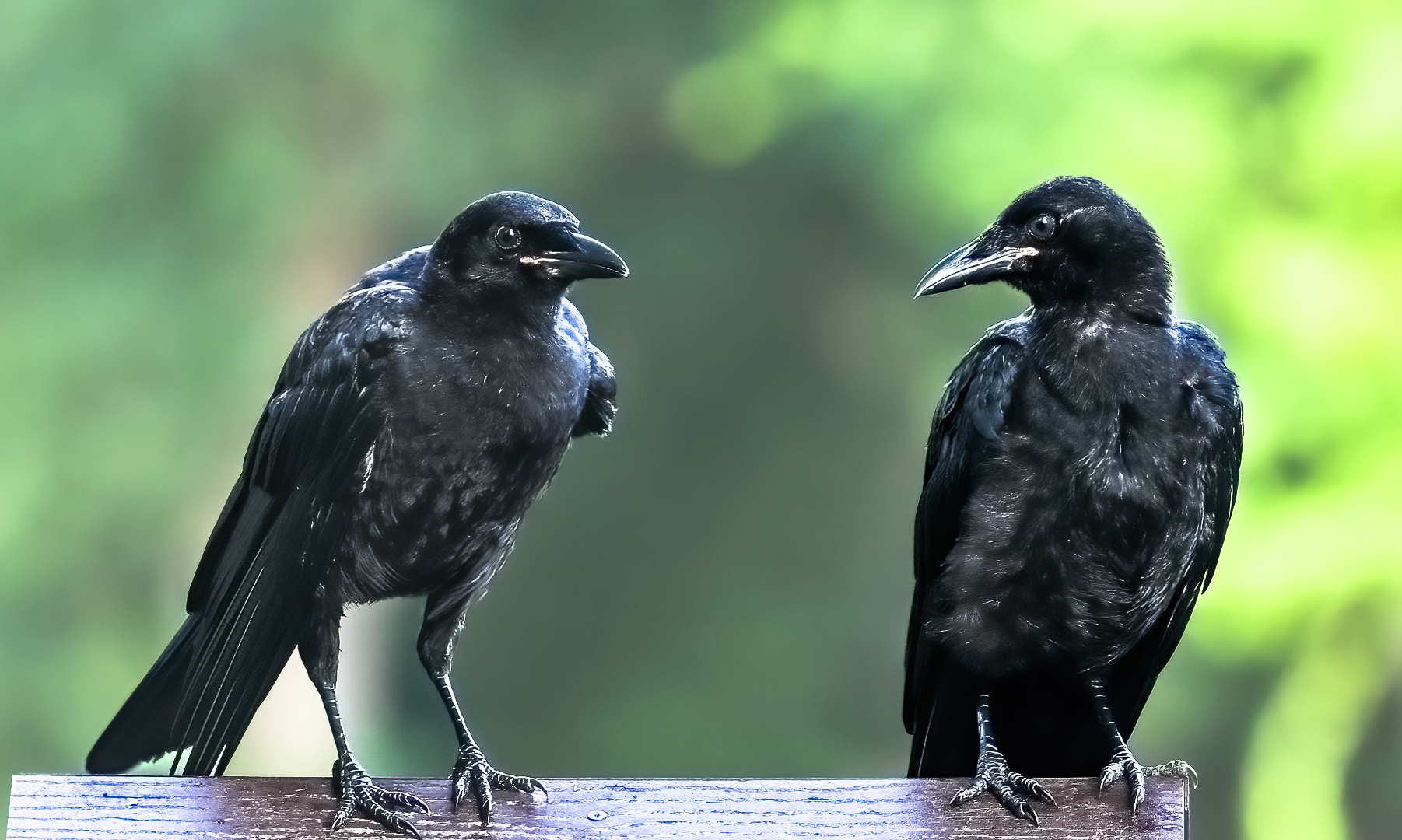
American Crows
Enter the American Crows
To attract birds to the patio, I purchased several shallow bird bath bowls that could be placed directly on the deck railing. The bowls were easy to maintain and provided a source of water for drinking and bathing during the hot weather.
As expected, the squirrels were the first visitors. Then came the American Crows.
What followed became an ongoing exercise in observation and a lesson in the value of simply watching what happens in your own backyard.
One day, an American Crow arrived carrying something in its beak. It dropped the item into the water and flew away. Curious, my mother walked over to investigate. The object turned out to be a piece of hard bread.
Several hours later, the crow returned. It removed the bread from the water, placed it on the railing, and ate it. It appeared that the crow was using the water to soften the food before eating it.
The behavior repeated itself many times over the following weeks. Sometimes the crow brought bread. Other times it arrived with French fries. On one occasion it brought a piece of bacon, although it apparently decided it was not interested in eating it and left it behind on the railing for a squirrel to discover.
The food likely originated from the nearby restaurants around Harbour Town and the golf clubhouse, where scraps are often available around outdoor dining areas and refuse containers.
Most often the crow visited alone, although occasionally it arrived with a companion.
During one visit, a young squirrel attempted to steal a piece of bread that was soaking in the water. The pair of crows had been watching from a nearby tree. The moment the squirrel grabbed the bread, the crows swooped down and began mobbing it. The squirrel finally dropped the bread and scrambled up a nearby tree, leaving the crows in possession of their reclaimed prize.
During the heat wave, the crows often perched nearby with their beaks open. Like many birds, crows do not sweat. Opening their beaks helps them regulate body temperature and release excess heat. Watching them seek shade, drink from the bird bath, and return repeatedly reinforced just how important a reliable source of water can be during periods of extreme weather.
By this point, my mother had become an active observer and chronicler of the crows' daily activities. Nearly every phone conversation included an update on the latest crow behavior.
During one of those conversations, I mentioned something I had read about crow intelligence. "Don't be surprised if the crow brings you a gift." A few days later, something unusual happened. A crow arrived carrying a small fish, likely caught around Harbour Town or one of the nearby lagoons. It dropped the fish into the water, flew away, and later returned. After picking at the fish and eating portions of it, the crow left the skeletal remains near the foot of my mother's chair.
The same sequence occurred a second time. Was it a gift? I have no way of knowing. What I do know is that it sparked a great deal of discussion between my mother and me and deepened our interest in understanding these remarkable birds.
Given the timing of our observations during spring and early summer, it is possible the crows were nesting somewhere in the mature live oaks and pines around Harbour Town. American Crows often maintain territories close to reliable food and water sources, making the bird bath a convenient stop during the breeding season.
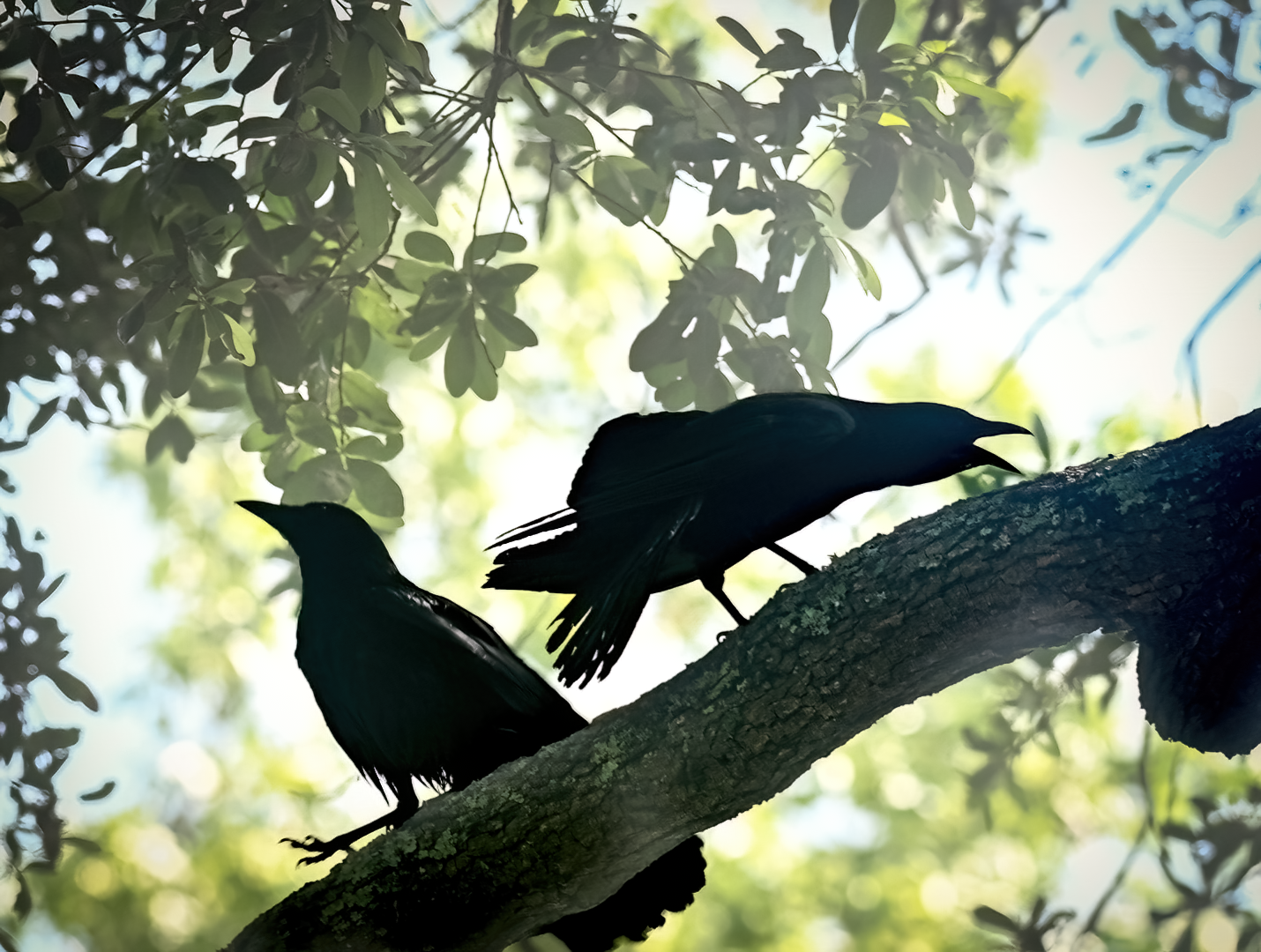
American Crows
My Mother Loves to Read
My mother has always loved books.
As her interest in the crows grew, I began purchasing books about crow behavior, intelligence, and their relationship with people. Among my favorites are Gifts of the Crow by John Marzluff and Tony Angell, Crow Planet by Lyanda Lynn Haupt, andIn the Company of Crows and Ravens, also by Marzluff and Angell.
Each explores a different aspect of these remarkable birds, from their problem-solving abilities and social lives to the ways they have adapted to living alongside people. The more we read, the more many of the observations from my mother's patio seemed less surprising and more consistent with what researchers have documented about crows for decades.
What We Learned About American Crows
American Crows are among the most intelligent birds in North America. They are members of the corvid family, which also includes ravens, jays, and magpies.
Researchers have documented that crows can recognize individual human faces, remember those faces for years, solve complex problems, use tools, and learn from one another. They are highly adaptable birds that thrive in both wild and developed environments.
Several of the behaviors my mother observed are consistent with what scientists know about crows:
Crows frequently soak hard foods in water before eating them.
They are opportunistic feeders and will consume a wide variety of foods.
They remember reliable sources of food and water and often return to them repeatedly.
They can distinguish individual people and may become comfortable around humans who do not threaten them.
Crows are highly social and frequently cooperate with one another when defending resources or responding to potential threats.
Watching these behaviors unfold from a patio chair brought those scientific observations to life in a way that no book ever could.
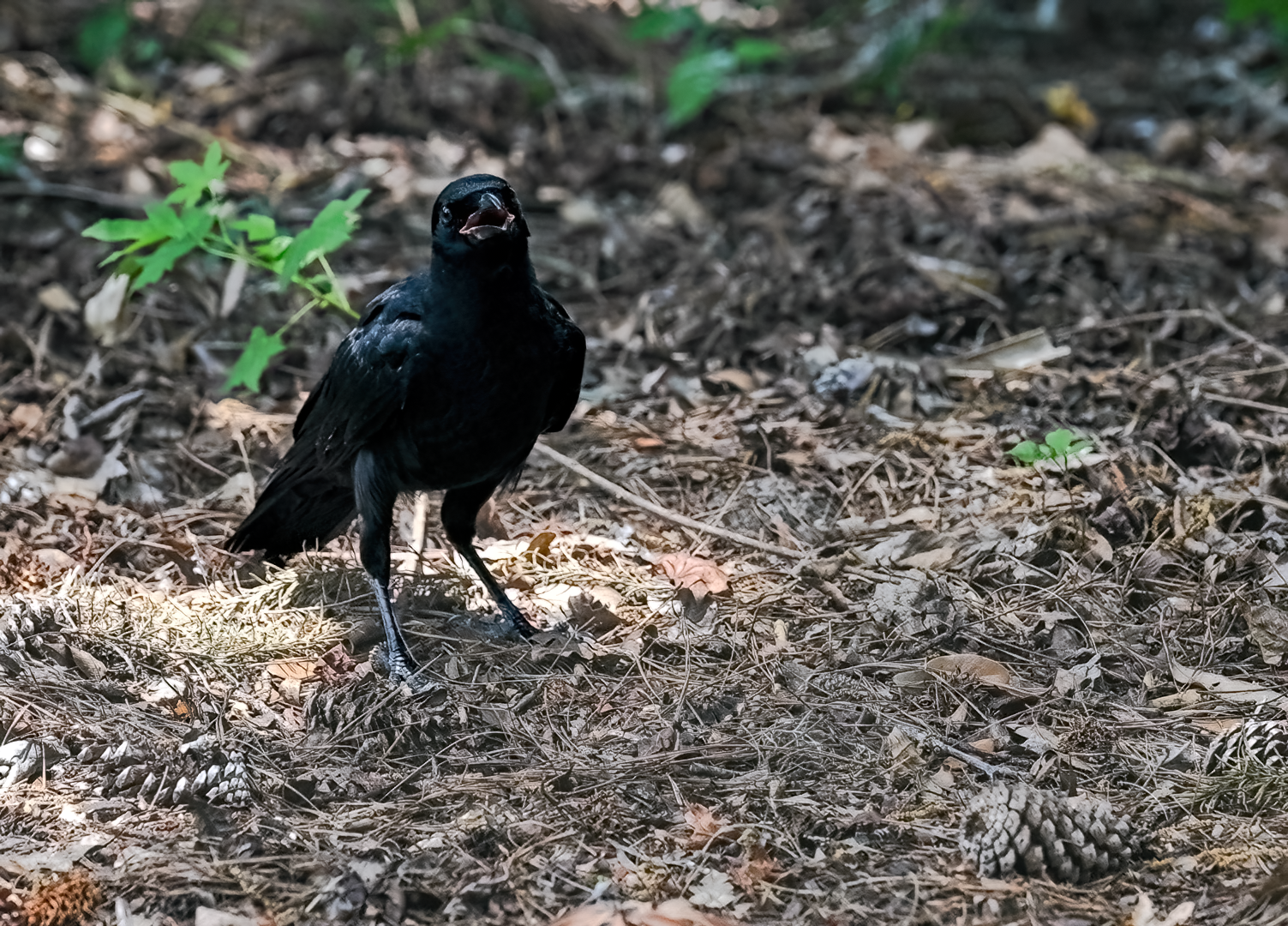
American Cow
Birdwatching in Place
As birders, we often think about traveling to wildlife refuges, searching for rare birds, or planning our next field trip. But one of the lessons from my mother's crows is that meaningful birdwatching does not always require going anywhere.
At 90 years old, my mother no longer drives. Her world is naturally smaller than it once was. Yet every day, nature continues to arrive on her patio. The Northern Cardinals announce the morning. House Finches sing from nearby trees. Small deer wander through the neighborhood. And now the crows stop by to soak bread, chase squirrels, and provide the latest chapter in an ongoing story.
What began as a simple bird bath during a spring heat wave became something more. It became a reason to look outside. A reason to pay attention. A reason to ask questions.
Will the crow return today?
What will it bring?
What will it do next?
The answers are not always important. The act of observing is.
Many studies have shown that spending time in nature can reduce stress and improve well-being. My mother's experience reminds me that those benefits do not require a wilderness adventure. Sometimes they can be found from a patio chair with a cup of coffee and a few minutes of attention.
The crows have certainly benefited from the bird bath. But I suspect they have given something in return.
Not fish.
Not gifts.
Something more valuable.
A daily sense of curiosity and connection to the natural world just beyond the back door.
Books and Resources That Helped Us Learn About Crows
Books
Gifts of the Crow by John Marzluff and Tony Angell
Crow Planetby Lyanda Lynn Haupt
In the Company of Crows and Ravens by John Marzluff and Tony Angell
The Comfort of Crowsby Margaret Renkl
Crows: Encounters with the Wise Guys of the Avian World by Candace Savage
Bird Baths for Decks and Ground
Bird Bath Bowl (set of 2) - 12”
Lightweight Binoculars
Nocs Provisions Field Tube 10x32 Monocular
Crow T-shirts
Support Your Local Murder Tshirt
Disclosure
This article includes a small number of curated recommendations. I only share items I’ve used or would confidently recommend based on my experiences.,This post contains Amazon affiliate links. As an Amazon Associate, I earn from qualifying purchases.