
Read the Bird: Silhouettes
Read the Bird: Field Notes on Bird Photography is an ongoing series grounded in real field conditions—real light, real decisions, real tradeoffs. This installment begins with a question that comes up often when working in backlight: when a bird falls into shadow, should you recover detail, or trust the shape and let it go?
For me, the answer is usually to let it go. When the light is right and the outline is clean, a silhouette often feels more direct and more honest to the moment than an image full of recovered detail. In these situations, I’m reading the bird by gesture first—by the bend of a neck, the angle of a bill, the lift of a wing—and only second by light or texture.

Marbled Godwit
Why silhouettes work
Silhouette is one of the oldest visual languages we have. Long before photography, artists traced shadow outlines cast by sunlight or flame. Britannica traces silhouette to outline drawing and shadow painting, noting ancient Greek and Roman practices of drawing from a person’s shadow cast by sunlight, candlelight, or lamplight. In other words, silhouette is not a gimmick or a stylistic detour. It belongs to one of the oldest visual languages we have: edge, contour, and contrast.
Research supports what photographers see in the field. Studies on visual perception show that outline shape plays a central role in how we recognize living things. In practical terms, that means a bird’s posture, bill shape, and proportions can remain highly legible even when feather detail disappears.
Camera guidance aligns with this. Nikon emphasizes that strong subject shape leads to stronger images, especially in backlight. Adobe defines silhouette photography as the use of a dark subject against a brighter background, with shadows intentionally kept deep to preserve impact. In both cases, the goal is not recovery—it is clarity through contrast.
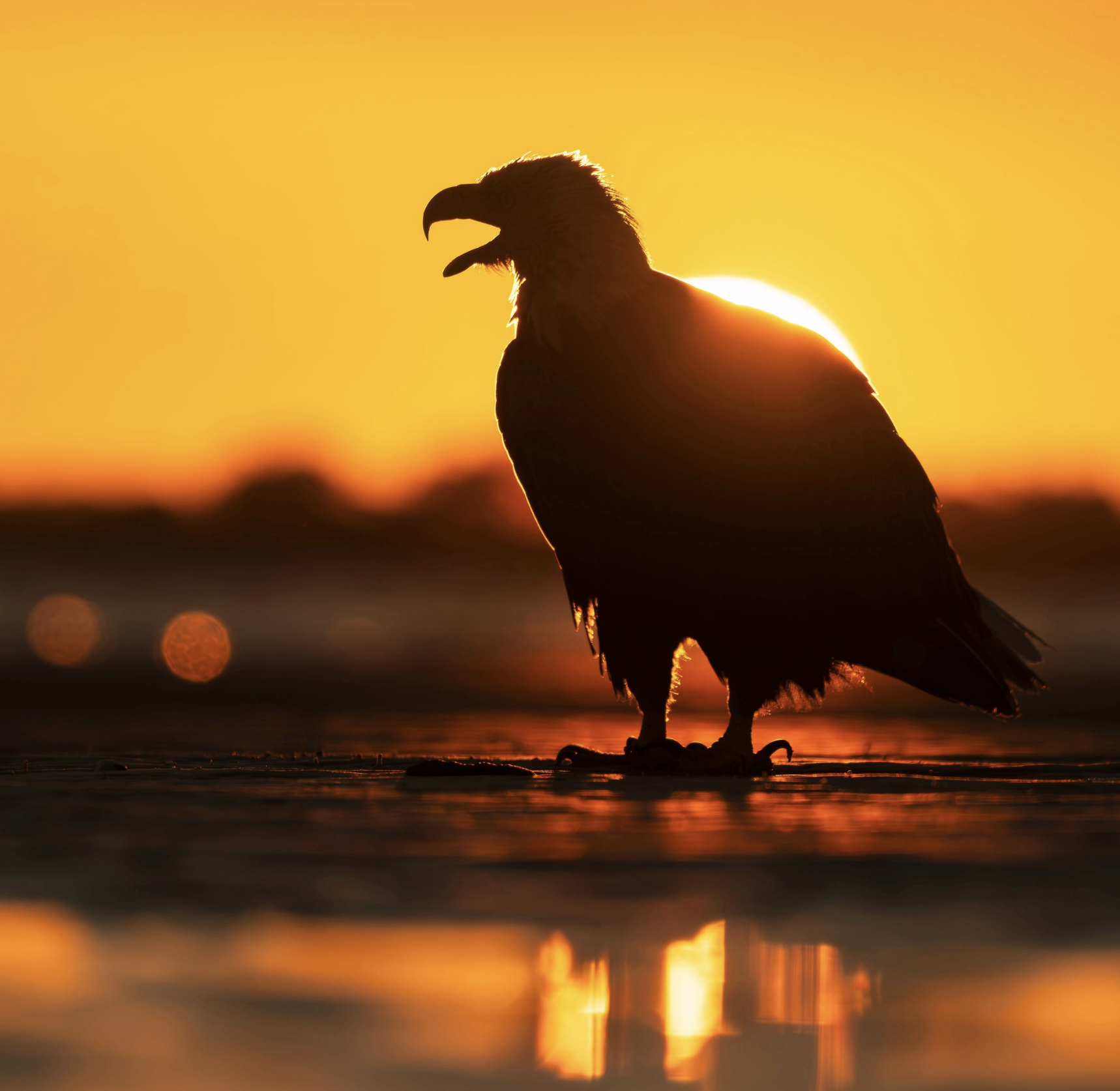
Bald Eagle
What makes a strong silhouette
Not every backlit bird becomes a good silhouette. The image depends on a few key conditions:
Clean outline: The bird’s shape must be distinct and uncluttered. Overlapping elements or busy backgrounds weaken the effect.
Recognizable posture: Species cues like bill length, neck curve, or stance help the viewer identify the bird even without detail.
Strong light direction: Low-angle light at dawn or dusk creates separation between subject and background.
Negative space: Giving the bird room in the frame makes the silhouette more legible and more visually striking.
This is where silhouette photography becomes less about exposure tricks and more about positioning and timing in the field.
On a recent morning shoot, a Snowy Egret moved through shallow water just after sunrise. The light was bright behind it, and any attempt to lift shadows introduced noise and flattened the mood. Letting the bird fall fully into black preserved the arc of the neck and the precise placement of each step. The result was simpler, but stronger—the behavior read clearly without distraction.
In situations like this, trying to “fix” the shadow often works against the image. The gesture is already doing the work.
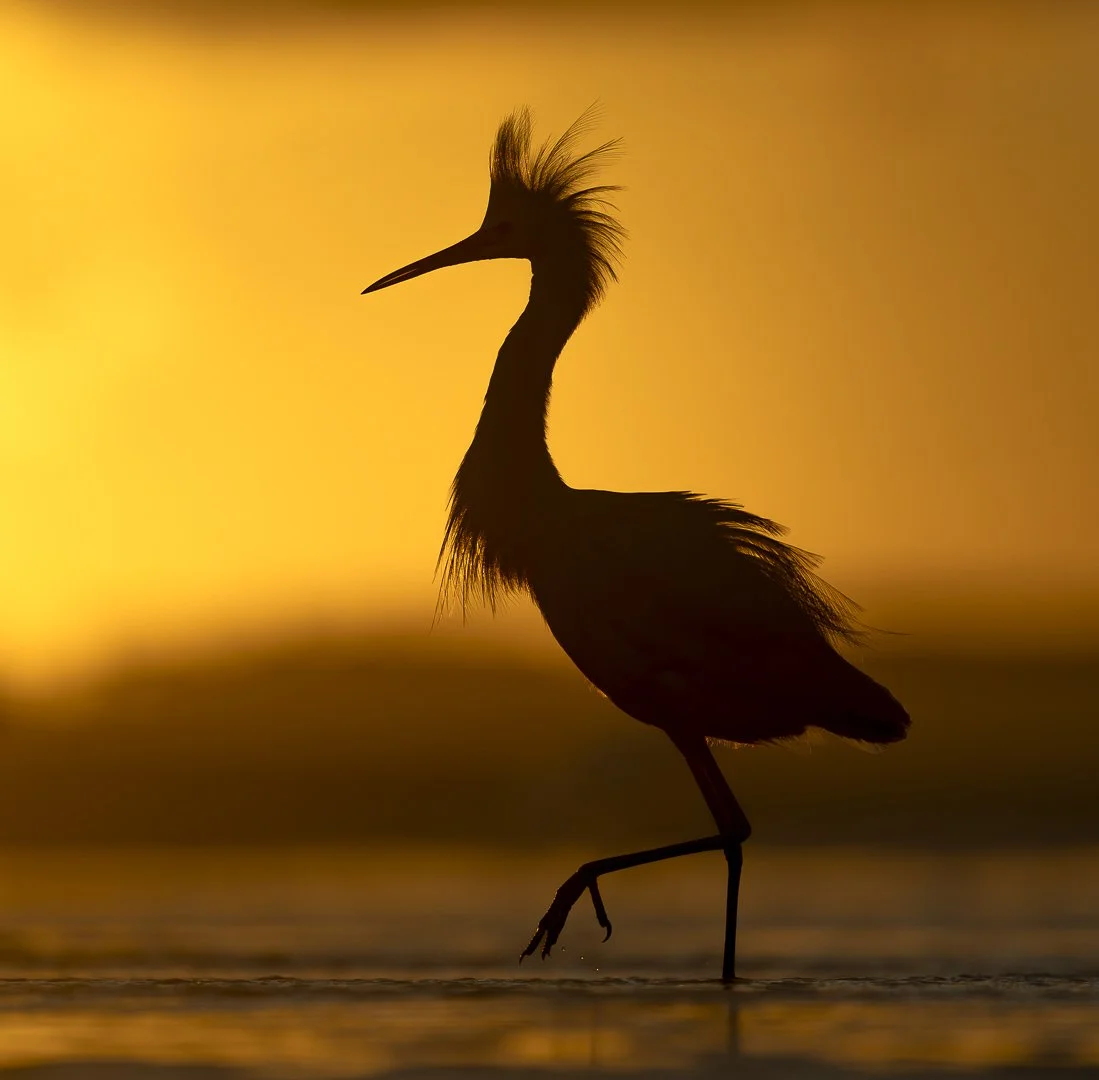
Snowy Egret
Contemporary Conversations
The contemporary conversation around bird photography keeps coming back to the same ideas: story, mood, shape, light, and restraint. BirdLife Australia judge Georgina Steytler points toward emotion and drama. Kevin Morgans talks directly about shape over detail in backlit wildlife work. Morkel Erasmus frames photography as evocation rather than description. Art Wolfe speaks in the language of design. And Audubon judge Daniel Dietrich explicitly praises silhouette as a positive aesthetic force, not as the absence of something more important.
“Fantastic images don't show us a bird, they tell us a story and do it in a way that evokes emotion in the viewer.” — Georgina Steytler.
“For me, one of the greatest draws to this style is the emphasis on shapes rather than detail.” — Kevin Morgans.
“Photography should evoke more than it describes.” — Morkel Erasmus.
“When I photograph, I am always looking for elements of design such as line, pattern and texture, as visual cues.” — Art Wolfe..
Nikon and Adobe say much the same thing in more practical language: expose for the bright background, choose a subject with a strong outline, and let the shadows stay convincingly dark rather than rescuing them back into description
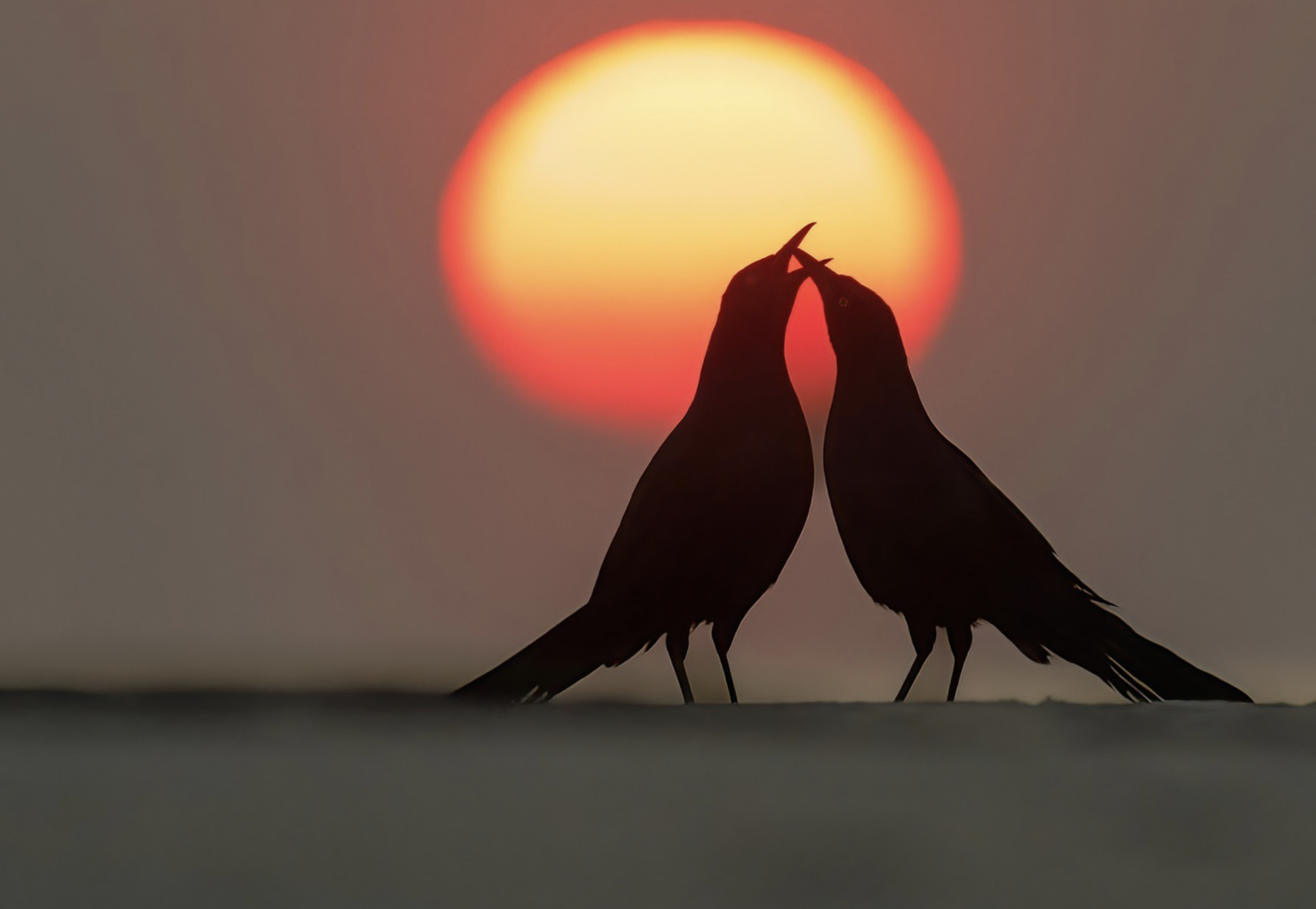
Boat-tailed Grackles
When to keep full black and when to open shadows
A simple rule: keep the bird fully black unless opening the shadows clearly improves the image.
Consider lifting shadows only if:
You lose critical anatomical clarity (for example, the bill disappears into the body).
The gesture becomes confusing or unreadable.
A small amount of detail adds context without weakening the overall contrast.
Otherwise, commit to the silhouette. Expose for the sky, protect the highlights, and let the subject fall where it will.
Why this approach matters
Silhouettes shift the focus from description to experience. When detail drops away, what remains is gesture, spacing, and light. The bird becomes not just a species to identify, but a presence in a specific moment—held briefly against the glow of morning or evening.
Next time you’re working in backlight, try exposing for the sky and resisting the urge to recover detail. Let the shape carry the image. Below is a chart I created that shares practical tips in shooting a bird silhouette.
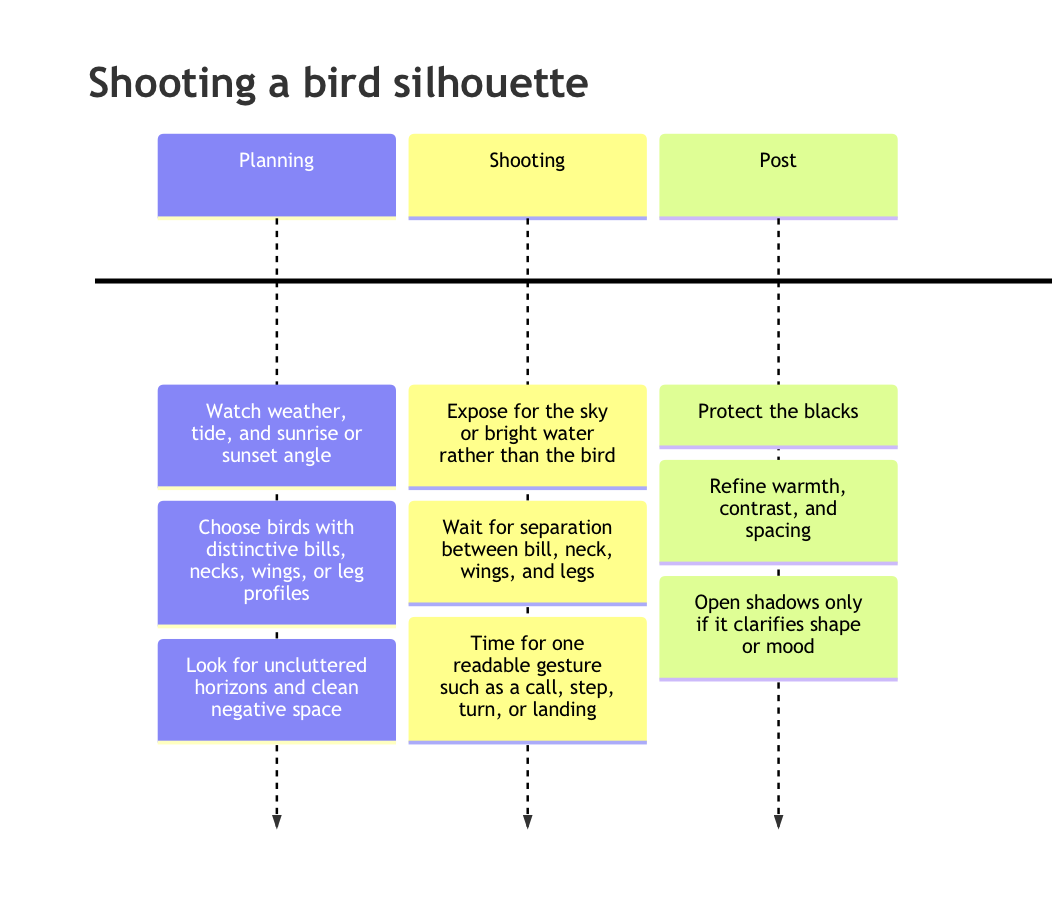
Guidance on photographing a bird silhouette
I am drawn to silhouettes because they ask less of description and more of feeling. When detail falls away, gesture, spacing, and light become the language of the image. In these bird photographs, I want the subject to read not only as species, but as shape, presence, and moment—small lives held briefly against the glow of dawn or dusk.
When the light is right, I’ve learned to trust that outline and let the bird go to shadow.
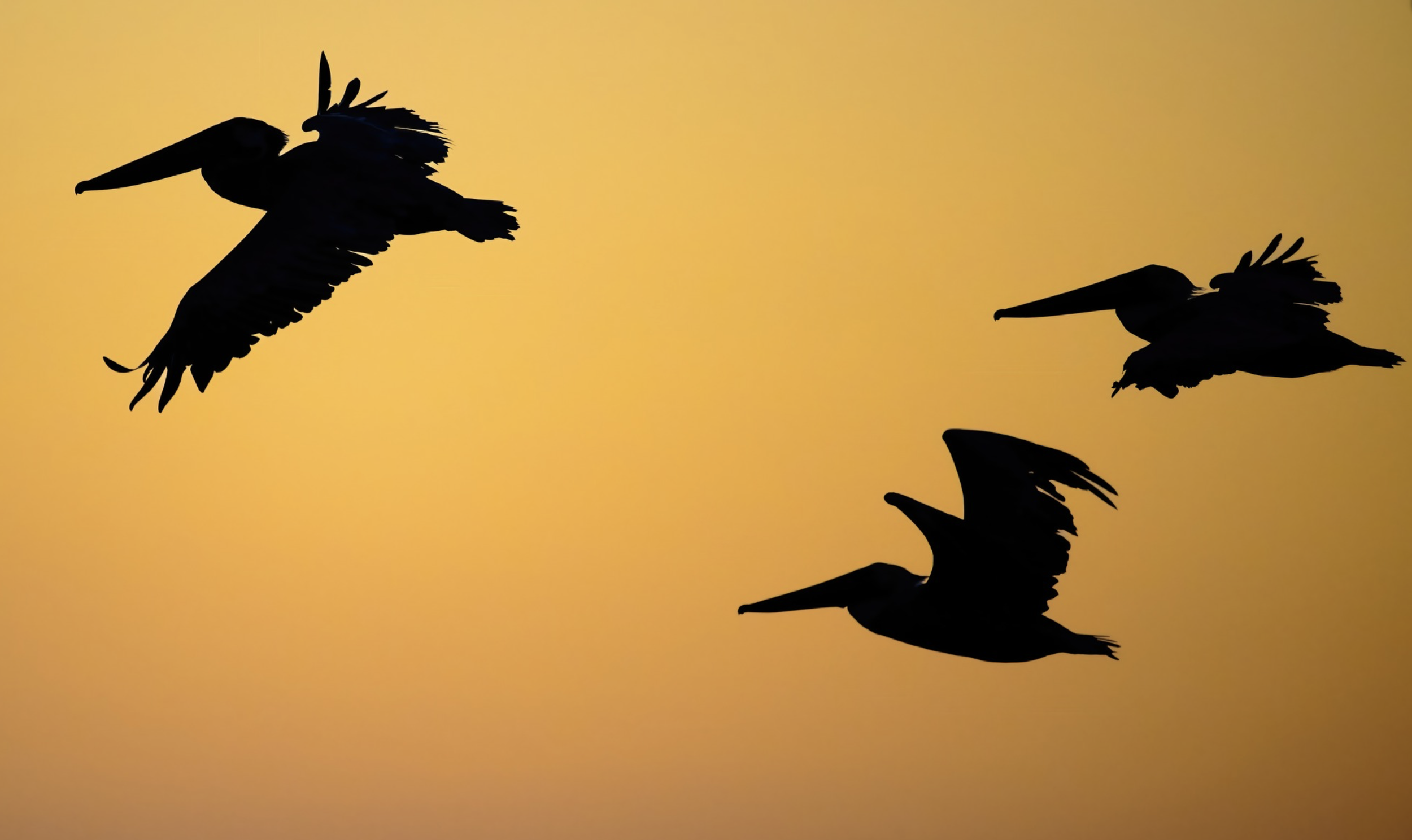
Brown Pelicans