
Pastel Dawn Skies and Lowcountry Birds: The Rayleigh Effect
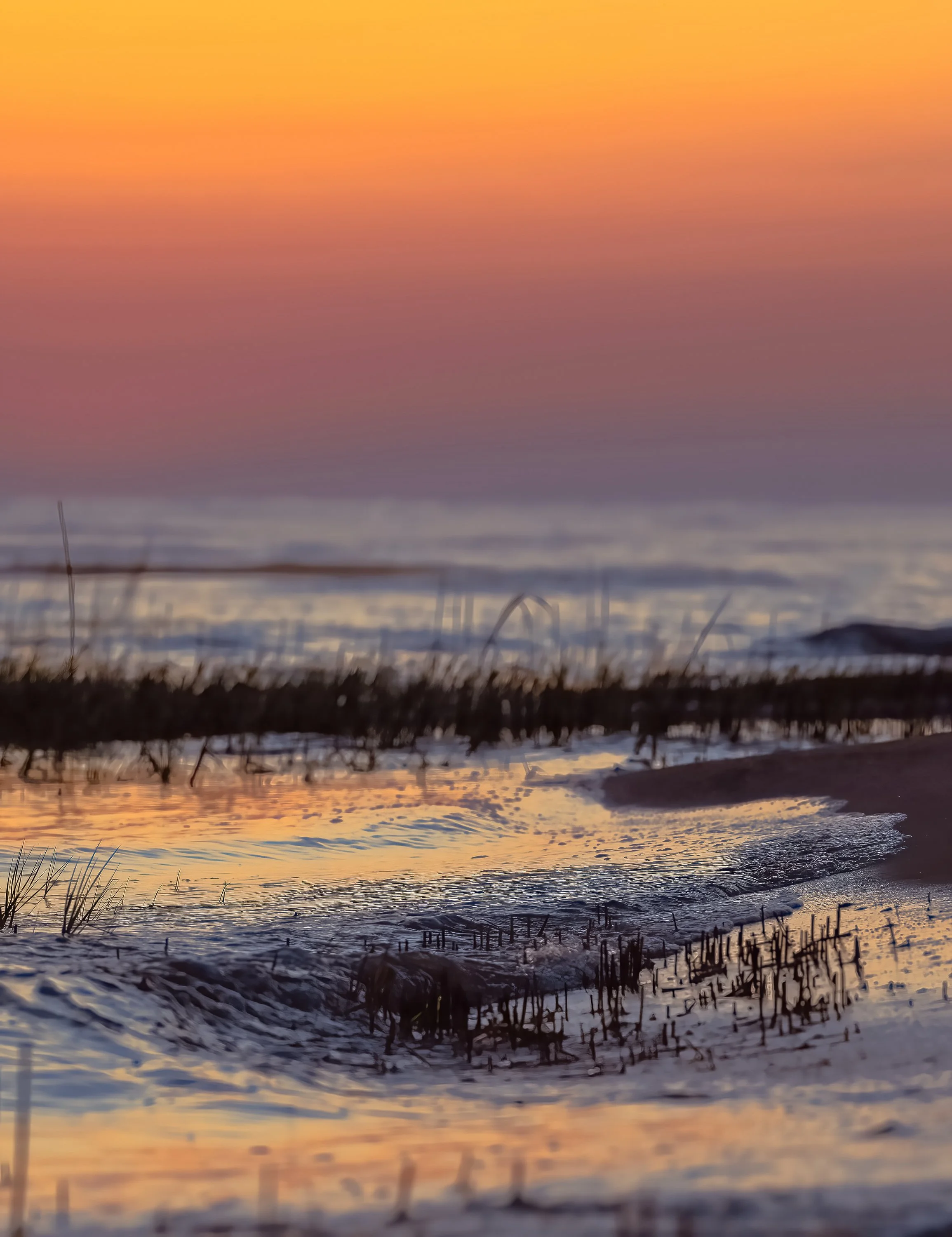
On the first day of spring this year, which fell on March 20, I headed to the beach before dawn to witness the day’s first light. I knew first light would appear around 7:00 a.m., with sunrise about half an hour later, so I arrived by 6:30 a.m. to give myself plenty of time. I had a peaceful half-hour to soak in the quiet and watch the eastern horizon for the first hints of color. The air was cold—around 44°F—but the sky was clear. The tide was about halfway in, steadily rising after a 4:30 a.m. low tide. The incoming tide was slowly seeping back in, tracing thin, foamy lines through the rippled sand and mud flats.
About Rayleigh Scattering
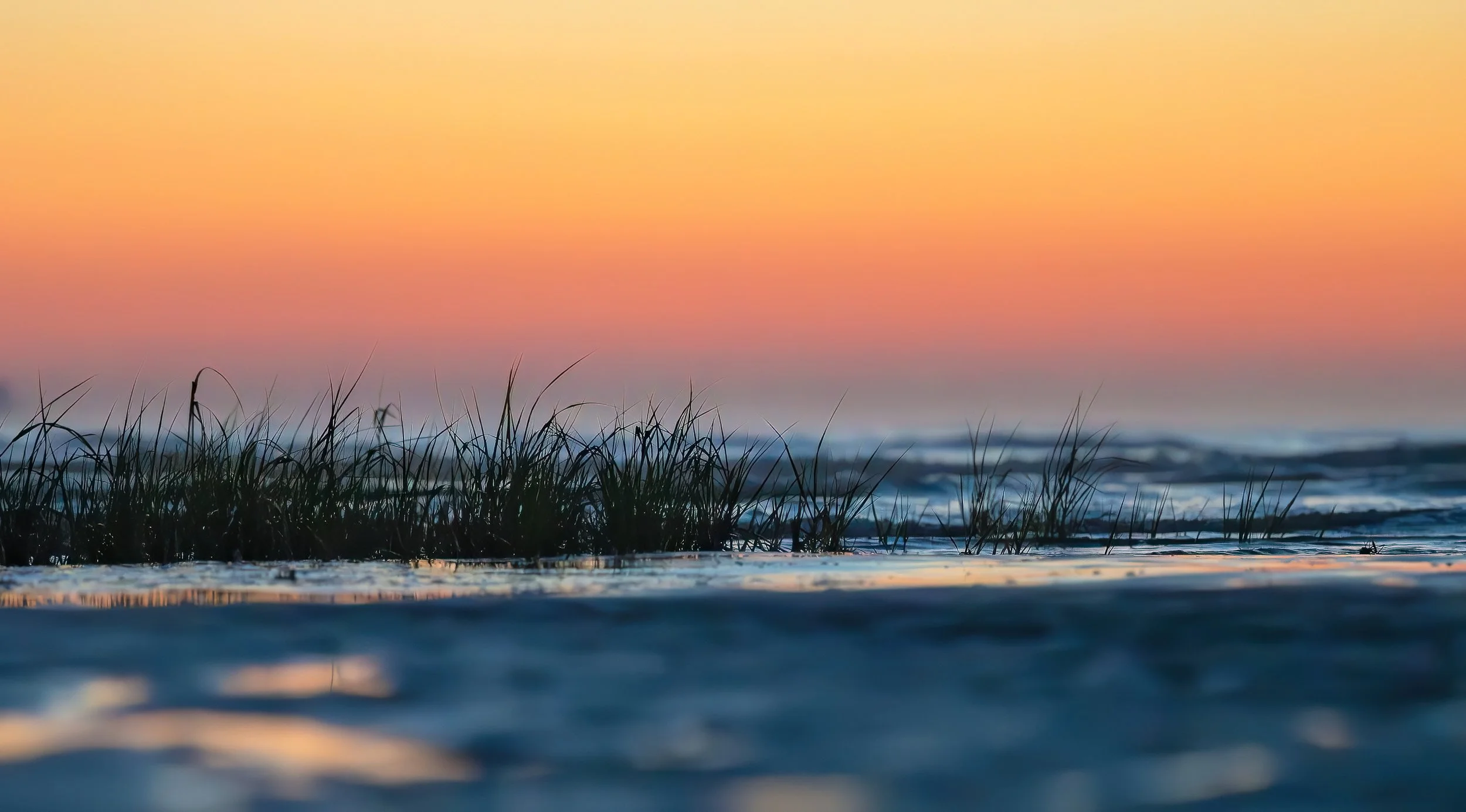
The first light finally began to glow with hints of pink on the horizon, followed by a stunning palette of pastel-like colors — yellows and oranges, soon joined by blushes of pink and purple — all fading upward into deep blue overhead. These hues were vividly reflected on the wet mudflats in front of me, as if the ground itself had been painted with the dawn. This beautiful light show is thanks to a phenomenon called Rayleigh scattering—essentially, the atmosphere acts like a filter that scatters the shorter-wavelength colors (the blues and purples) out of our direct view, leaving the longer wavelengths (warm reds and oranges) to shine through when the sun is low on the horizon. With the sun so low, its rays must travel through a much thicker slice of atmosphere, exaggerating this effect: the scattered blue light tints the wider sky a cool blue-gray, while the direct sunlight reaching the horizon is rich with golden and rosy tones..
Despite the nearly 100% humidity on this morning, there were no clouds or heavy haze to mute the display – high humidity can make the air a bit hazier by swelling tiny particles, but it didn’t noticeably alter the vibrant colors unfolding before me. And even though this was the first sunrise of spring and the air was chilly, those factors by themselves didn’t create any special hues; the dazzling dawn colors were driven by the sun’s angle and clear air, rather than the season or temperature. Meanwhile, the mudflats acted like a giant mirror for the sky. A thin sheen of water over the mud picked up the pinks and golds above, so the colors seemed to double, glowing up from the ground as well as down from the sky. As the tide slowly advanced and the reflective surface expanded, the mirrored colors stretched and shifted, adding to the magic of the moment. It was a breathtaking start to the day – a perfect backdrop as the island’s bird life began to stir.
In the still-dark pre-dawn light, the first birds appeared as silhouettes along the high tide wrack line. A lone Black-bellied Plover stood out – the largest North American plover, with a stout bill and bold stance. It probed the sand for invertebrates, exemplifying the plover’s “run-stop-peck” foraging style. Nearby, a small flock of Sanderlings scurried energetically at the water’s edge. True to their reputation, these pale sandpipers chased each receding wave and darted away as the next rolled in, seizing tiny crustaceans and worms from the wet sand. A couple of Piping Plovers were also present, darting between clumps of seaweed. Piping Plovers often forage along the wrack line up to the dune edge, plucking insects (ants, spiders, fly larvae) from the debris. The wrack line – a ribbon of washed-up seaweed and grasses – teemed with life at this hour. It is a vital resource: decaying seaweed in the wrack hosts sand flies, amphipods, small crabs and other invertebrates that fuel migrating shorebirds. In fact, without natural wrack lines, beaches would be nearly barren of shorebird food, since “nothing eats sand” and these debris zones are like buffet lines for coastal birds. In the dim dawn, these shorebirds fed busily along the strand, capitalizing on the rich foraging before full daylight.
First Light: Sea Fog and Sea Birds
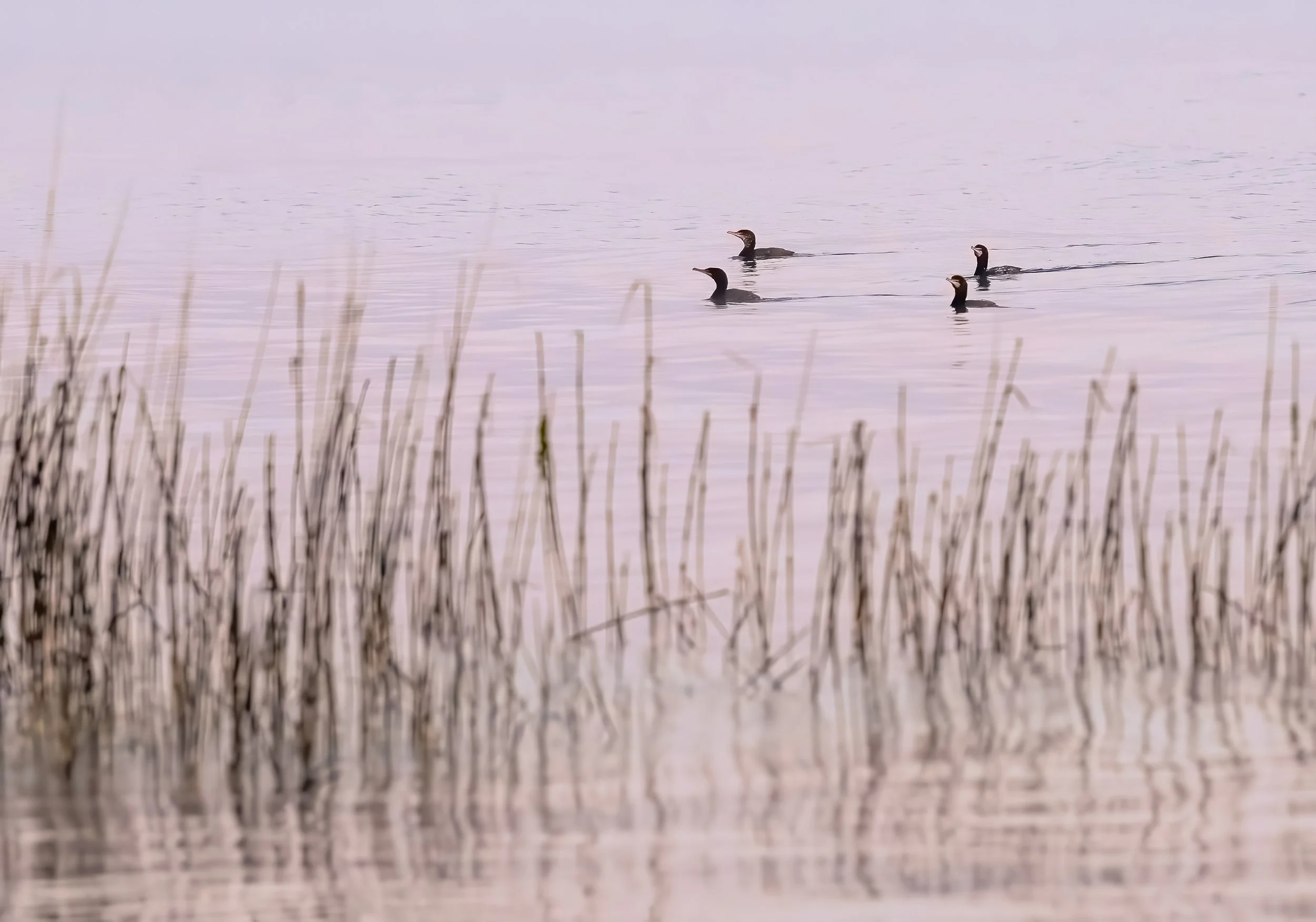
As the first light brightened toward dawn, a sea fog began forming over the sound. A warm, moist air mass meeting the cooler water created the perfect conditions for this low mist to develop. Through the fog, the scene came alive with birds: the piercing calls of Ring-billed Gulls rang out as they flew overhead, pale wings catching early light. Skimming just above the water’s surface were a few Black Skimmers, easily recognized by their black-and-white coloration and long orange bill. They flew in sync, barely visible under the fog, dragging their elongated lower mandible through the water to snap up fish – a unique feeding method. Black Skimmers often prefer low light conditions; even Charles Darwin noted they feed most actively at night or dusk when small fish swim near the surface. Their eyes are specially adapted with cat-like pupils that narrow to vertical slits, allowing them to hunt at dawn without being blinded by rising sun glare. Following the gulls’ path, a small squadron of six Double-crested Cormorants winged in and splashed down among the marsh shallows being inundated by the rising tide. Instead of continuing on, these dark, long-necked waterbirds settled in a half-submerged stand of spartina grass. From my vantage, I watched their sleek heads and necks weave in and out of the reeds as they dived for fish. Double-crested Cormorants typically forage by diving underwater and chasing fish, sometimes cooperatively in groups. The sight of their black bodies bobbing between golden marsh grasses in first light was a striking photo opportunity – though a challenging one in terms of gaining focus on the birds, as they would swim or vanish underwater and resurface unpredictably amid the stalks.
Dawn Chorus in the Marsh: Rails and Blackbirds
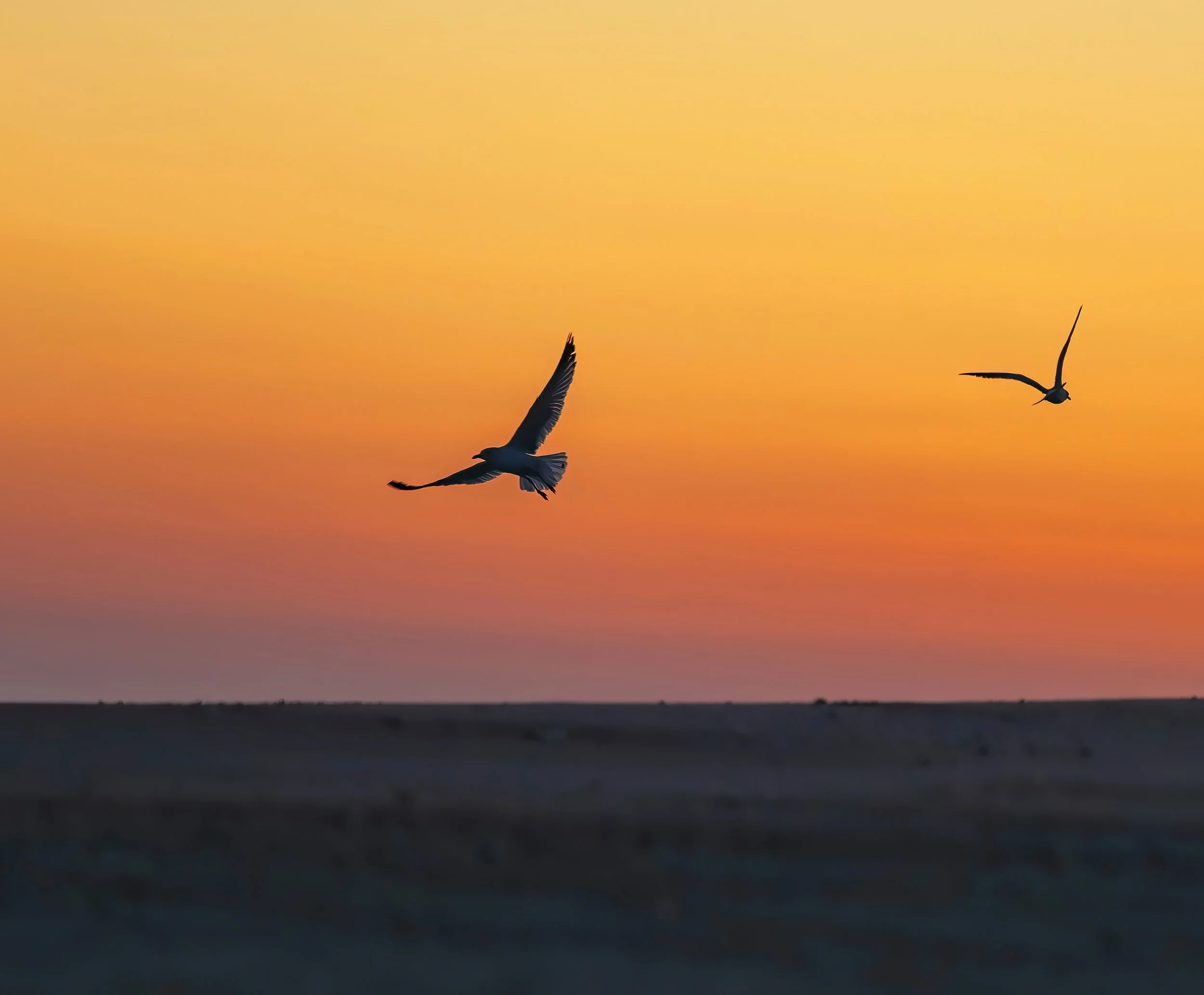
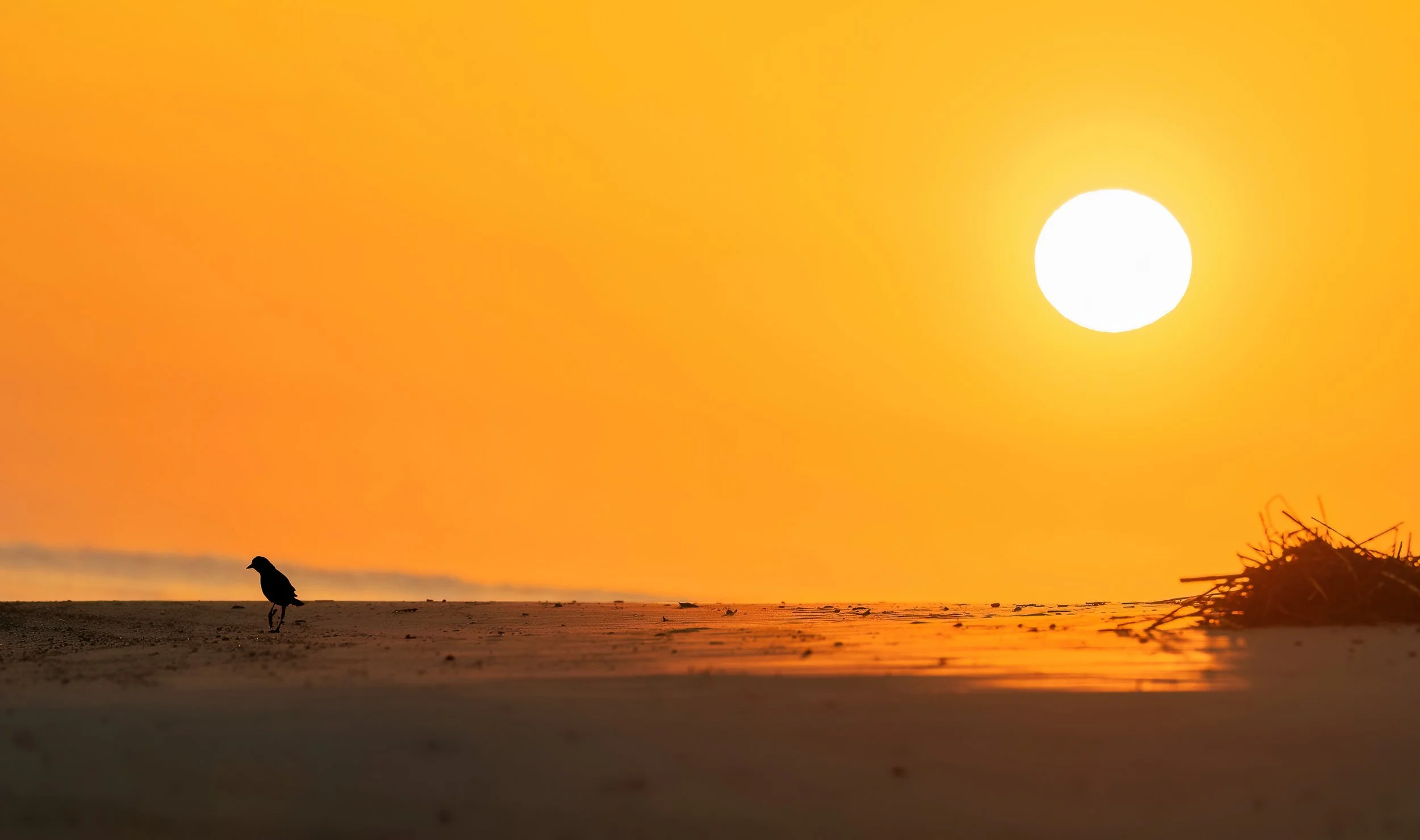
Soon the marsh itself found its voice. From deep within the cordgrass came the abrupt clatter of Clapper Rails, sounding like hands rapidly clapping together. These secretive marsh birds are more often heard than seen, and dawn is when their loud, repetitive calls are most common. I paused to listen to the duet of rails “clapping,” a hallmark sound of Lowcountry salt marsh at daybreak. Almost simultaneously, the rich konk-la-ree song of Red-winged Blackbirds began to echo over the wetlands. Male red-wings perched on the highest cattails, puffing out their red shoulder patches and gurgling their famous territorial song – a “classic sound of wetlands across the continent”. Their calls, along with the rail’s cackling, formed a natural symphony welcoming the morning. As the sky grew lighter, more blackbird silhouettes appeared, including a few Boat-tailed Grackles moving in. True to their boisterous nature, the grackles announced themselves with harsh, ringing calls. Boat-tailed Grackles are extremely vocal and often gather in large, noisy flocks – an unforgettable spectacle during their communal roosting dispersal at dawn. I kept low behind a sand bank to avoid notice and thus startling them. By positioning myself lower than the birds on a slight rise, I hoped they would come closer, allowing me to capture the minimalist side-by-side composition I envisioned—an outline of a black bird against the orange sky on one side of the frame and the rising sun on the other. After a short wait, several male grackles appeared on the ridge above me. With the sun rising behind them, their dark forms turned into crisp silhouettes against the orange sky as the sun continued to climb. I took a series of photos as one male paused at the ridge’s edge, giving me the composition I had hoped for: the bird’s silhouette anchoring the right side of my frame, balanced by the sun on the left..

Wading Birds After Sunrise
Once the sun rose, on cue, the wading birds made their entrance. I saw flocks of Great Egrets, White Ibis and a sole Wood Stork make their way from their roosting areas inland, fly parallel to the beach and then turn inland to the marsh. This timing is consistent with typical morning behavior for these species, which often leave roosts shortly after sunrise in response to light cues. The rising tide likely signaled that foraging conditions in the marsh were becoming favorable, drawing these birds to feeding grounds that were being replenished with small fish and invertebrates.
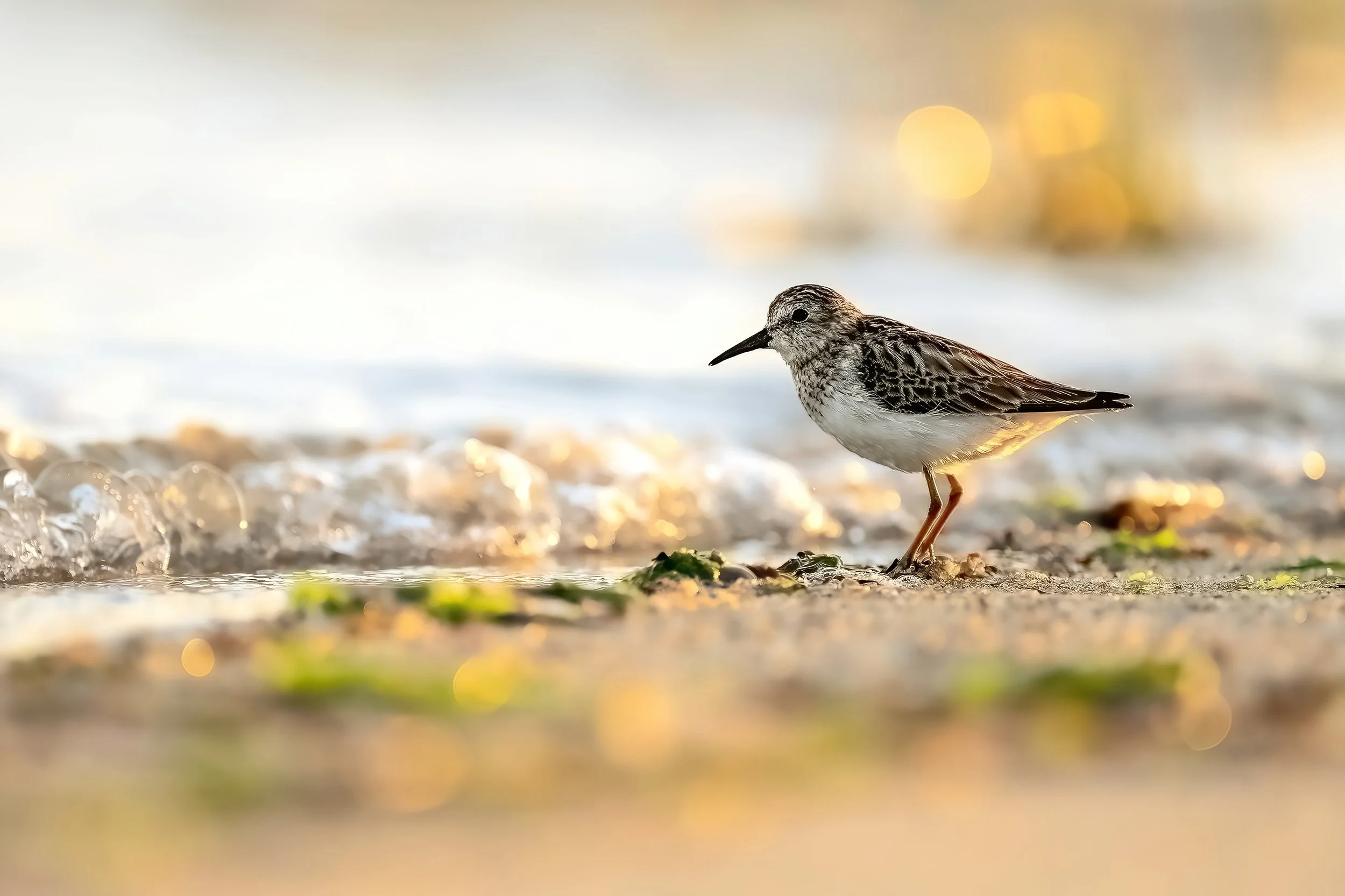
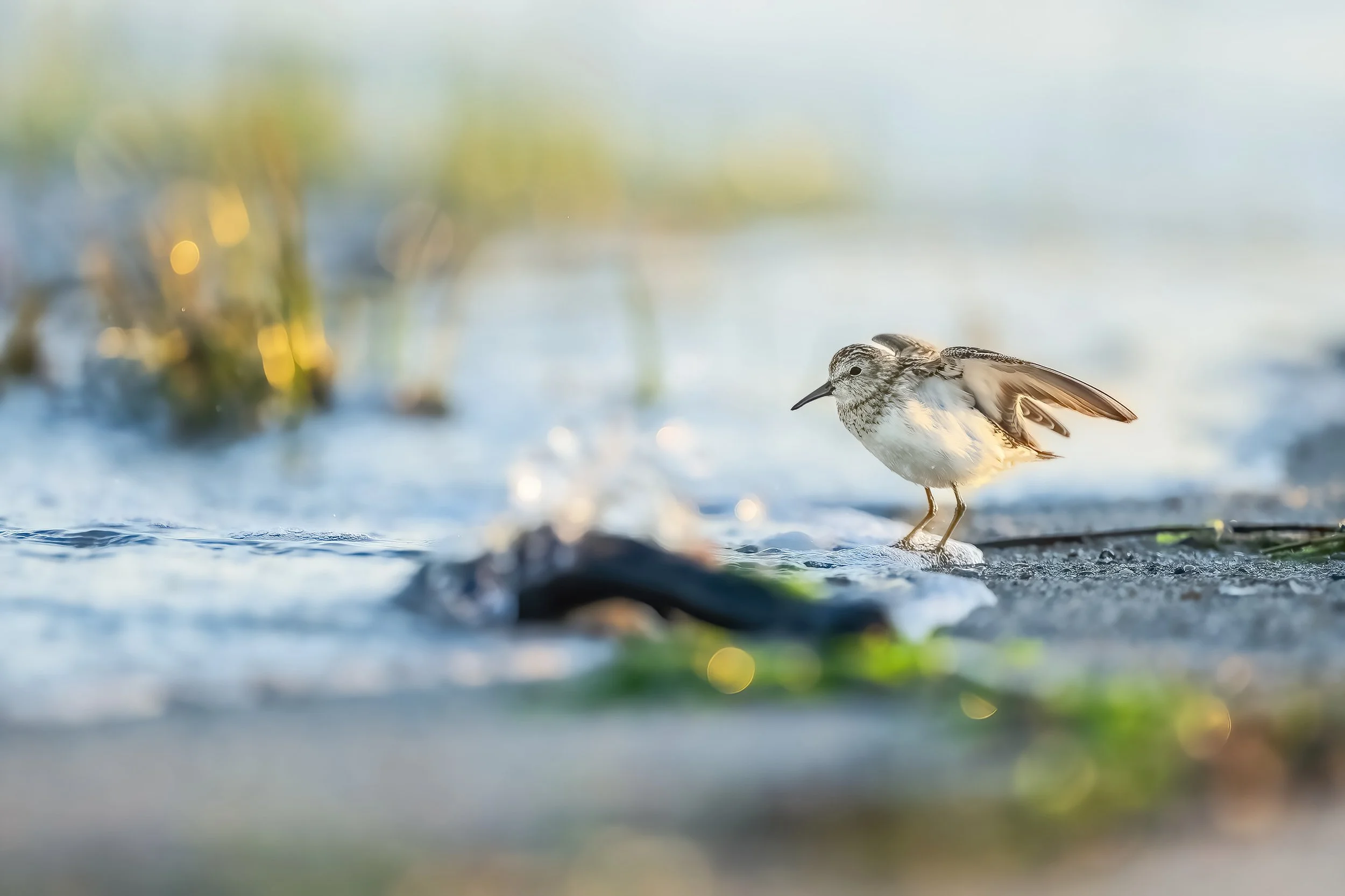
As I began my walk back home I spotted a mixed flock of Willets, Dunlin and Least Sandpipers foraging along the wrack line, advancing in my direction. Sensing a good photo opportunity, I again crouched low and remained still, letting the birds come to me. Sure enough, the pair of Least Sandpipers inched closer and began probing the mud and debris just a few feet away, and I was grateful to have my 70–200mm f/2.8 lens ready as they were feeding. Least Sandpipers tend to prefer muddier, vegetated edges over open sandy beaches, so this wrack-strewn strip was prime habitat for them. They inserted their fine bills into the wet clumps of seaweed and decaying marsh grass, picking out tiny crustaceans and insects hidden within. The low angle of the early sun created a beautiful bokeh in the background and foreground – sparkling circles of blue, green, and gold light dancing behind the sharp focus of the little sandpipers. It was a photographer’s delight, capturing the birds in their element with the vibrant bokeh!
Terns on the Hunt
Just as the sandpipers moved on, the last actors of the morning appeared overhead. Forster’s Terns, slim silver-white birds with black eye patches, were now patrolling along the shoreline shallows. These agile terns are quick and efficient hunters, and I watched as they flew about 20–30 feet above the water, scanning intently for movement below. Upon spotting a fish near the surface, a tern would pause to hover briefly, then plunge-dive straight down with a splash, often emerging with a small silvery fish in its bill. Forster’s Terns primarily feed on small fish (1–4 inches long) caught by diving from the air. In fact, they sometimes wait to hunt until an incoming tide has covered mudflats with a few inches of water, making minnows more accessible. Now, with the tide high, the terns were taking full advantage.
In the span of a couple of hours, I had observed a rich pageant of birdlife at dawn: from solitary plovers on the dark beach to the mass arrival of waders at sunrise. Each species followed its own rhythm and strategy to greet the new day. My journal was filled with notes and my memory card filled with images – tangible reminders of why dawn is such a magical time for birding.
Sources: Bird species information and behavioral details from Audubon Society, Cornell Lab of Ornithology, and other nature resources. Specific references include All About Birds species accounts (Cornell Lab) for feeding behaviors, Audubon Field Guide and Magazine articles for habitat and adaptations, and regional Audubon/wildlife organizations for marsh bird activity patterns. These sources provided insight into the observed behaviors and the ecological context of the dawn bird activity. All observations were made at Hilton Head Island, South Carolina, in a coastal beach and marsh habitat.
What to wear birding? Read blog post a Practical Guide to What to Wear Birding in the Lowcountry.
If you’d like to explore these habitats with a local guide, you can learn more about my guided birding and bird photography outings click here.
Hilton Head Island and the surrounding Lowcountry offer some of the best coastal birding on the Atlantic Flyway, and I’m always happy to help visitors and local residents discover the birds and habitats that make this region so special.
You can learn more about Hilton Head’s birds, habitats, and photography in my book Flight Through the Seasons, available on Amazon.
Disclosure: This post contains Amazon affiliate links. As an Amazon Associate, I earn from qualifying purchases.