
A Guide to Mindful Birding in the Lowcountry: An Attentive Practice on Hilton Head Island
(re)Defining Mindfulness
Mindfulness is a word that shows up everywhere now. It is often framed as something new—something to learn or add into a routine.
What I’m describing here is something more specific. It is a practice of attentive, field-based observation—one that has existed long before the term mindfulness became popular. Its roots can be traced to traditions like Zen Buddhism, where attention, stillness, and direct observation are central. In that context, the goal is not to do more, but to notice what is already happening without trying to control it.
These ideas also carry through in Japanese aesthetic traditions such as Wabi-sabi, which recognize impermanence and change (something I explore more directly in my post on Wabi-sabi photography in the Lowcountry), and in the work of naturalists like Henry David Thoreau, who built understanding by returning to the same places over time. Birding, at its core, follows this same pattern.
Here on Hilton Head Island and across the Lowcountry, we are in a position where we don’t have to go far to experience it. The landscape supports it. Tidal marshes shift hour by hour, exposing and covering feeding grounds. Beaches change with wind and tide, altering where birds gather and move. Maritime forests create edges where sound often reveals birds before they are seen.
If you’ve spent time watching first light move across the mudflats, or following how birds respond as the tide comes in, you’ve already experienced this kind of attention. These are not isolated moments—they are part of a pattern that becomes clearer the more time you spend observing. Mindful birding, in this sense, is really attentive birding—recognizing that this way of observing is already built into the practice and choosing to lean into it more intentionally
What Attentive Birding Looks Like in Practice
In practical terms, it comes down to a few shifts:
Staying in one place longer than you normally would
Listening before scanning
Not moving on too quickly
Letting behavior unfold without trying to control it
This is the same approach that shows up across repeated field observations—watching how shorebirds adjust to tidal movement, or how light influences behavior along the marsh edge.
Over time, patterns emerge. You begin to see how birds use the same areas repeatedly, how timing matters, and how small changes in conditions affect what you observe.
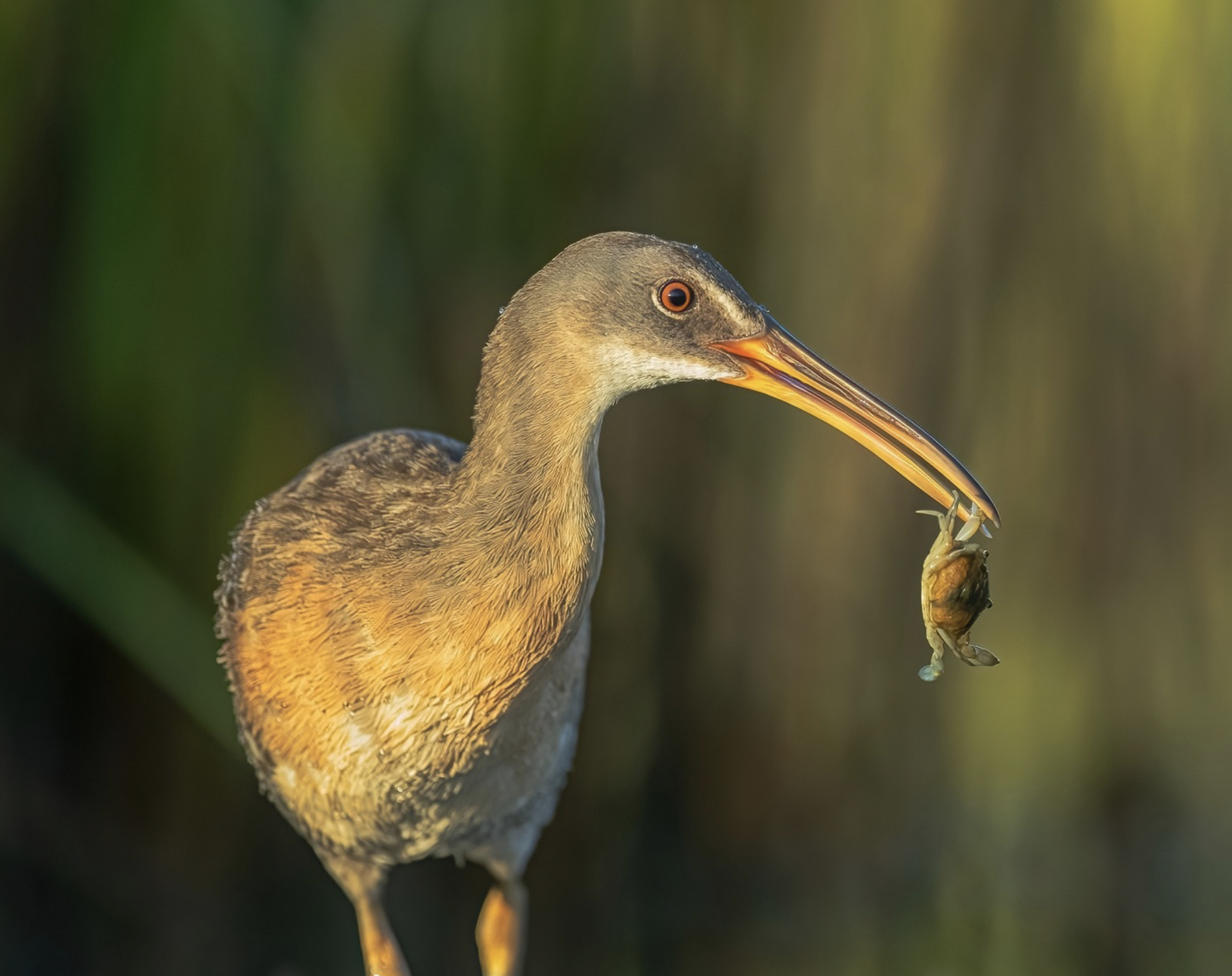
Clapper Rail
What the Research Shows
Organizations like Harvard Health Publishing and the American Psychological Association have documented the benefits of time in nature—reduced stress, improved mood, and improved cognitive function. As one summary notes:
“Time spent in nature has been found to lower stress, improve mood, and enhance cognitive functioning.” - Research from Harvard Health
Research highlighted by the National Audubon Society suggests that seeing and hearing birds can have a measurable positive effect on mental well-being. The Greater Good Science Center has also explored how moments of attention in nature support emotional regulation and focus..
This aligns closely with attentive birding. The combination of stillness, observation, and repetition engages the same systems these studies describe.
The Sit Spot Practice
A “sit spot” is a simple but powerful approach: return to the same place, regularly, and observe without an agenda.
This is where attentive birding becomes a practice.
You are not moving through the landscape—you are letting the landscape come to you. Over time, you begin to recognize patterns: where birds land, how they move with the tide, what changes from day to day. It is less about seeing something new and more about seeing more clearly.
One practical detail that makes a difference: comfort matters. If you’re uncomfortable, you won’t stay long enough to observe anything meaningful. A simple setup can make your sit spot far more effective: A waterproof mat is often enough for marsh edges, beaches or the forest floor. If you want to stay longer, a lightweight chair or stool makes a noticeable difference. And don’t forget the bug spray.
Outdoor folding chair (portable, foldable, lightweight and waterproof)
Capturing Your Observations
One piece that is often overlooked: recording your observations.. Over time, attentive birding becomes less about individual sightings and more about recognizing patterns—how birds move with the tide, where they return, what changes from one day to the next. Here are two suggestions for recording what your senses experience:
Bring along a notebook to record your observations. Note the date, weather, and any birds or wildlife you observe. Reflect on how the experience made you feel. What caught your attention? Did anything surprise you? Journaling helps you see patterns over time and strengthens your mindfulness practice by encouraging reflection and gratitude.A small, weatherproof notebook makes writing that possible out in the elements. I use Rite in the Rain waterproof notebooks and pens because they hold up in Lowcountry conditions—humidity, wet ground, and unpredictable weather. A compact notebook is enough to start.
While a notebook works well, I’ve found that voice recording can be just as effective in the field. A simple voice memo allows you to capture observations in real time without breaking focus—especially when conditions are changing quickly. Later, those notes can be reviewed and translated into patterns or written observations. For example, Apple Notes and dictation allow you to convert spoken words into text instantly, or record audio with live transcription thereby capturing your observations in real-time. I recommend viewing this YouTube video on the basics on how to use Apple Notes.
A Simple Sit Spot Template
Over time, I’ve found it helpful to follow a simple structure when observing. Not to formalize the experience—but to make it easier to recognize patterns. You don’t need to write much. A few notes—location, conditions, behavior, and one moment—are often enough.
1. Basic Information (anchor the observation)
Date:
Season:
Time (start–end):
Location:
Tide (if known): (incoming / outgoing / high / low)
Weather: (clear, overcast, wind, temperature estimate)
2. First Impressions (before you move or scan)
(Pause here—this is important to your method)
What do you hear, see, smell, taste, touch first?
What do you notice immediately (movement, light, sound)?
General activity level: (quiet / moderate / active)
3. Species & Activity
(Keep this simple—this is not a checklist exercise)
Species observed:
Approximate numbers:
What are they doing?
feeding
resting
moving with tide
interacting
4. Behavior Notes (this is where insight happens)
Any repeated behavior?
Movement patterns (direction, timing):
Interaction with environment (mudflat, water edge, vegetation):
👉 Prompt:
What is changing while I sit here?
5. Environmental Changes
Tide movement:
Light changes:
Wind shifts:
Changes in weather:
Human activity or disturbances (if relevant):
6. One Moment to Capture
Describe one specific moment and how it made you feel
Three Sit-Spot Moments from the Lowcountry
Some of the moments that have stayed with me most have come from simply staying in one place and waiting. They are easy to miss if you are moving—brief, often quiet, and dependent on timing. But over time, these are the observations that begin to build a deeper understanding of how birds use a place. Here are three that stand out.
1. Pinckney Island — Red-shouldered Hawk
While walking the main trail at Pinckney Island National Wildlife Refuge toward the ponds, I stopped along the side of the trail to observe a flock of White Ibis in the marsh just before the turnoff to Ibis Pond. It was a sunny but chilly and windy afternoon in February.
I heard the sound of wings behind me—a distinct swoosh—and turned to see a Red-shouldered Hawk flying in. It likely had spotted potential prey in the marsh. The hawk hovered over the tall marsh grass for about 30 seconds, wings extended and beating, yellow talons out. It did not catch anything and moved on. The moment was brief.
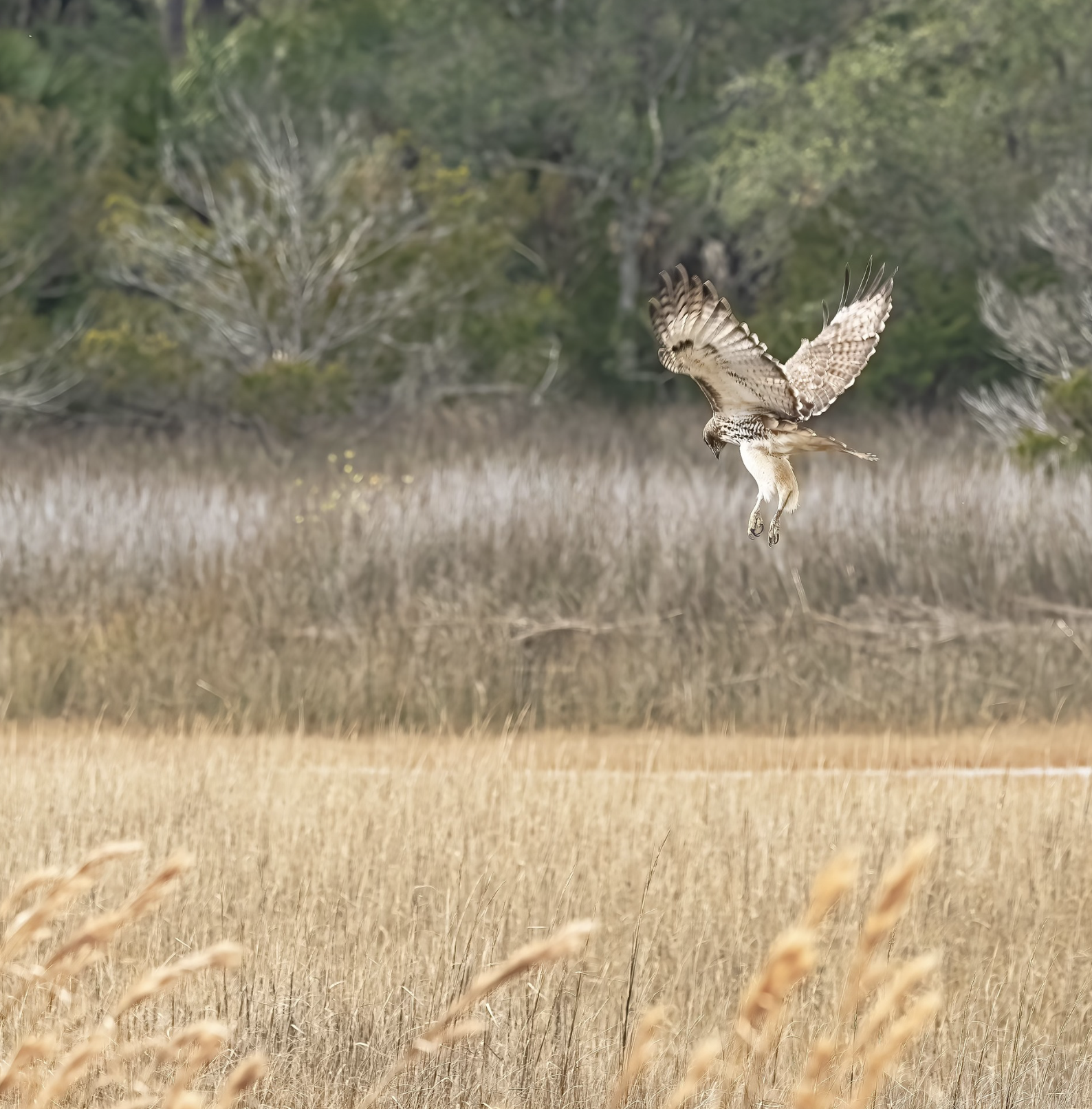
Red-shouldered Hawk, Pinckney Island NWR
2. Fish Haul Beach - Juvenile Wood Storks
At Fish Haul Beach Park in May, I was positioned along the edge of the marsh, waiting for sunrise. I was expecting herons and egrets to appear and begin feeding at the lagoon, as they typically do after the sun is up. Instead, a flock of about a dozen juvenile Wood Stork approached. They came in close—just a few feet away—and did not react to my presence. They moved through the marsh together in a playful manner, jumping, shifting positions, and vocalizing. They stayed for about a minute, then moved on.
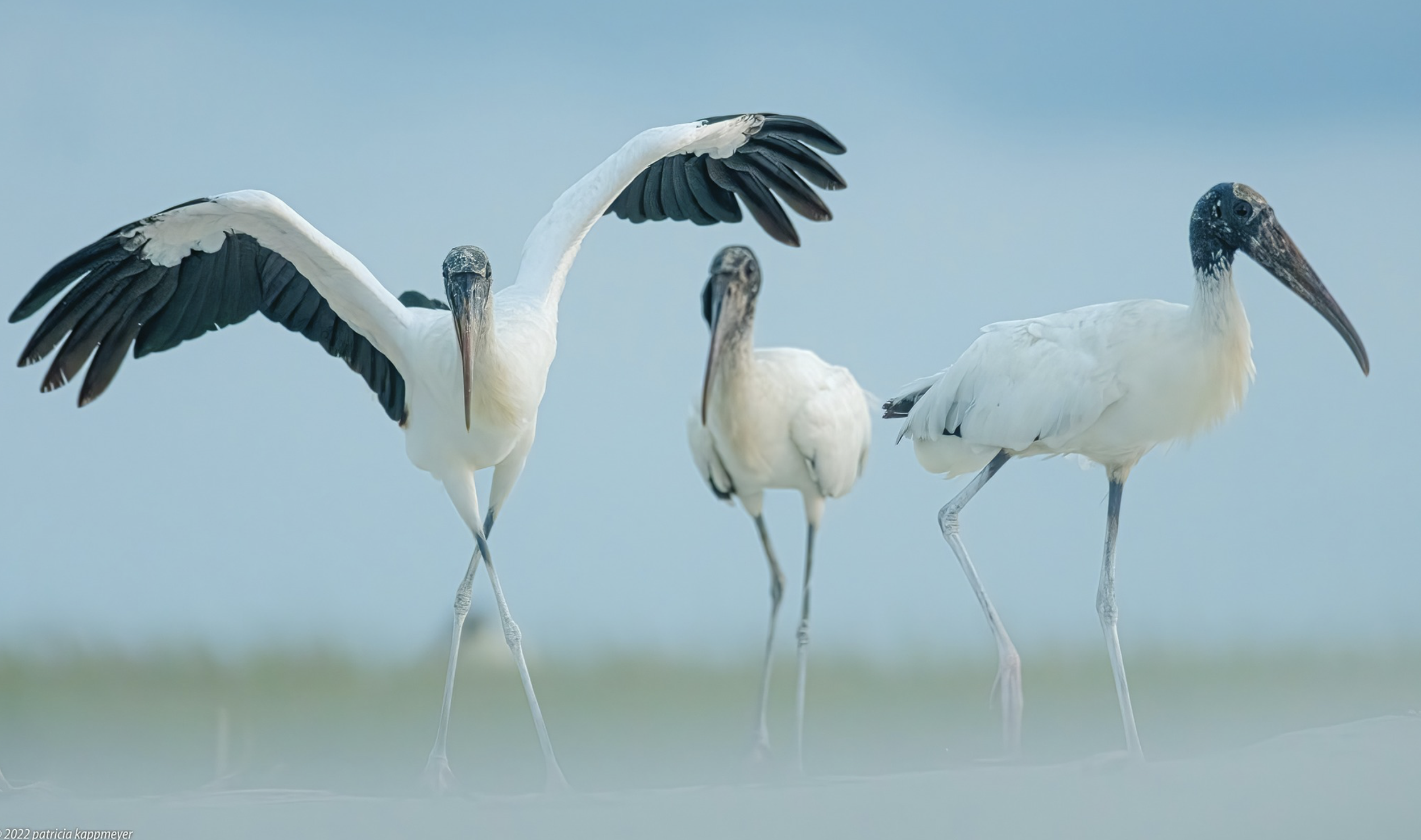
Juvenile Wood Storks, Hilton Head Island
3. Hickory Forest Beach - Least Sandpiper
In November, when overwintering shorebirds are present along our beaches, I spent time watching activity out on the mudflats. If you sit and watch long enough, behavior begins to stand out. One Least Sandpiper was bathing and preening as the tide was going out. It moved with the edge of the water, wings spread, catching the small waves as they rolled out. After each pass, it flew back to its original spot and repeated the same sequence. It was surfing the tide! This continued several times.
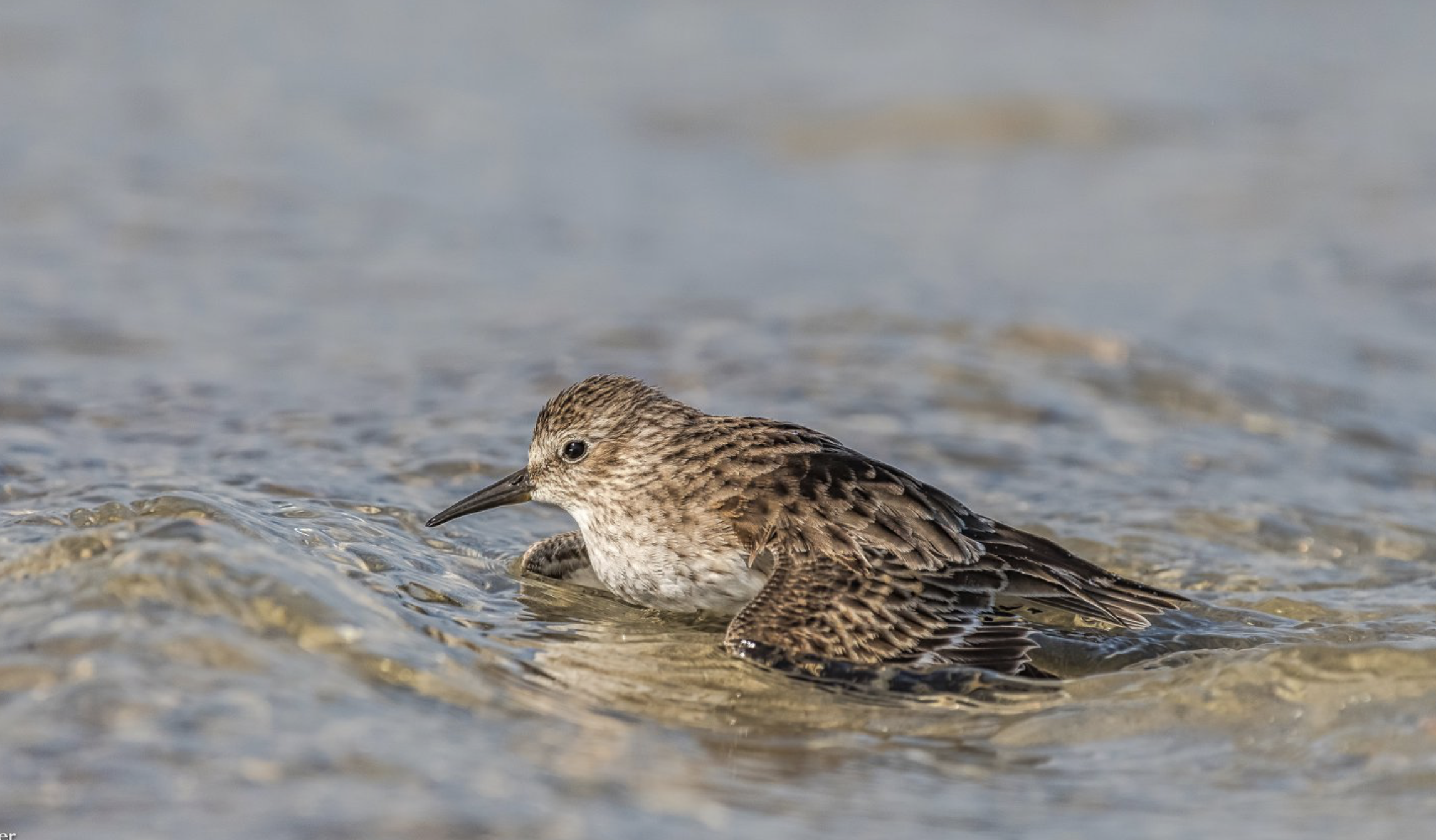
Least Sandpiper, Hilton Head Island
How to Start (Keep It Simple)
You don’t need much to begin.
Choose Your Spot: Find a location that feels inviting—whether it’s a quiet corner of your yard, local park, the beach or a spot along a trail.
Be Fully Present: Dedicate at least 15–30 minutes to being still and observant as it take about that amount of time for birds to become accustomed to your presence. Sitting low and still works best. Signs that signal birds have adjusted and returned to normal behavior include: preening and perching, feeding, relaxed spacing - not clustered together, and not calling out alert signals to other birds.
👉 The goal is not to get closer to birds
👉 The goal is to stay long enough for birds to come back to you.Commit to Regular Visits: Make it a weekly ritual to revisit your spot and deepen your connection to its rhythms.
If you’re new to birding, I recommend starting with the REI Bird-watching for Beginners guide, available for free online. It covers the fundamentals clearly, including responsible birding practices—an area where I’ve contributed perspective based on my field experience here on Hilton Head Island.
Resources for Going Deeper
If you want to go further, there is a body of writing that reflects this same shift—from simply identifying birds to understanding how they live, behave, and interact with their environment.
These books are grounded in the authors’ personal experiences in the field and offer practical insight into observation, behavior, and attention:
The Art of Mindful Birdwatching — a reflection on slowing down and observing more intentionally
Slow Birding — an approach centered on time, place, and repeated observation
What It's Like to Be a Bird — insight into bird behavior and how birds experience their world
Taken together, they reinforce the same idea: the more time you spend observing, the more there is to see.
A Practice for Mental Clarity and Joy
Consider gifting yourself this practice. A sit spot is more than an observation—it’s a way to connect with nature, yourself, and the present moment. It’s a practice of mindfulness that calms your mind, enhances your focus, and cultivates joy. This year, let the birds and the rhythms of nature inspire you. Find your sit spot, settle in, and embrace the small yet profound moments that make life richer and more meaningful.
——————————————-
Not sure what to where birding the marshes and mudflats, read blog post: a Practical Guide to What to Wear Biding in the Lowcountry.
If you’d like to explore these habitats with a local guide, you can learn more about my guided birding and bird photography outings click here.
Hilton Head Island and the surrounding Lowcountry offer some of the best coastal birding on the Atlantic Flyway, and I’m always happy to help visitors and local residents discover the birds and habitats that make this region so special.
You can learn more about Hilton Head’s birds, habitats, and photography in my book Flight Through the Seasons, available on Amazon.
Disclosure: This post contains Amazon affiliate links. As an Amazon Associate, I earn from qualifying purchases.