
Part of a series exploring Japanese aesthetics in Lowcountry nature and bird photography, beginning with wabi-sabi and the role of impermanence in the field.
About Wabi-sabi
Wabi-sabi is a Japanese philosophy and aesthetic that finds beauty in imperfection, impermanence, and simplicity. Rooted in Zen Buddhism, it encourages embracing natural cycles of growth and decay, valuing modest, weathered, or rustic objects over perfection. It focuses on finding peace in transience, such as in cracked pottery or autumn leaves. - Carnegie Library of Pittsburgh
Earlier this winter I participated in a class at the SALT Institute (Maine College of Art and Design) that explored the Photographic Poetry of the Ordinary, including the concept of wabi-sabi. Wabi-sabi honors irregularity and impermanence — the beauty found in things shaped by time rather than perfected by design.
I left that class thinking about Fish Haul Beach and similar places to photograph birds along the South Carolina coast.
The Lowcountry is not a place of dramatic peaks. It is defined by tide cycles, shifting sand, softened horizons, and subtle tonal transitions. Twice a day, the shoreline rearranges itself. Wrack lines form and dissolve. Shorebirds gather, feed, and lift away.
Nothing remains exactly as it was.
With that in mind, I returned to Fish Haul with a different intention. Instead of pursuing sharp detail and peak action, I wanted to photograph the shoreline as it feels — transitional, weathered, and quietly in motion.
Beginning with the Edge of the Tide
The first image in this series is not a bird.
It represents fragments left behind — oyster shells, small stones, marsh debris caught in a thinly curved wrack line across wet sand. These elements are usually peripheral. We step over them on the way to the subject.
But they are the physical record of tide and time.
Broken shells, scattered textures, uneven lines — none of it arranged for beauty, yet shaped by repetition and erosion. Using a shallow depth of field and lifted highlights allowed edges to soften and details to recede. The images become less about documentation and more about atmosphere.
Standing there, I began to notice how much of Fish Haul’s character lies in what remains after the water pulls back.
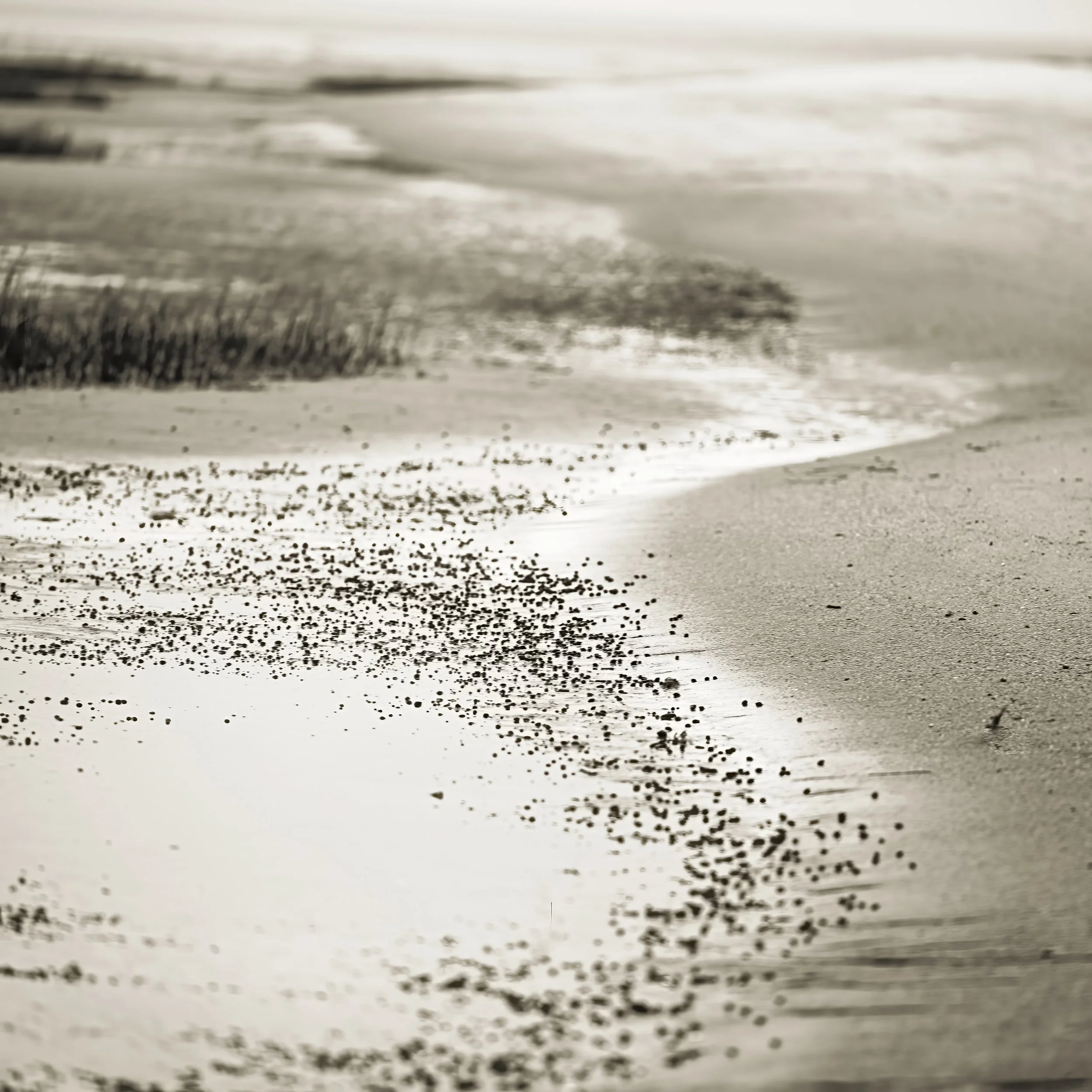
Wrack Line
Rethinking the “Perfect” Bird Photograph
Bird photography often rewards precision.
We look for razor sharpness.
Clean feather detail.
Strong eye contact.
Peak wing position.
High contrast and crisp separation from the background.
Those goals are valid — and much of my work depends on them.
But wabi-sabi asks something different.
It suggests that impermanence and irregularity are not problems to correct. They are truths to acknowledge.
Shorebirds Within Space
Further down the beach, shorebirds moved along the receding tide.
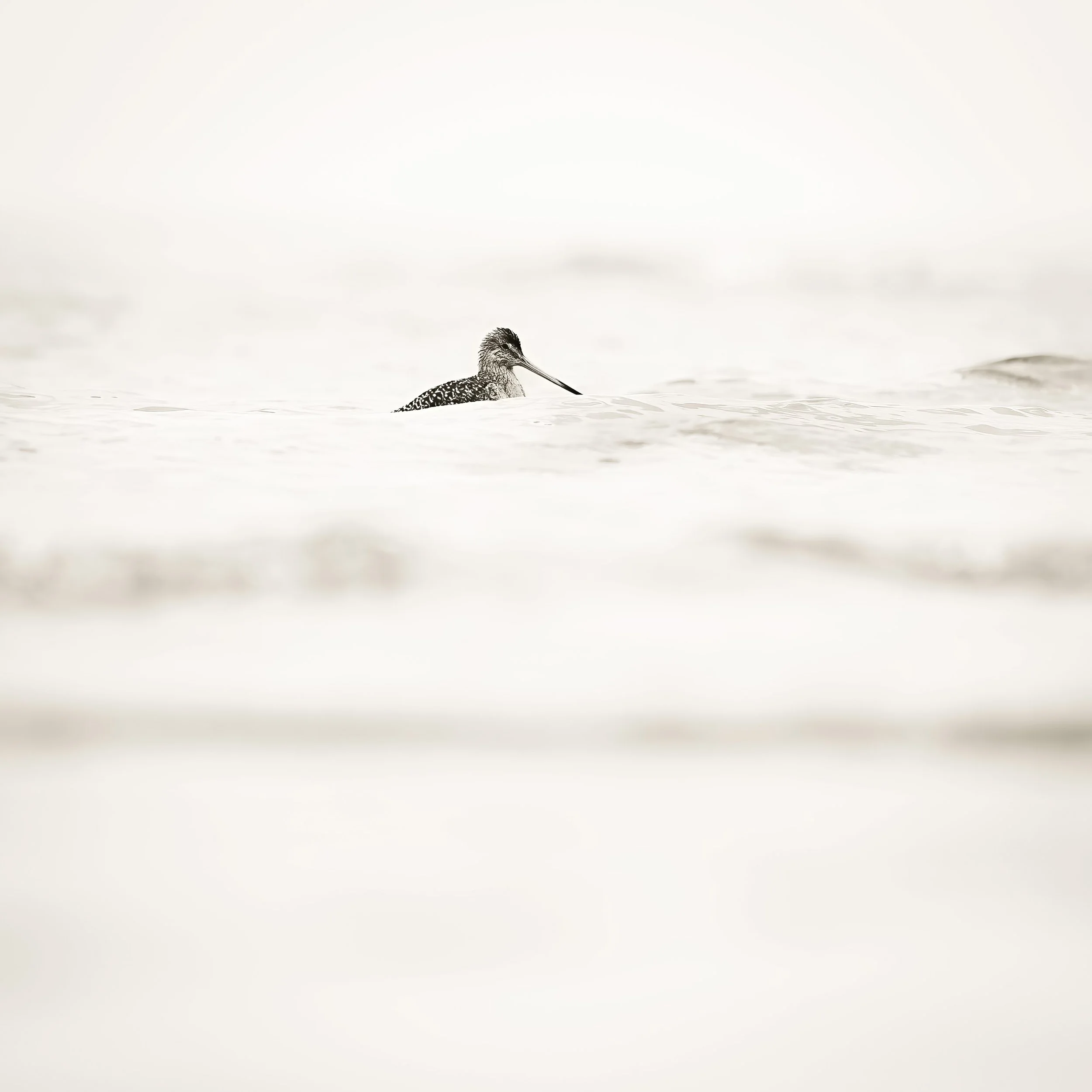
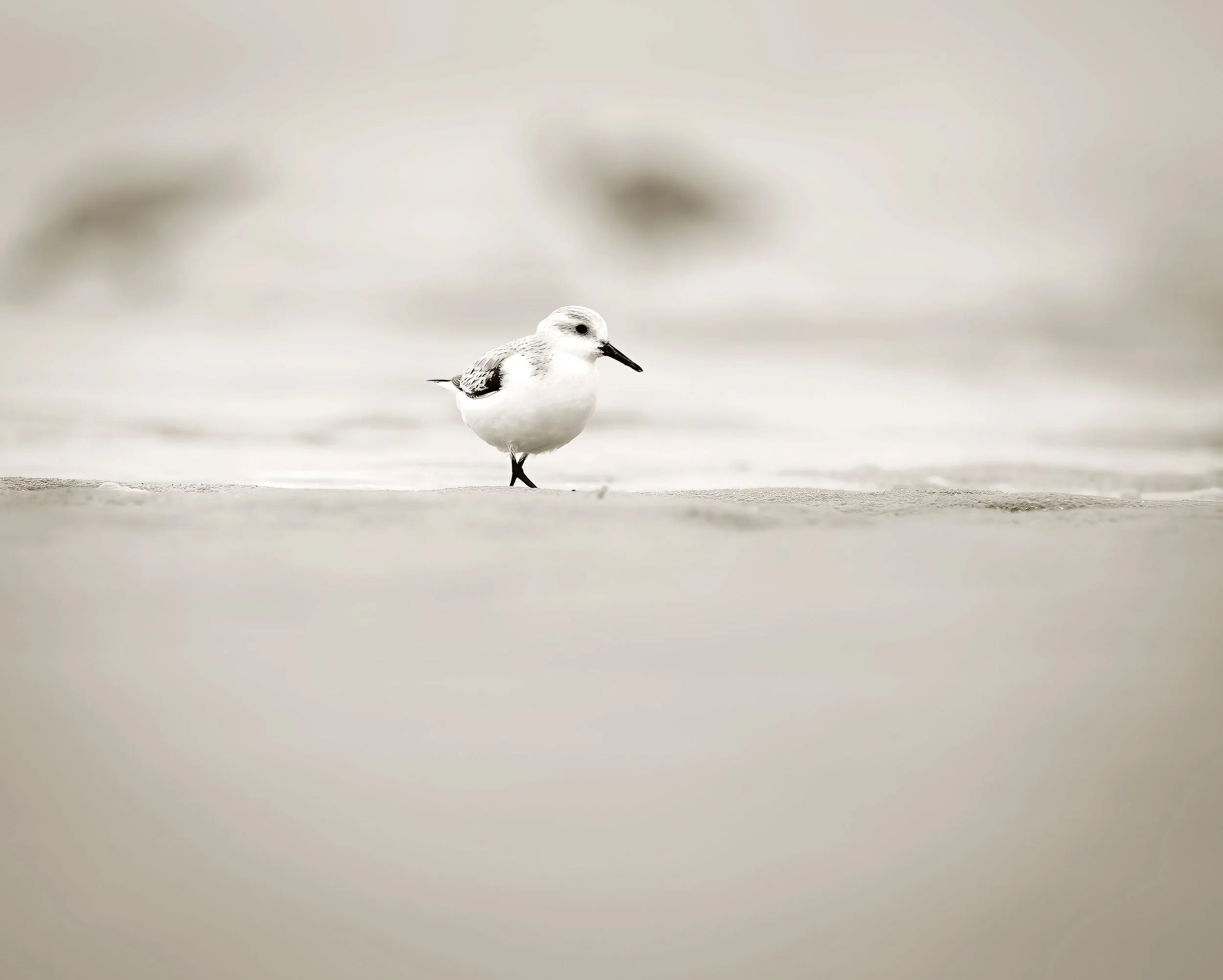
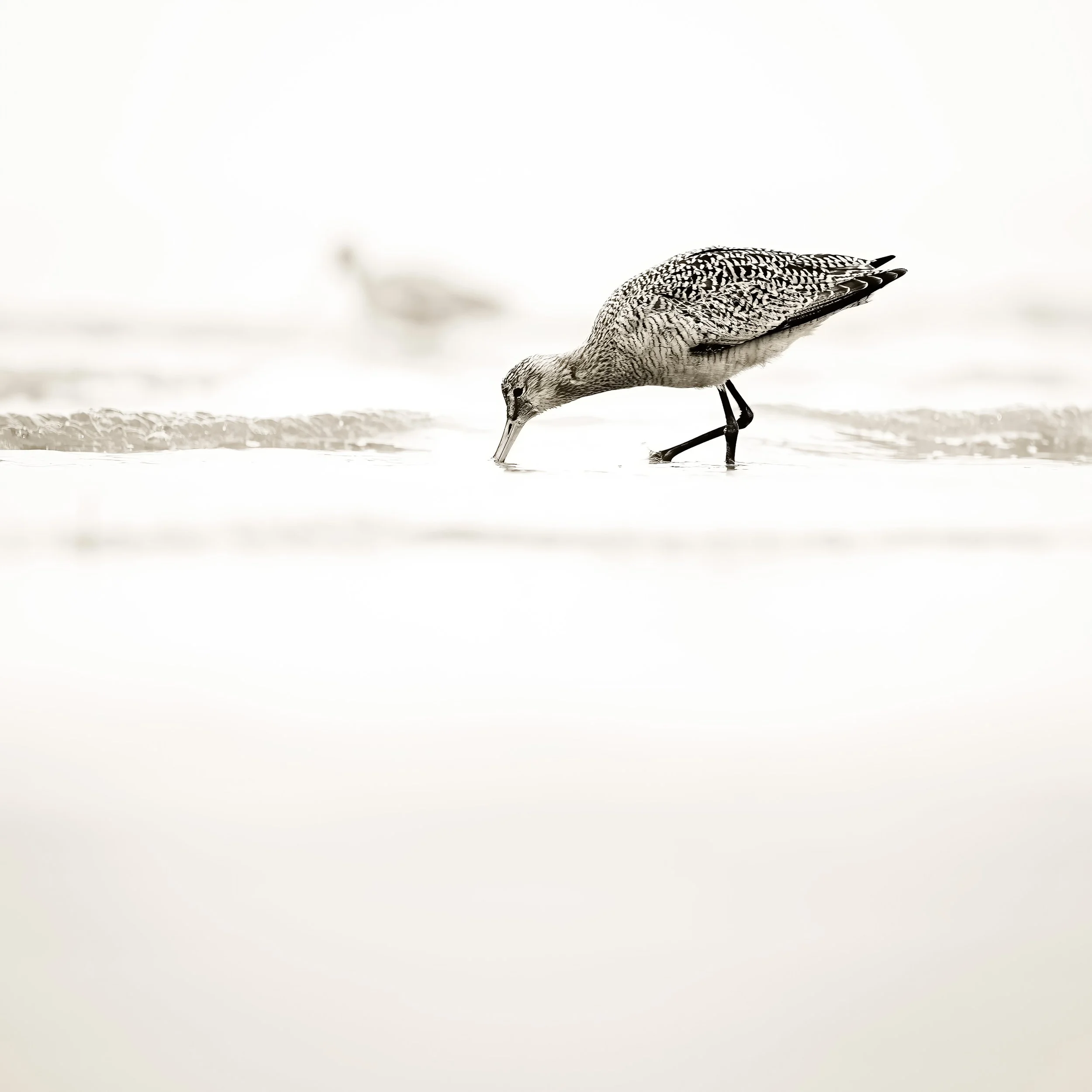
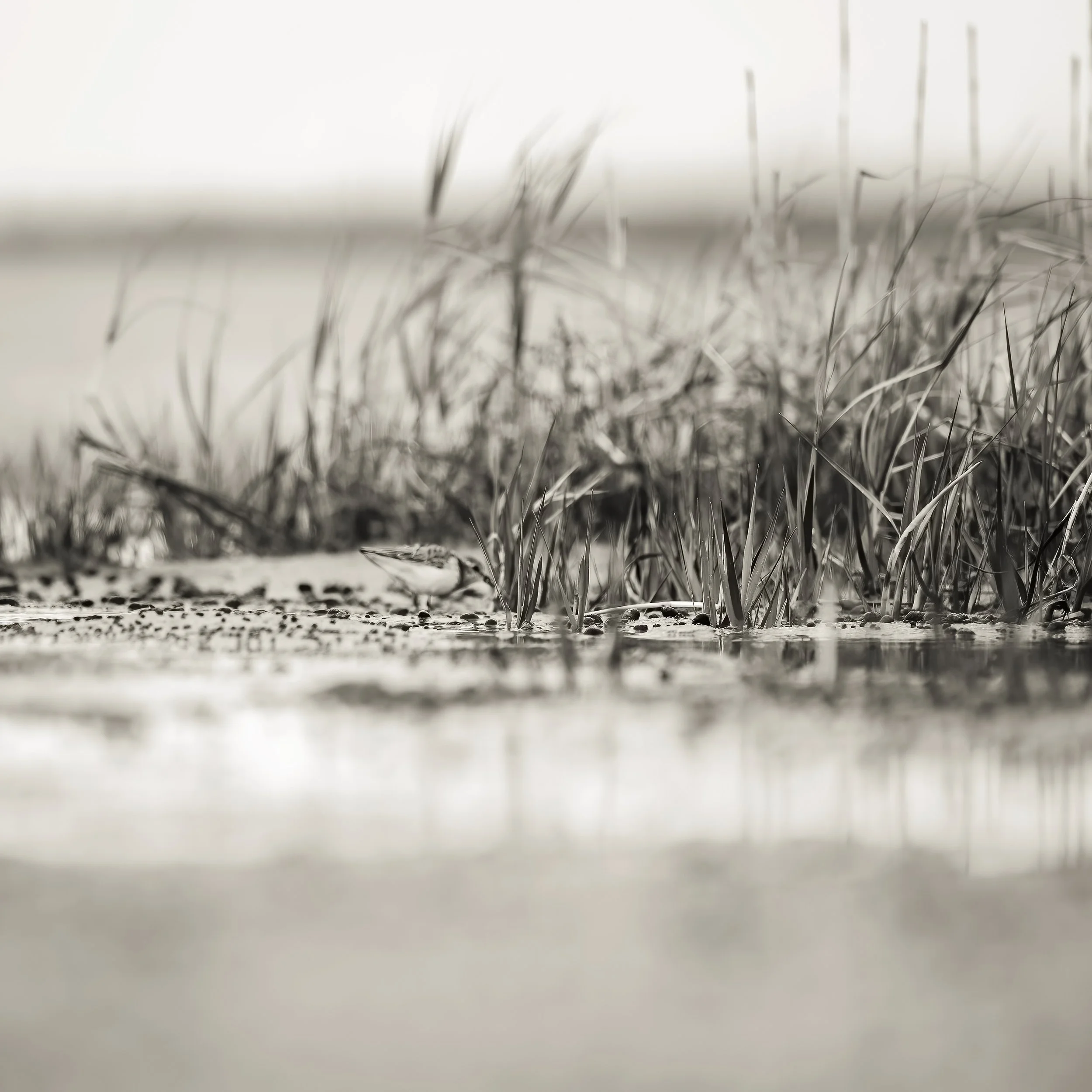
A Marbled Godwit stood half-submerged in pale surf, its reflection broken by ripples. Another probed methodically along the edge of a thinning wave. A Sanderling balanced lightly on one leg, nearly disappearing into sand the same color as its winter plumage. A Least Sandpiper blended into marsh grass, small and easily overlooked.
Rather than isolating these birds, I allowed them to remain small within the frame. The horizon softens. Highlights lift. Background detail recedes.
On overcast days at Fish Haul, sky and water merge into a quiet band of tone. Shorebirds feel temporary against that expanse. Leaving space around them reflects how they actually exist in the landscape — present, but never dominant.
The restraint is intentional.
Short-Billed Dowitchers in Motion
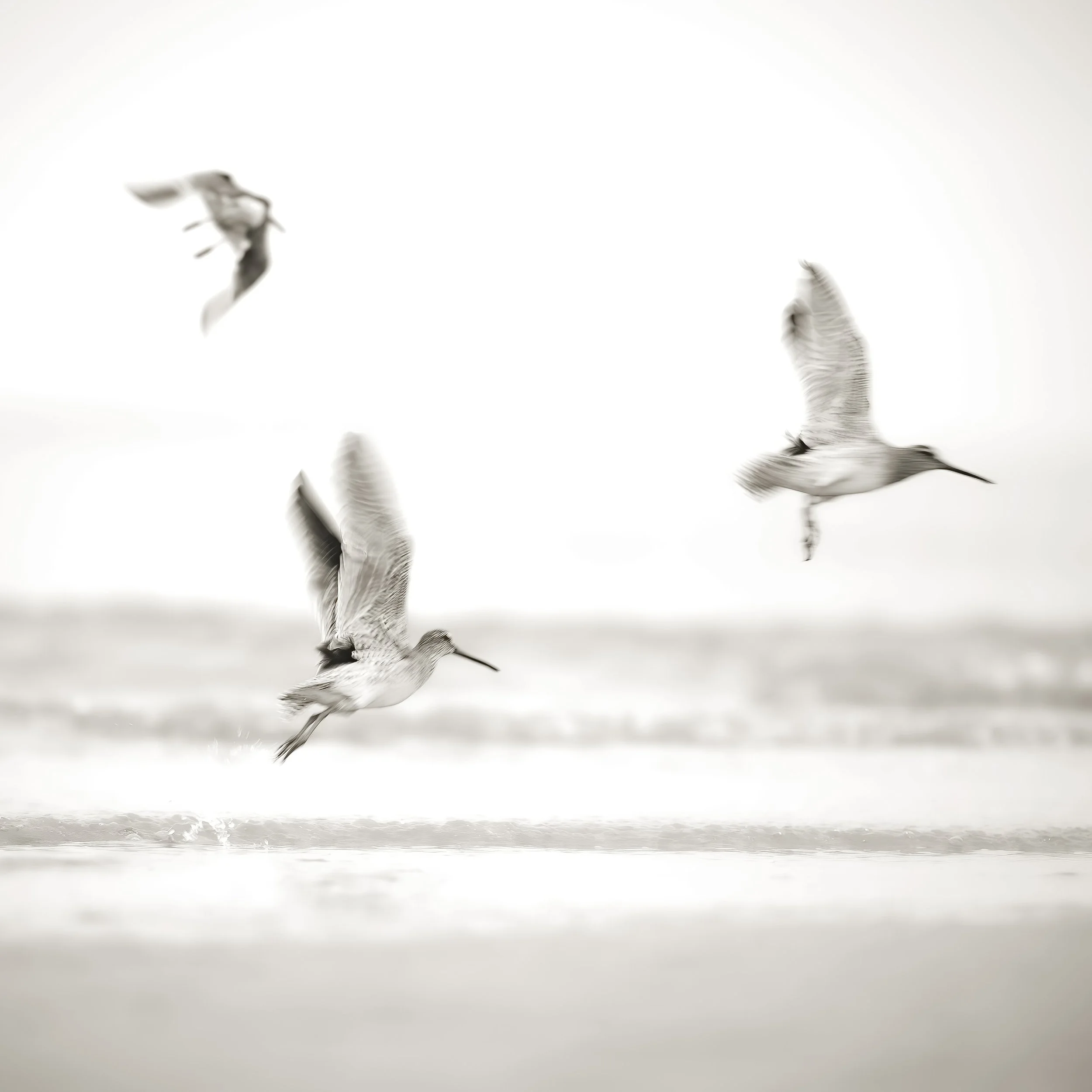
When a small group of Short-billed Dowitchers lifted from the sand, I resisted the impulse to freeze them at peak wing position. A trace of motion remains in the blur of their wings.
Flight along the shoreline is quick and reactive. The blur speaks to transition — the moment between standing and gone.
Not every movement needs to be resolved.
Short-billed Dowitchers
The Great Blue Heron: Solitude and Scale
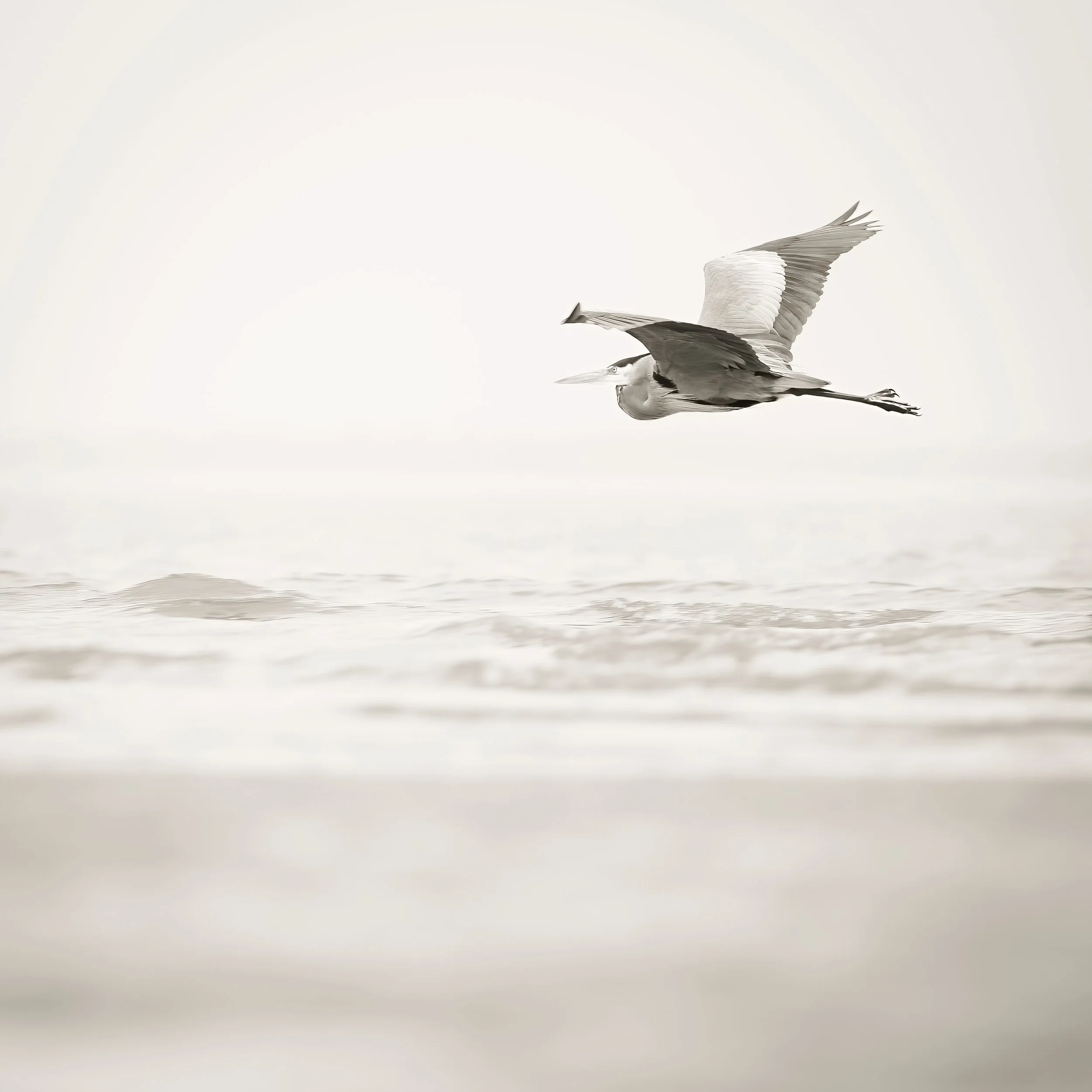
The presence of a Great Blue Heron shifts the scale but not the tone.
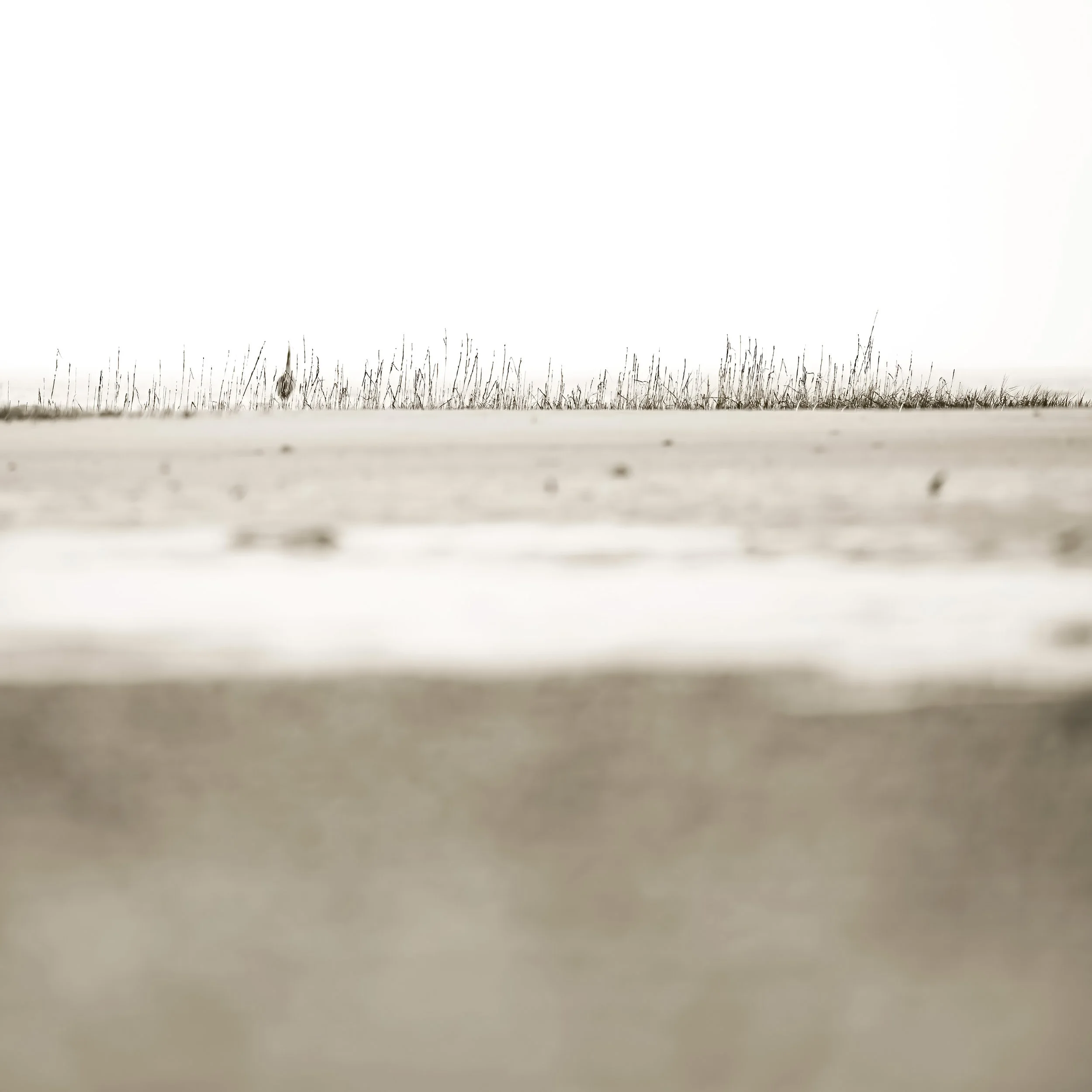
In one frame, the heron crosses a pale sky, suspended against open space. In another, it passes low along distant marsh grass, the horizon subdued and minimal.
There is no dramatic sunrise or saturated silhouette. The bird is simply moving through.
That passing mirrors the rhythm of the shoreline itself.
Lowcountry Landscapes: Shaped by Repetition
Fish Haul Beach sits at the edge of Port Royal Sound where the water meets the Atlantic Ocean, where tidal flats stretch wide and far at low water. Under muted light, color drains away and tone becomes dominant. Spartina bends unevenly in the wind. Sand shifts. Shell fragments accumulate and disperse.
Photographing here through the lens of wabi-sabi does not require imposing an aesthetic. It requires attention.
Imperfection appears in:
uneven wrack lines
weathered shells
birds partially obscured by grass
motion that cannot be fully contained
horizons that dissolve rather than define
These are not flaws. They are evidence of change.
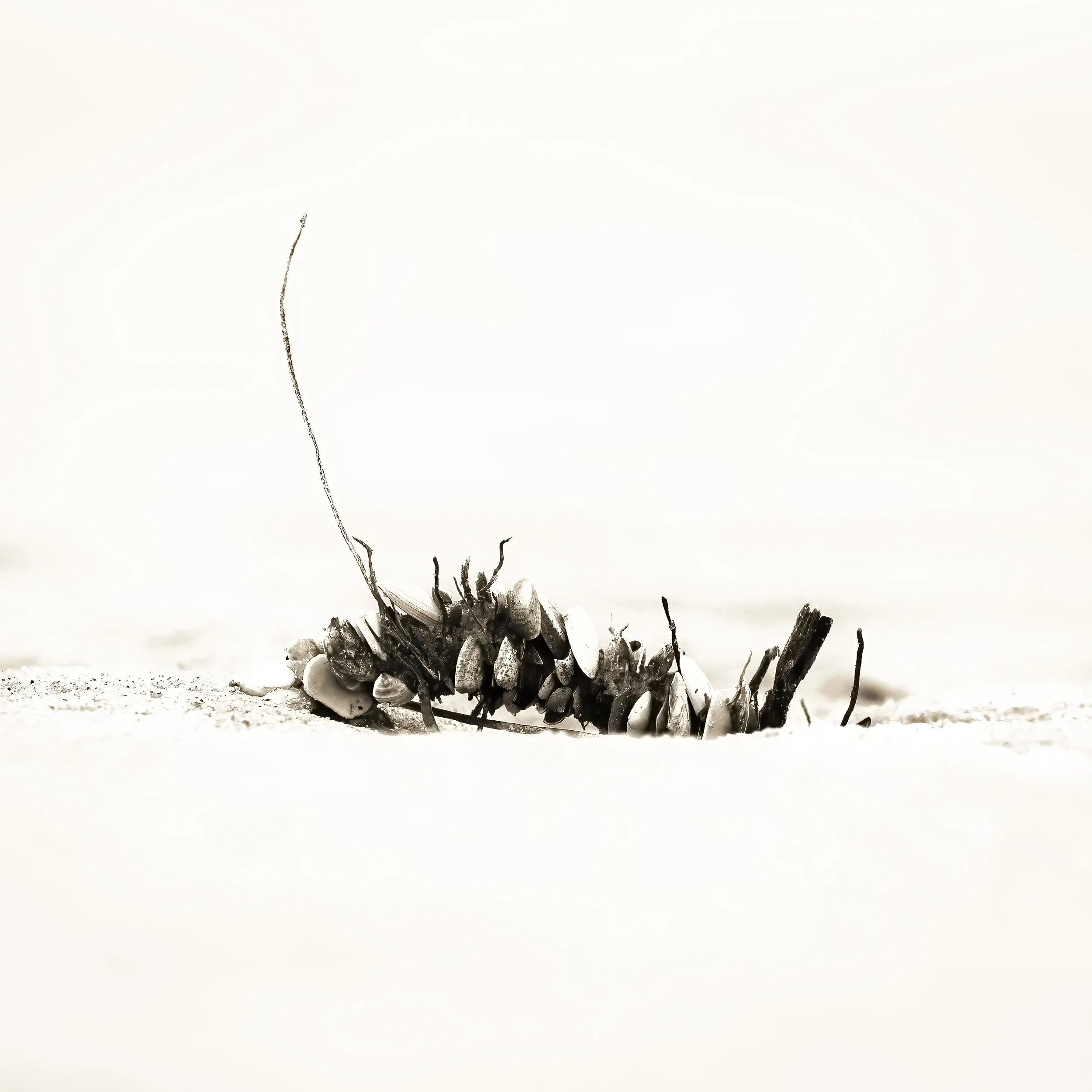
Shells
Letting the Frame Reflect the Place
This series asked me to simplify:
leave more negative space
soften contrast
accept incomplete edges
allow light to flatten rather than dramatize
Instead of separating bird from environment, I let each subject remain embedded in its setting.
Fish Haul does not announce itself. It reshapes itself.
Photographing Marbled Godwits, Sanderlings, Least Sandpipers, Short-billed Dowitchers, and a passing Great Blue Heron in this way felt less like constructing an image and more like observing a shoreline shaped continuously by tide and time.
Wabi-sabi does not alter the Lowcountry. It helps reveal what has always been there — irregular, shifting, and quietly complete in its impermanence.
Suggested reading: Wabi Sabi - The Art of Finding the Beauty of Imperfection: Discover Timeless Japanese Widsom to Cultivate Peace, Joy, and Balance in a Perfectly Imperfect Life
You can learn more about Hilton Head’s birds, habitats, and photography in my book Flight Through the Seasons, available on Amazon.
Disclosure: This post contains Amazon affiliate links. As an Amazon Associate, I earn from qualifying purchases.