
White Ibis at Ibis Pond: Breeding Season at Pinckney Island
White Ibis Gather at Ibis Pond During Breeding Season
I recently visited Ibis Pond at Pinckney Island National Wildlife Refuge during breeding season to photograph the White Ibis. True to its name, the pond was full of ibis gathered to court, build nests, and raise young within the protected edges of the rookery.
I have always been fascinated by wading birds and especially attuned to the complexity of colonial nesting behavior — the noise, territorial disputes, constant motion, and layered interactions between species sharing the same habitat. I wrote another post called The Underbelly of a Rookery, exploring that same tension between beauty and chaos within a nesting colony. This visit to Ibis Pond felt very much in that same vein, only this time centered around White Ibis gathered beneath the palms.
White Ibis
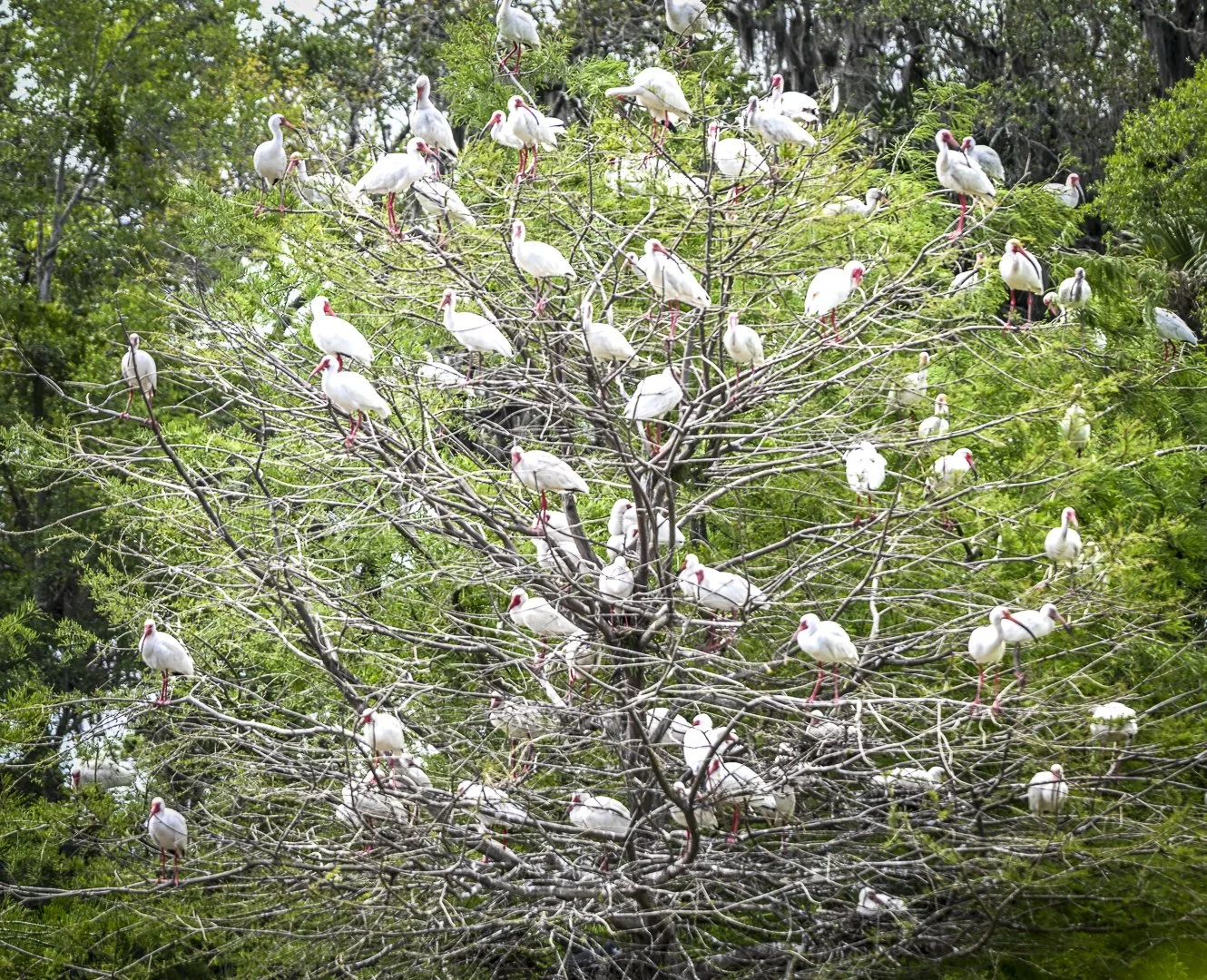
What struck me first was not just the number of birds, but where they had gathered. One scene in particular stayed with me — what I refer to as the “Ibis Tree.” A single rounded tree appeared almost entirely filled with White Ibis, their white bodies layered so densely among the branches that the tree itself seemed transformed into a living mass of birds. The rounded shape of the tree amplified the effect, giving it an almost sculptural appearance made entirely of white plumage, curved bills, and movement.
Many of the White Ibis clustered within the shelter of the palm hammock and understory rather than out in the open water. Beneath the cabbage palmettos, the birds perched quietly along curved trunks and balanced on drooping palm fronds, partially hidden in the shadows.
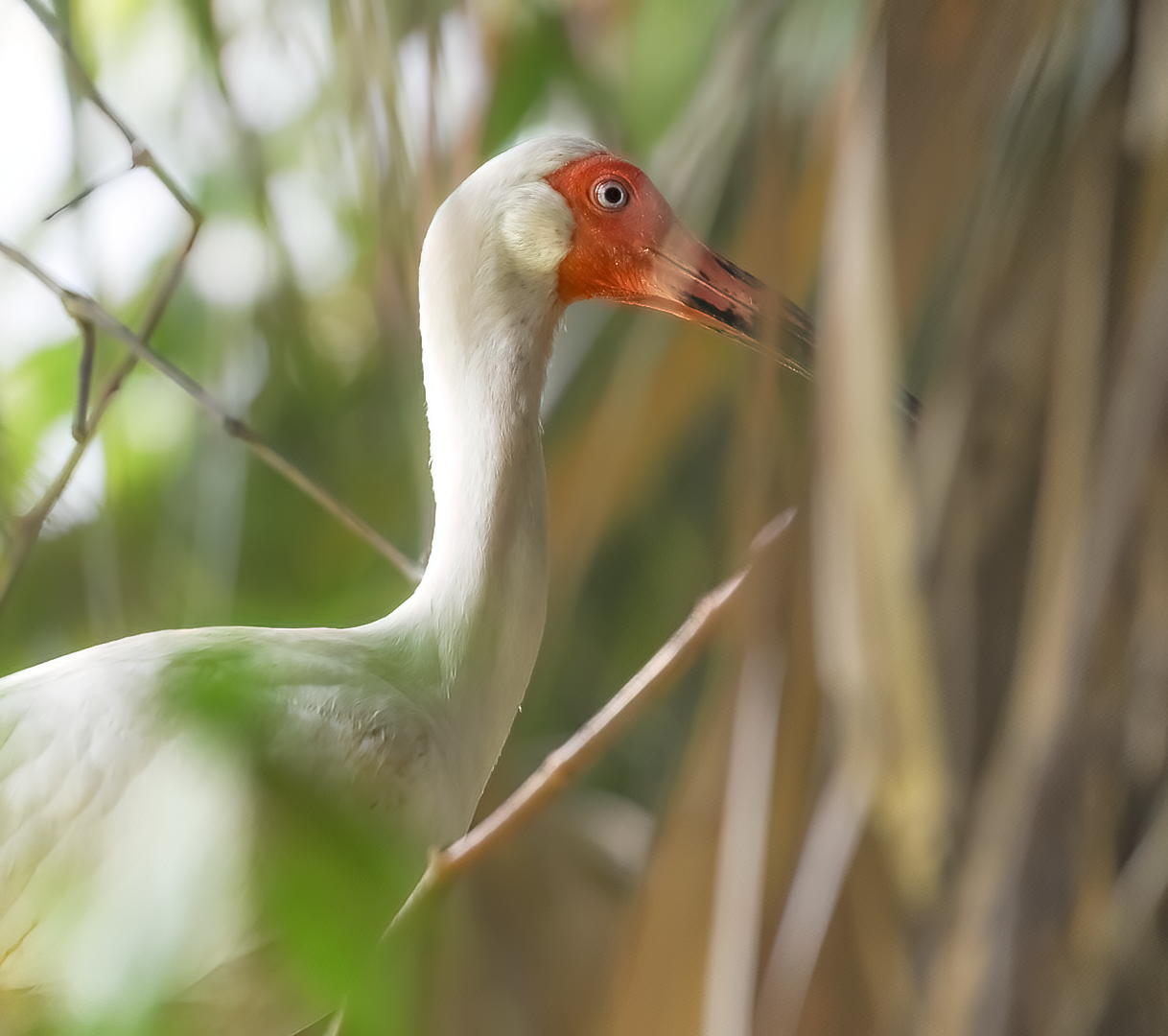
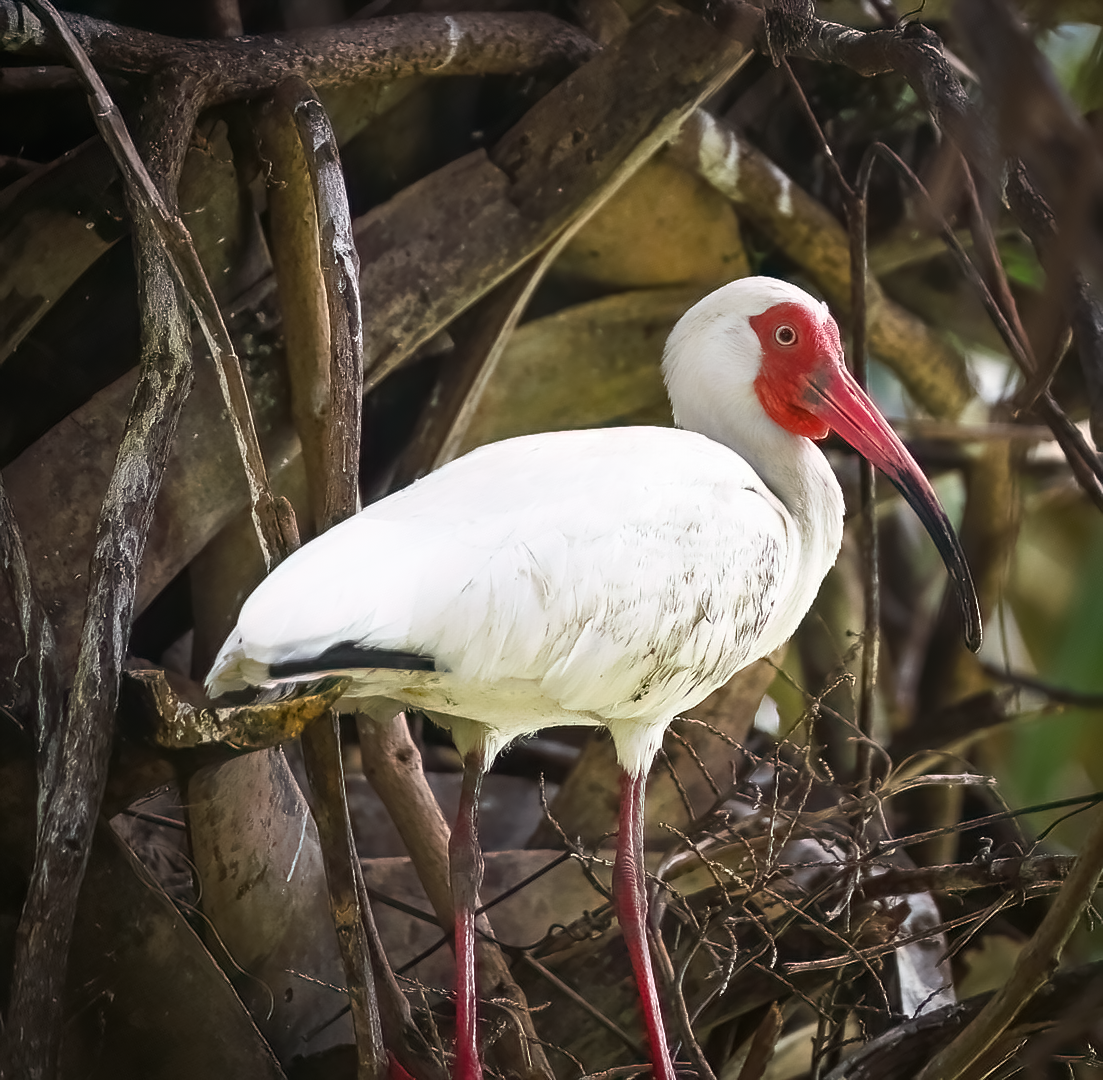
Their breeding colors seemed almost unreal. Their long curved bills ranged from bright red-orange to deep coral red, matched by vivid red legs that flashed in and out of the filtered light beneath the palms. Up close, the breeding colors extended beyond the bill and legs. The bare red gular area beneath the beak appeared swollen and intensely saturated, standing out sharply against the bird’s white plumage.

White Ibis
White Ibis Rookeries Along the South Carolina Coast
During breeding season, White Ibis develop these more intense colors as part of courtship and nesting behavior. Along the Lowcountry coast of South Carolina, large rookeries form in sheltered wetlands, ponds, and marsh edges where birds gather communally to nest.
Colonial nesting offers protection through numbers, with ibis often nesting alongside herons and egrets in mixed-species rookeries.
White Ibis are highly adapted to the coastal wetlands of the Southeast. Here in the Lowcountry, they feed in shallow marshes, mudflats, and tidal pools, sweeping their curved bills through the water to locate prey by touch rather than sight. Small crabs, shrimp, insects, and other aquatic prey support these large breeding colonies throughout spring and summer.
Pinckney Island provides ideal habitat for them. The combination of freshwater ponds, surrounding saltmarsh, and maritime forest creates protected nesting habitat close to productive feeding grounds. The palm hammocks surrounding the pond also provide shade and cover during the heat of the day.
Photographing a Lowcountry Rookery
Photographing the rookery was both beautiful and chaotic. I eventually situated myself beneath the palm trees, covered by the drooping fronds overhead, where I could point my camera upward into the activity unfolding above me. From below, the rookery was alive with movement and sound. White Ibis flew in and out of the palms continuously while vocalizations echoed through the understory. Birds squabbled over space on the crowded perches, wings opened suddenly in defense displays, and flashes of white plumage crossed between patches of filtered light.
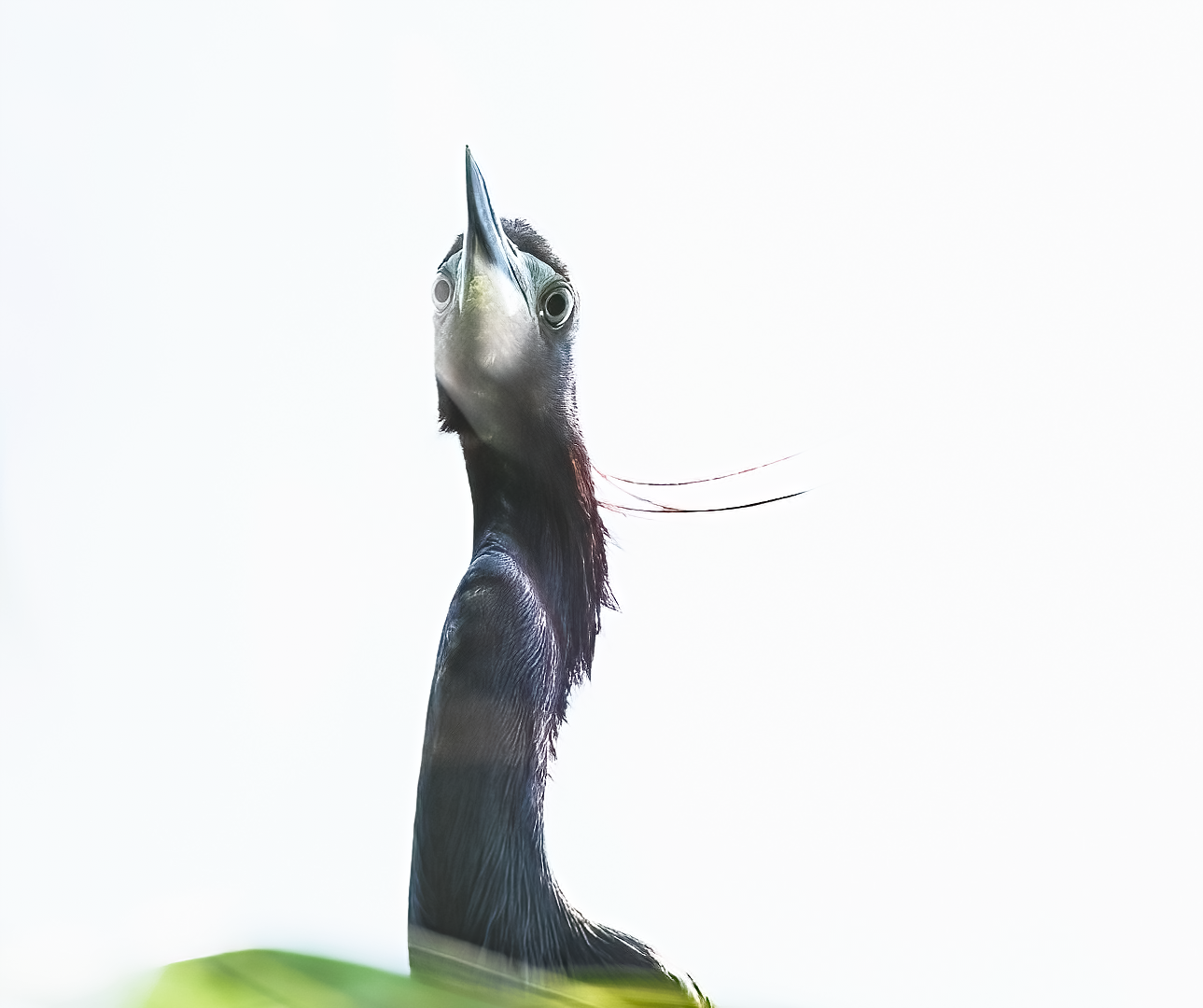
Mixed among the ibis were several Little Blue Heron and Tricolored Heron pairs nesting within the same rookery. The herons appeared especially protective of their immediate nesting areas, posturing and defending their turf as neighboring birds moved too close.
Little Blue Heron
Also present were Boat-tailed Grackle — noisy, alert, and seemingly everywhere at once. Their harsh calls cut through the constant vocalizations of the rookery as they moved through the palms and reeds, nesting within the same habitat alongside the wading birds.
The deep shade beneath the palmettos contrasted sharply with bright openings overhead, creating difficult but rewarding photographic conditions. Often only fragments of the birds emerged from the vegetation — the curve of a red-orange bill, white feathers catching sunlight through the fronds, or a sudden burst of wings against the dark canopy.
White Ibis
The Experience of an Ibis Rookery
A rookery is not simply a collection of birds gathered in one place. It is an active living system shaped by sound, proximity, competition, and constant movement. Spending time beneath the palms at Ibis Pond reminded me how layered these nesting colonies truly are.
At any moment there was motion overhead — ibis arriving suddenly through openings in the canopy, herons defending nesting space, grackles calling from hidden perches, wings brushing through palmetto fronds above the understory. The rookery never fully settled into silence. Even in quieter moments there was tension and alertness within the colony.
White Ibis
For photographers and birders alike, that complexity is part of what makes these rookeries so compelling. They are visually beautiful, but they are also raw, crowded, noisy, and deeply interconnected ecosystems where multiple species depend on the same protected habitat during one of the most important periods of their year.
At this time of year, Ibis Pond fully earns its name.