
Winter Visitors on the Pinckney Island NWR Ponds
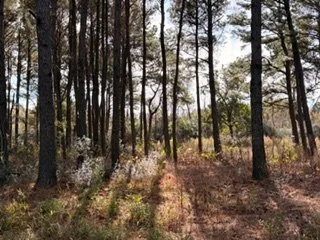
Yesterday felt like the first true winter day on Pinckney Island—sunny, blustery, and just cold enough in the 50s to keep hands buried deep in pockets between photographs. I followed the Main Trail out to Ibis Pond, then left the gravel road to walk the narrow woods path that links Ibis to Starr and, from there, to Osprey Pond, a quiet loop threading ponds that are now filling with overwintering birds.
Exploring Pinckney Island NWR: An unmarked path between ponds
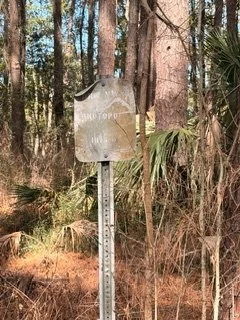
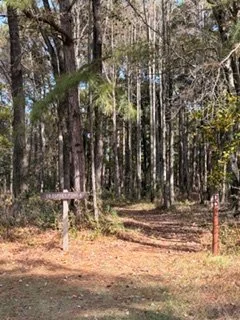
From Ibis Pond, the connecting trail slips into the woods, unmarked but easy to follow, worn in by years of foot traffic. Partway along, an old tin signpost appears, faded but still legible enough to read “Ibis Pond Photopoint,” a relic of some earlier monitoring or interpretation effort (an email is now in with the Savannah Coastal Refuges to see what story it might tell). However, I believe “photopoint” likely means a permanent photo-monitoring spot - a fixed location where someone would stand and repeatedly take photos in the same direction over months or years. Those repeat images might create a visual record of how Ibis Pond and the surrounding forest have changed over time with storms, water-level shifts, and management actions.
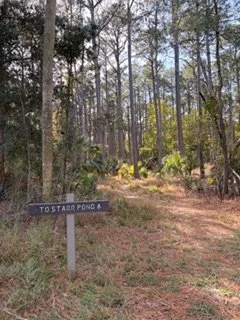
The primitive trail through the woods from Ibis Pond eventually leads to Starr Pond, where about halfway around the shoreline a small sign points toward the path to Osprey Pond. These “back way” connections between ponds don’t usually show up in simple trip descriptions, but they are clearly part of the refuge’s informal trail network.
Ducks, Grebes and Coots
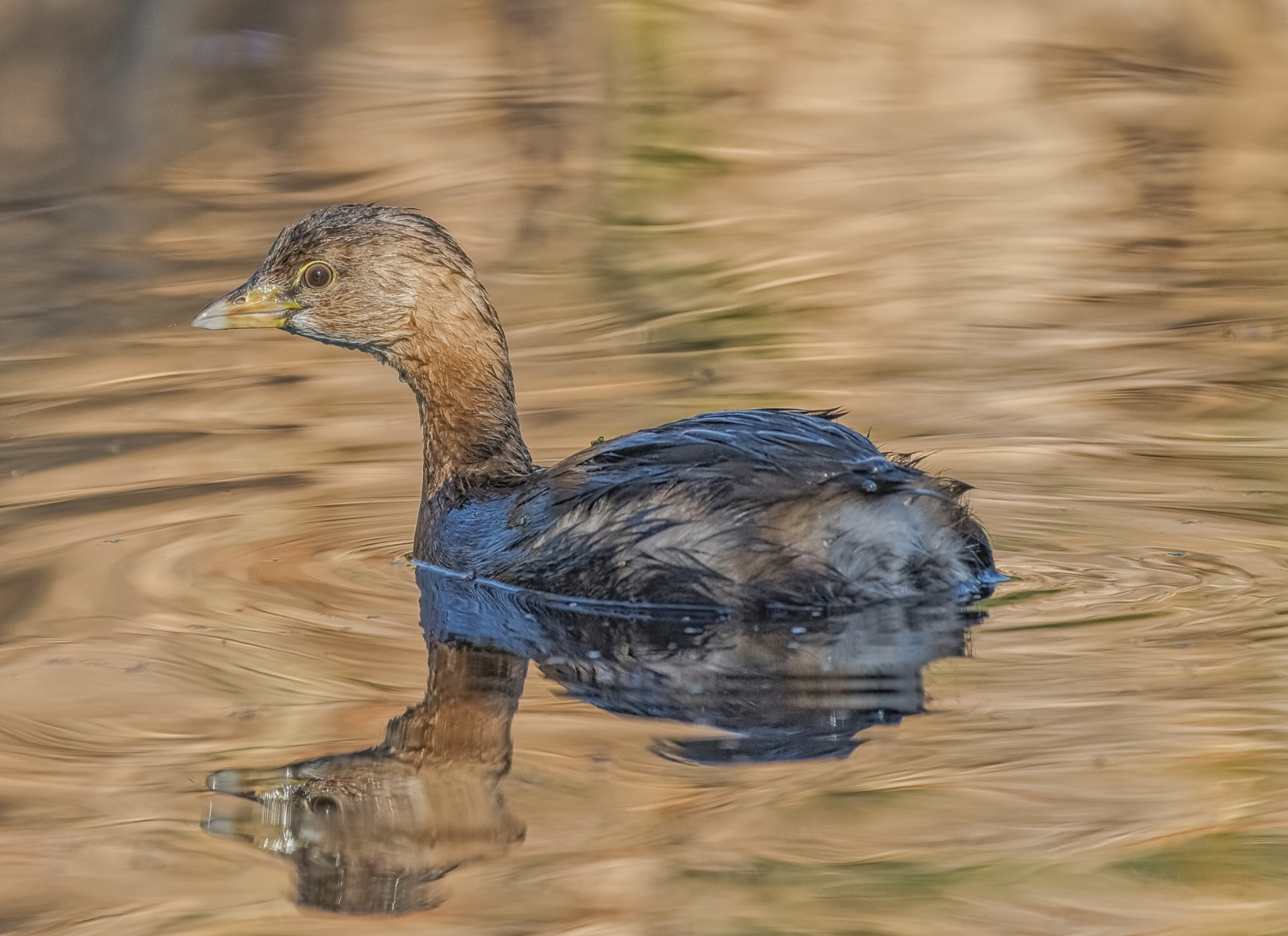
At both Ibis and Osprey Ponds, Hooded Mergansers have settled in, classic short-distance migrants that are most common here in winter, favoring protected ponds and lagoons. Several males were chasing and displaying for females, raising crests, calling, and then diving in near-synchrony for food, a compact, focused flock moving as one in the choppy wind. Ibis Pond also held a large raft of American Coots, dark gray, chicken-like waterbirds with white bills and lobed toes that patter across the surface when they run, grazing through the shallows and diving for aquatic plants. Many of these coots have migrated south from breeding wetlands in the northern United States and southern Canada, gathering on unfrozen ponds and marshes across the Southeast for the winter. Starr Pond, true to its reputation for “loads of ducks,” held an abundance of Black-bellied Whistling-Ducks and scattered Pied-billed Grebes, small, brown diving birds with chunky bodies and thick, two-toned bills that sit low in the water and surface quietly near cover.
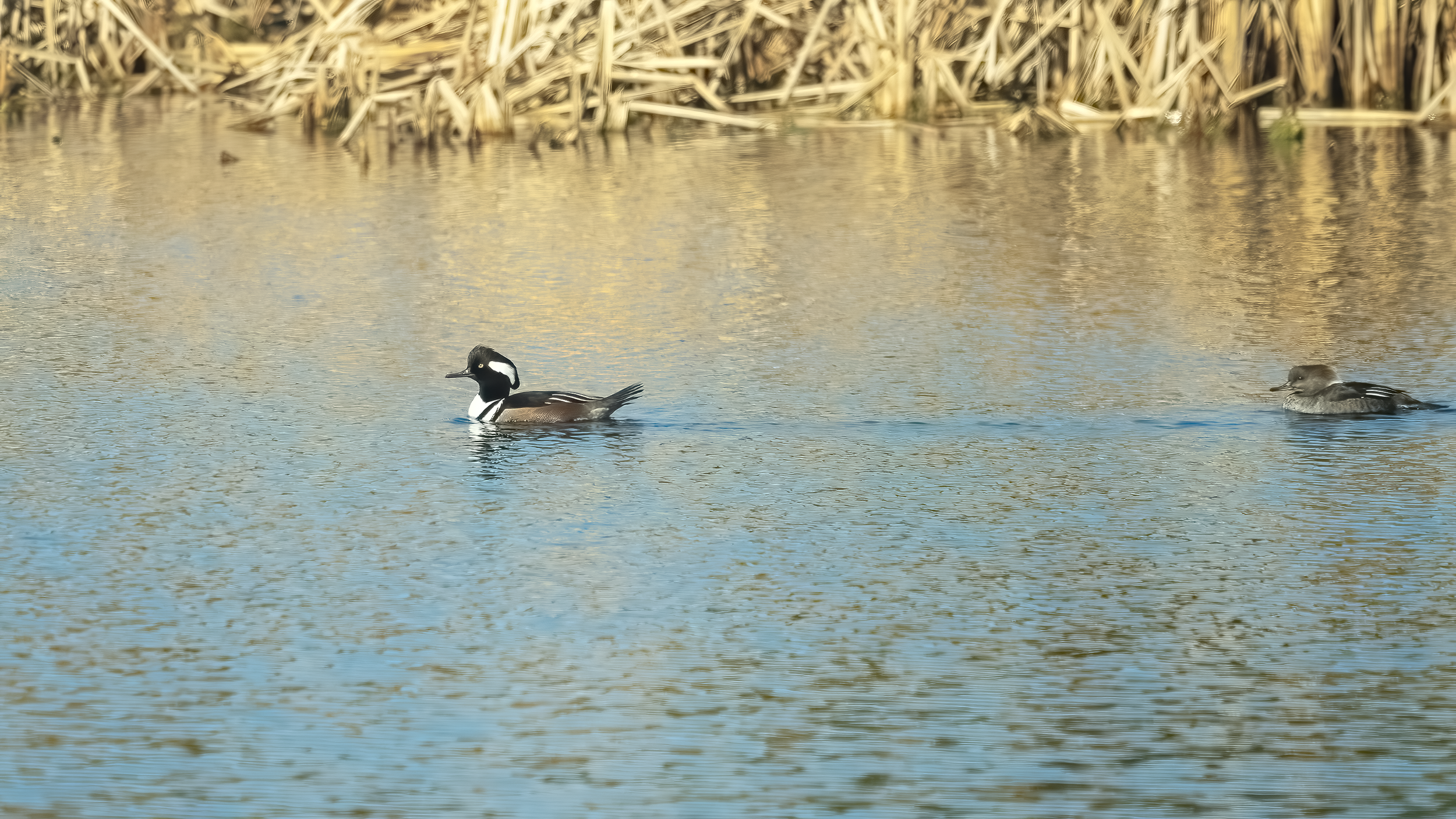
Hooded Mergansers
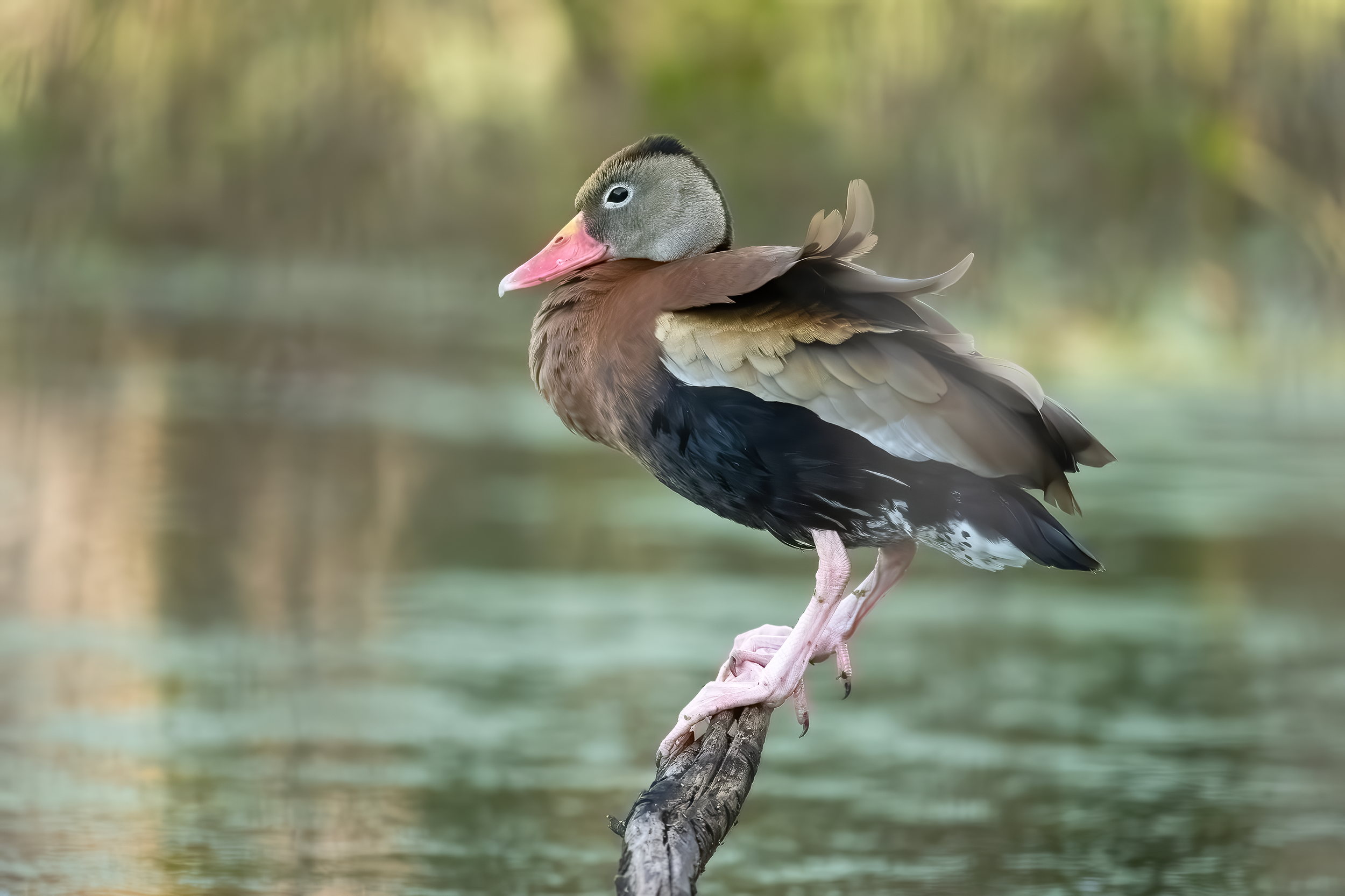
Black-bellied Whistling Duck
Unlike ducks, which belong to the Anatidae family and have webbed feet for surface swimming and foraging, Pied-billed Grebes are members of the Podicipedidae family, with lobed toes (rather than fully webbed ones) that fold back like paddles for efficient underwater propulsion when diving for fish, crustaceans, or insects. Their legs are positioned far back on the body, making them awkward and waddling on land—unlike the more upright, efficient gait of ducks—and they often sink their bodies low or even submerge almost entirely to evade threats, using specialized feathers to trap air for buoyancy control. This setup suits their reclusive, diving lifestyle in marshes and ponds, setting them apart evolutionarily from ducks, which are more closely related to swans and geese than to grebes (whose nearest living relatives are actually flamingos).
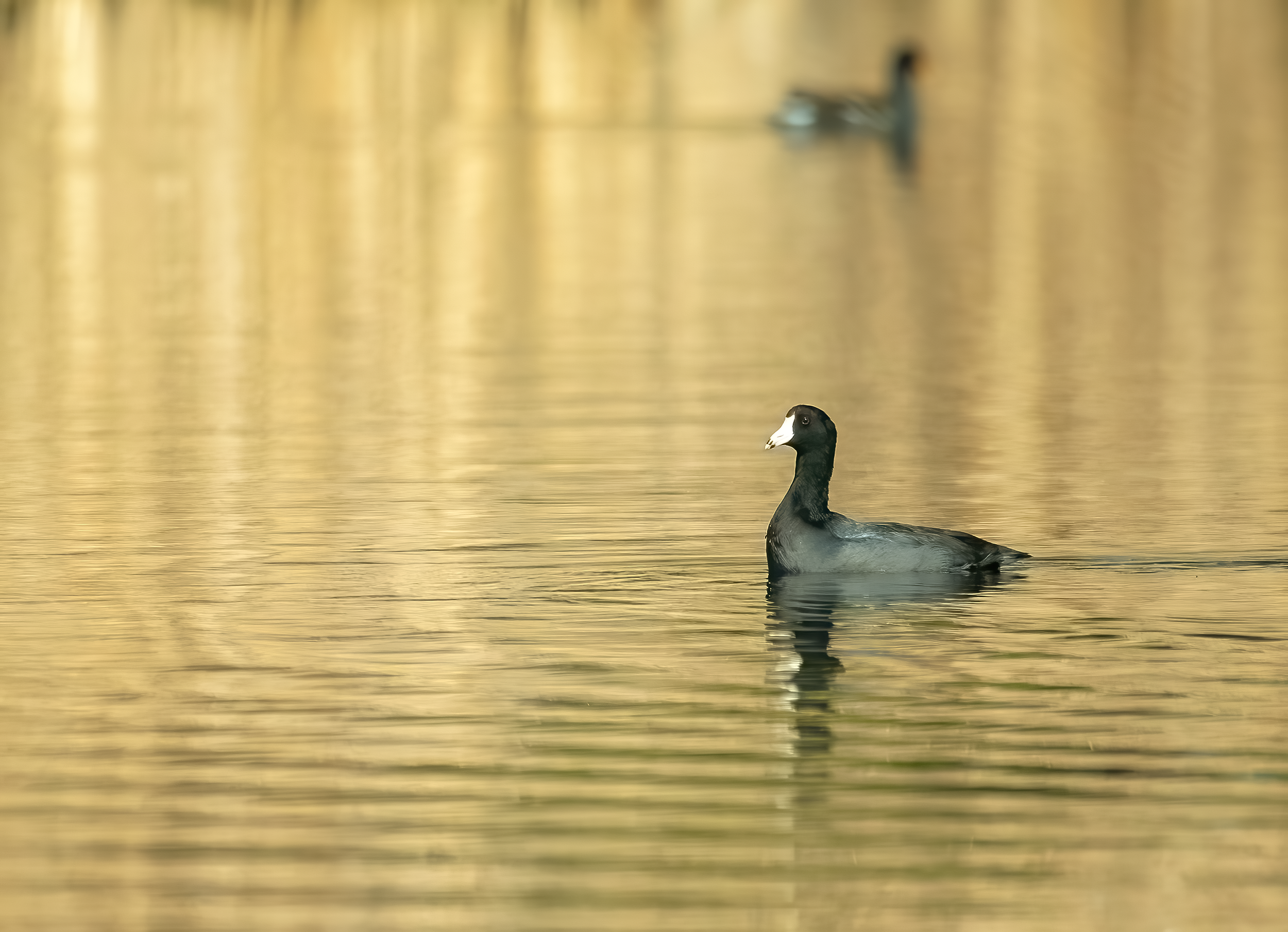
American Coots are not ducks, even though they share the same ponds and often mix in with winter duck flocks. They belong to a different order and family—Gruiformes, Rallidae—so they are closer to rails than to ducks, geese, and swans. Instead of fully webbed feet, coots have long toes with separate, rounded lobes of skin on each segment, which act like flexible paddles in the water and fold back when they walk on mud or land. Their posture and movement also differ: on shore they look more like dark, compact marsh chickens than dabbling or diving ducks, and when taking off they run hard across the water with rapid wingbeats before becoming airborne. All of this makes them duck-like in where they live and how they forage, but anatomically and evolutionarily they sit outside the duck family.
Cormorants and Kingfishers
Two Double-crested Cormorants used the snags at Starr Pond as a drying rack, wings spread to the sun in the cold wind, facing into the gusts. These adaptable fish-eaters migrate south from breeding grounds across much of the U.S. and Canada, including the Great Lakes, northern Atlantic Coast, and interior regions, to overwinter along southern coasts, bays, and inland waters like those in the Southeast—drawn here by unfrozen aquatic habitats that support year-round foraging on fish and amphibians. At both Starr and Osprey Ponds, a Belted Kingfisher announced its presence before it showed itself, rattling calls carrying over the open water and then a brief flash of blue and white cutting across the pond edge. Belted Kingfishers, which breed across much of North America from Alaska to the southern U.S., move southward from northern and interior breeding areas to milder coastal and wetland sites in the Southeast for winter, seeking open water free of ice to hover-hunt for fish and invertebrates.
Small songbirds in the winter woods
In the woods between ponds, movement came in short, quick bursts. Ruby-crowned Kinglets worked low branches and mid-story twigs, making short flights from perch to perch as they gleaned insects from the foliage. Yellow-rumped Warblers added their sharp “chek” calls from the canopy and from eye-level tangles, part of the large winter influx of this species into the South Carolina coastal plain each year.
On the way out from Starr Pond, one section of dense, tangled understory held the day’s most memorable sound: a single Hermit Thrush in full song. In a landscape otherwise dominated by wind, wingbeats, and kingfisher rattles, its clear, fluted phrases carried through the trees and across the trail, a solitary winter voice threading together these ponds and their seasonal visitors.
A winter walk between Ibis, Starr, and Osprey Ponds makes it clear that Pinckney’s quiet season is anything but empty. As the heat and crowds of summer fade, these ponds fill with Hooded Mergansers, American Coots, Pied-billed Grebes, whistling-ducks, cormorants, kingfishers, and small songbirds moving in from northern and inland breeding grounds to take advantage of the Lowcountry’s open water and sheltered woods. Standing on the trail in the chilly wind, watching them feed, display, call, and drift among the snags, you can feel how this refuge functions as winter habitat—a seasonal gathering place that links distant wetlands to this small island of ponds and marsh.
Not sure what to where birding the marshes and mudflats, read blog post: a Practical Guide to What to Wear Biding in the Lowcountry.
If you’d like to explore these habitats with a local guide, you can learn more about my guided birding and bird photography outings click here.
Hilton Head Island and the surrounding Lowcountry offer some of the best coastal birding on the Atlantic Flyway, and I’m always happy to help visitors and local residents discover the birds and habitats that make this region so special.
You can learn more about Hilton Head’s birds, habitats, and photography in my book Flight Through the Seasons, available on Amazon.
Disclosure: This post contains Amazon affiliate links. As an Amazon Associate, I earn from qualifying purchases.