
A summer of clouds and birdsong between Ellijay and Blue Ridge
"This is an enviable life, to live in the terrain of one's heart."
- Lee Smith, Dimestore: A Writer's Life
_____________________________________________________________________________
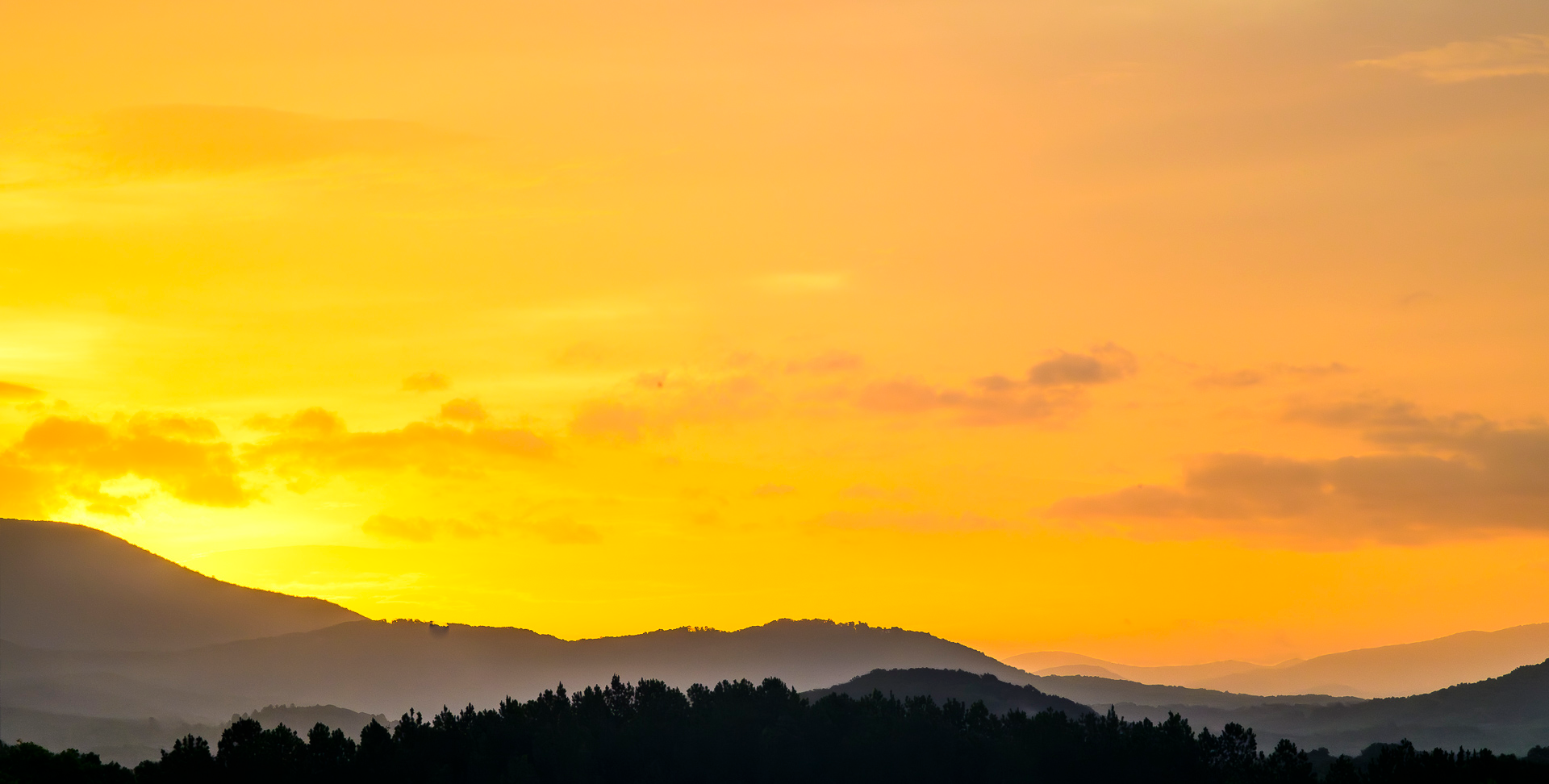
The ridges held low beneath the rising sun.
At home in the Lowcountry of South Carolina, the horizon runs long and low. Marsh, creek, and sky give the eye room to travel. This summer, from about 2,000 feet above sea level in the north Georgia mountains, the horizon has folded itself into ridge after ridge.
I keep returning to the same place with my camera, looking northeast, north, and northwest. The position changes very little. Everything within the frame changes continually. Mountains emerge and recede. Valleys fill with mist. Light travels through layers of cloud, then closes as quickly as it opened. The view is fixed; the scene never is.
The Geography of the View
From my perch between Ellijay and Blue Ridge, the northeast view reaches into the Rich Mountain country. Forest Service maps place the northern half of Rich Mountain Wilderness in the Ellijay River watershed and name Stover Mountain, Turniptown Mountain, Cold Mountain, Rocky Mountain, Chestnut Mountain, and Deadline Ridge within that broader landscape. I do not assign a name to any particular silhouette without an exact bearing, but those names give the horizon its larger geography.
Springer Mountain lies farther to the southeast, within the Ed Jenkins National Recreation Area. The northeast horizon belongs more properly to the Rich Mountain country. To the northwest rise the Cohuttas and the Cohutta Wilderness. The broader Cohutta map carries names such as Grassy Mountain, Three Forks Mountain, Flat Top Mountain, Tatum Mountain, and Potato Patch - names as textured as the terrain itself.
Below, the Ellijay and Cartecay Rivers meet in Ellijay to form the Coosawattee River. Water gathers here. So does weather.
The land appears arranged like a great amphitheater: gentle old mountains with rounded tops and generous slopes, one ridge fading into the next. Sometimes I can see deep into the valleys. Sometimes the valleys disappear under mist, leaving only the upper profiles of the mountains suspended above white air.
A Sky that Builds Upward
I cannot remember a completely cloudless day.
There have been tall vertical clouds, their tops building while I watched; dark gray shelf clouds; soft veils and hard-edged storm layers; horizontal puffs; thin wisps; and clouds as white as cotton bolls on a plant. I can see rain falling miles away, a gray curtain erasing one ridge while the ground beneath me remains dry.
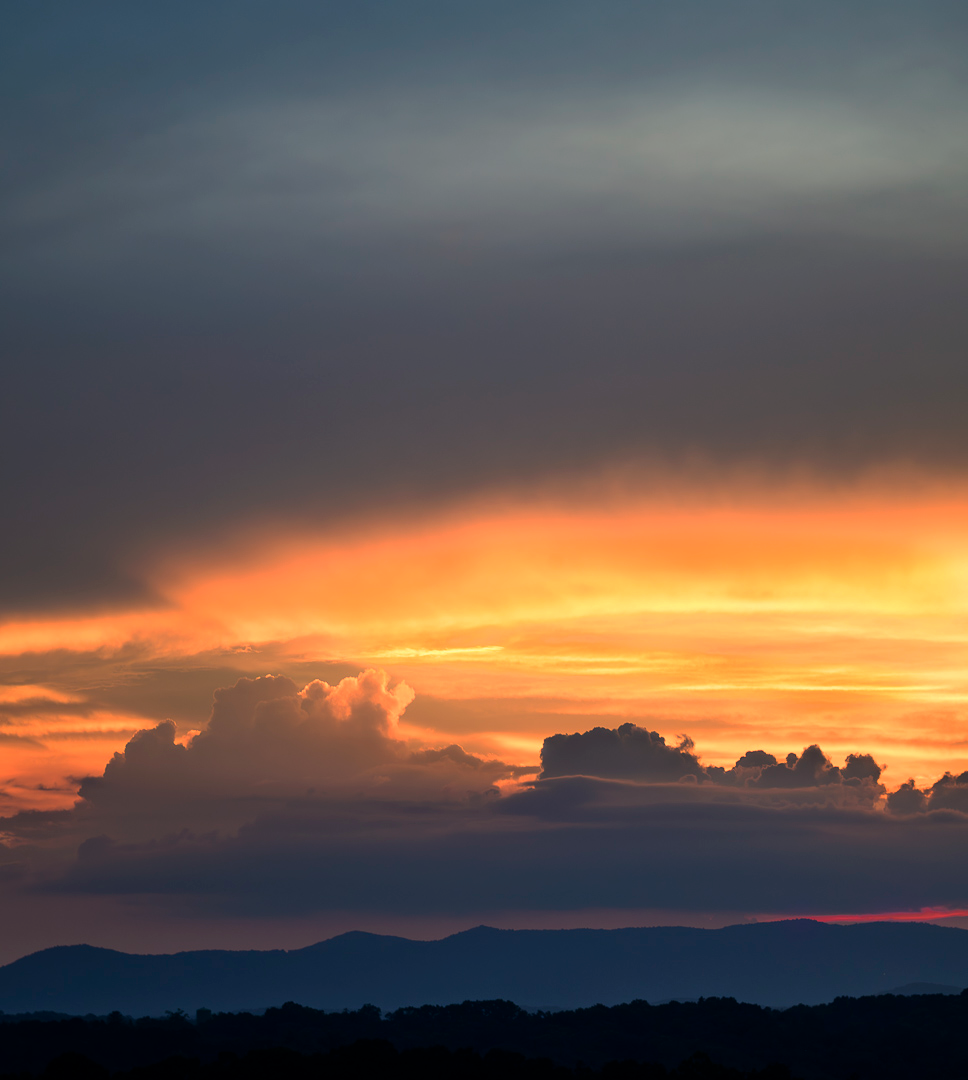
On many days the weather seems to approach from the northwest, out of the direction of Chattanooga and the Tennessee Valley, with the Cumberland Plateau beyond. Yet the clouds are not simply traveling toward me as finished forms. The southern Appalachian terrain helps make and remake them.
Summer sun heats the slopes and valleys. Warm, humid air rises, and the mountains add another lift as air is pushed upslope and over the ridges. As the air cools, water vapor condenses, releasing heat that can help the rising column continue upward and allow a modest cloud to become a deep tower. Ridges, valleys, boundaries left by earlier storms, and local air currents can focus that growth in one place and then another. The mountains do not merely receive the weather; they participate in it.
My elevation changes the experience, too. The mountains sit low in my field of view and become a measuring line for the sky. The clouds are tall because they are tall, but also because I have given them nearly the whole frame. Their bases feel close. Their tops seem to rise beyond any ordinary scale.
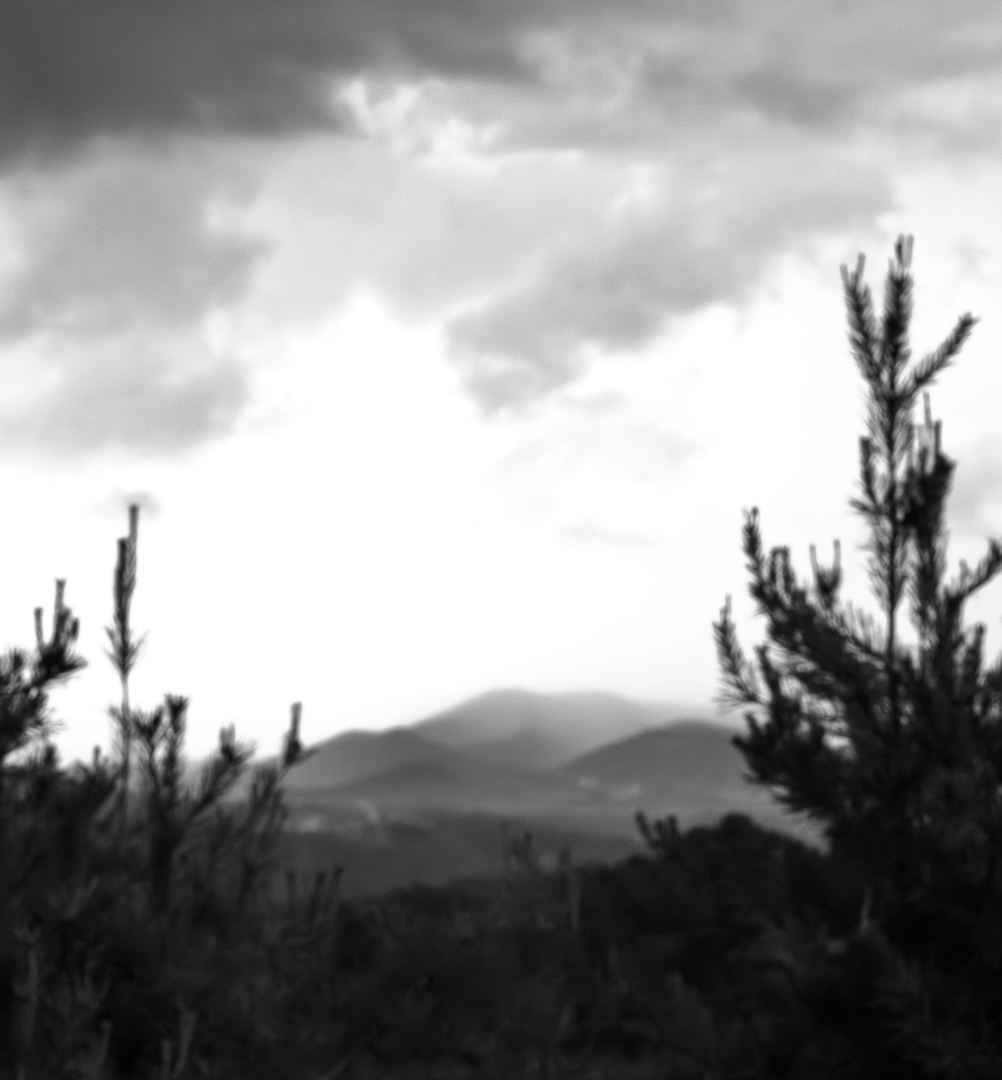
Rain and mist erase the distance.
After rain, or during the cooling hours of night and morning, colder air drains into the valleys. When the moist air reaches saturation, mist gathers below the ridges. From this high place I can look down on weather that would surround someone standing near the rivers.
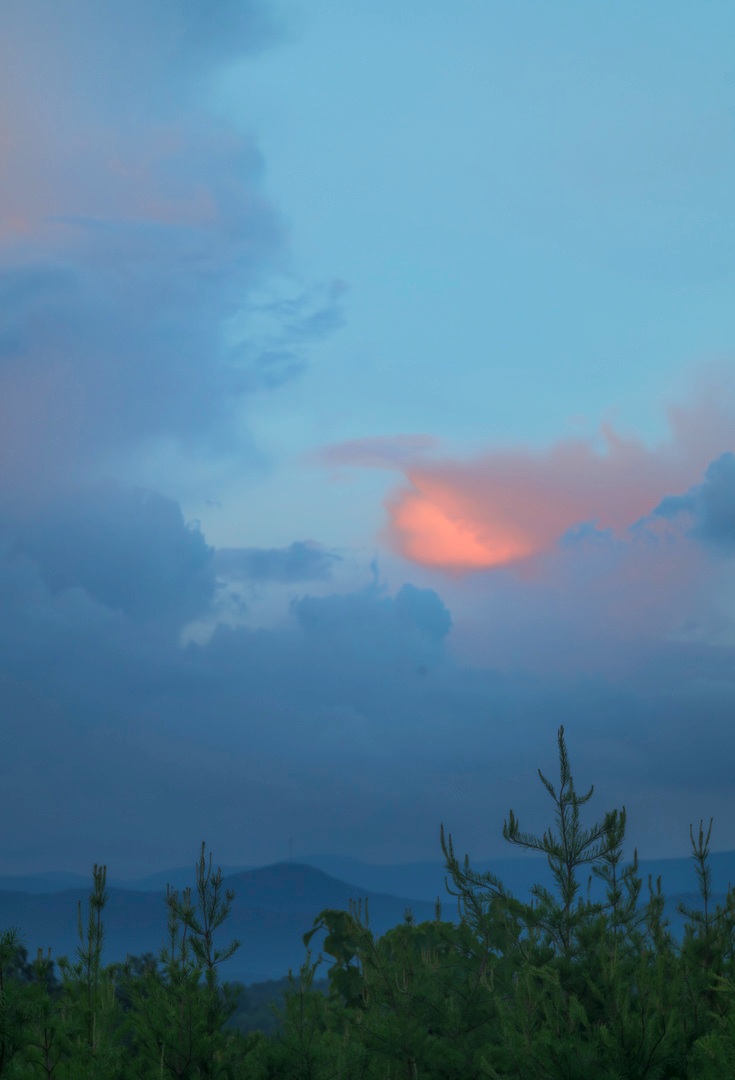
Sunset brings another kind of layering: gray over violet, blue over rose, and sometimes only a thin strip of yellow or pink immediately above the mountain profile. The round sun may never appear. Its location is revealed only by a concentration of color - a hidden center of apricot, coral, or gold behind the clouds. The sun becomes less an object than a presence.
Birds at the Edges of Light
The Eastern Towhees begin long before sunrise. Their songs come out of the darkness loud and clear, not tentative at all. One voice sounds close; another answers from farther across the bowl. As the light grows, a towhee moves from treetop to treetop, carrying his proclamation across the ridges.
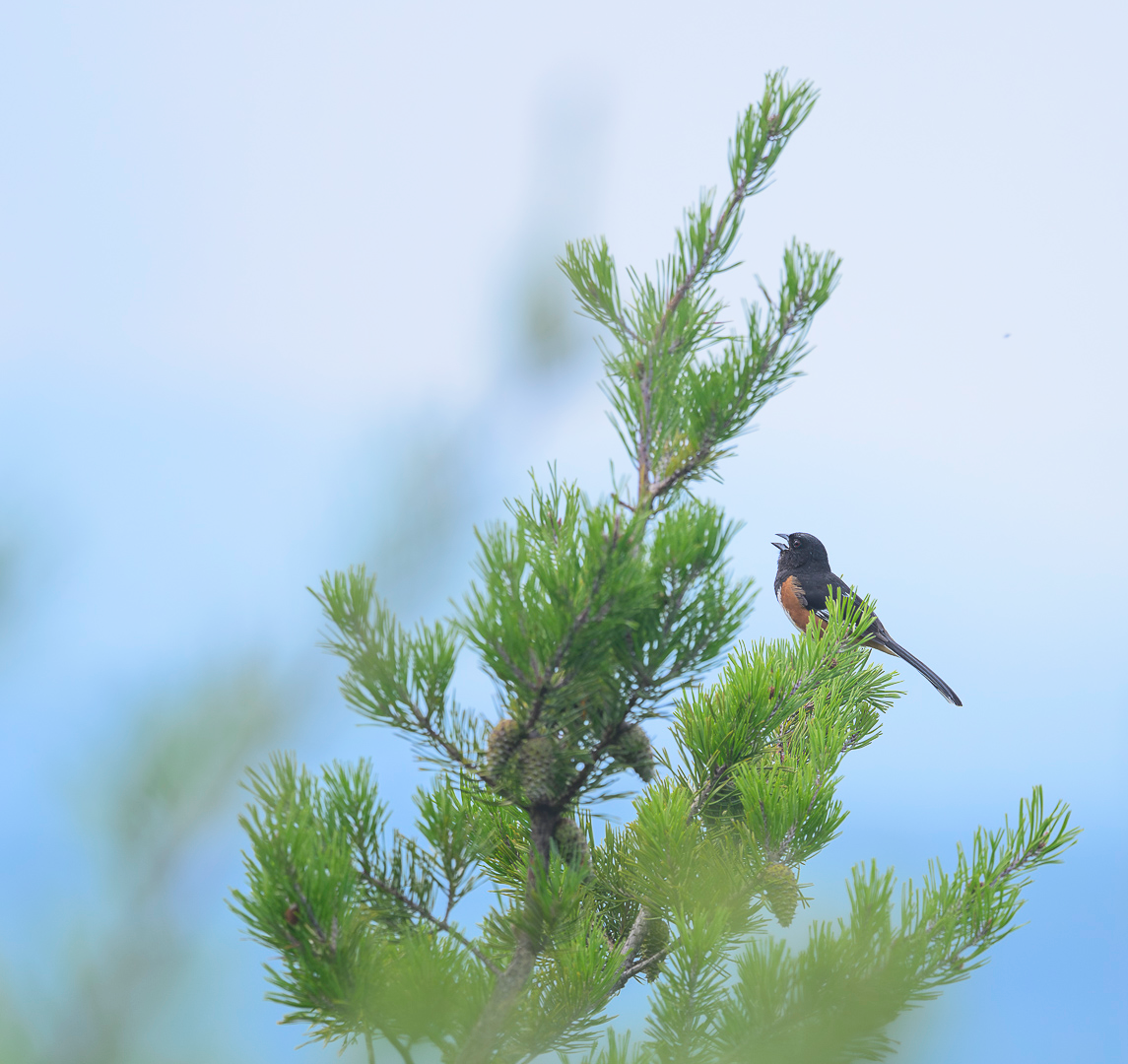
Eastern Towhee
At evening, one returns to a pine that faces west and sings the sun down with the same certainty. I cannot know whether he remains there through the night, but the tree has become, in my mind, his evening pine - the place from which he delivers the last strong notes of the day.
Song Sparrows and American Robins add their phrases to the morning. Then, near the time of sunrise and again near sunset, a small flock of American Goldfinches takes flight. At these edges of day, I have never seen one make the crossing alone. They rise together, a quick moving line across the sky.
The towhee announces the day from a fixed point. The goldfinches mark its threshold in motion. Between them, the birds keep time while the clouds refuse to.
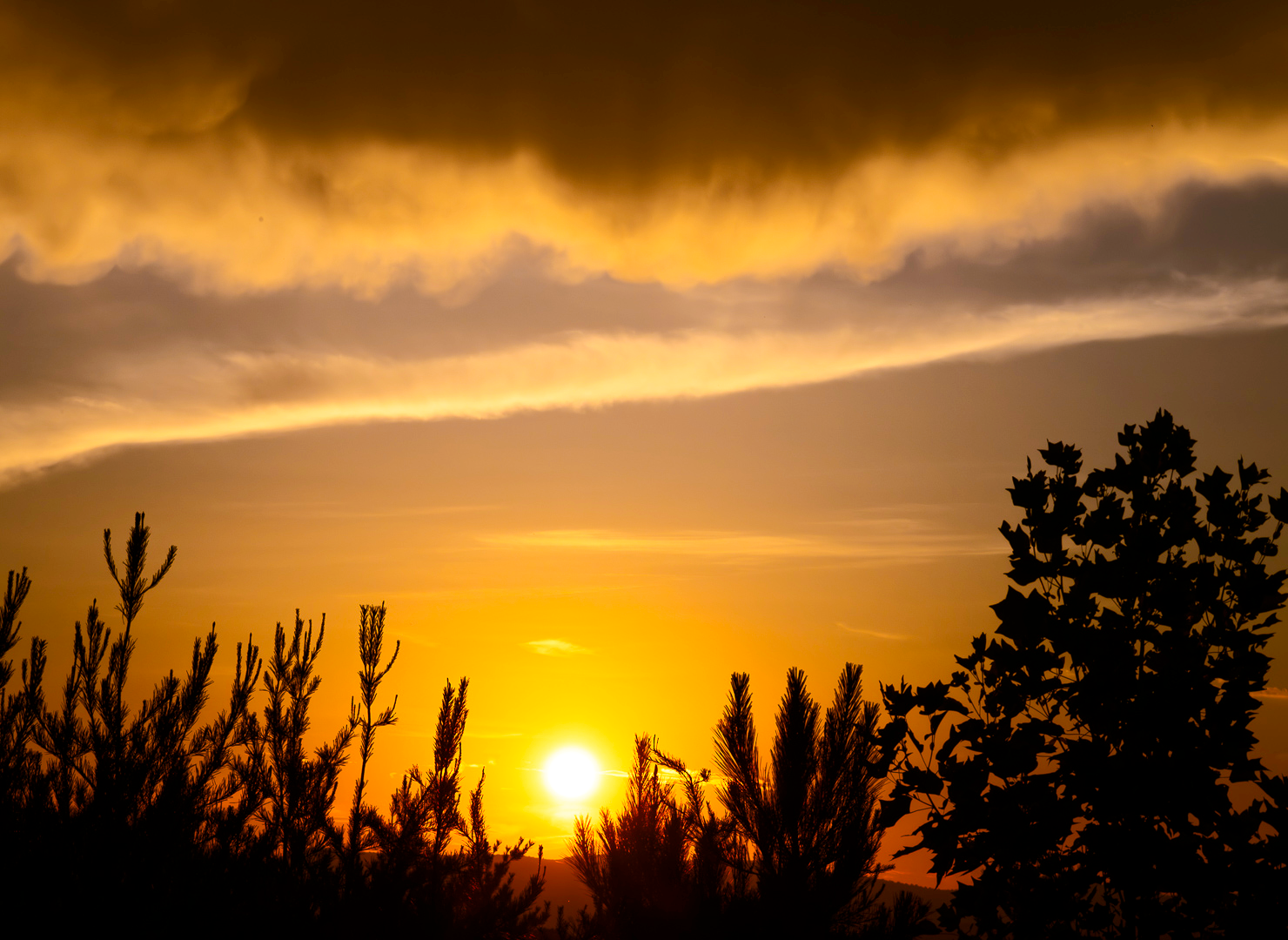
Sunset through the pines at the hour of birdsong.
My Foreground is Air
I have been making these photographs with a Meyer-Optik Görlitz Trioplan 100 mm f/2.8 lens. The narrow field of view lets me isolate a small portion of the sky and pay attention to shape, color, and the meeting of one soft edge with another. The lens encourages me to accept luminous blur rather than correct it away.
Conventional landscape advice often recommends anchoring an image with an interesting foreground: a rock, a flower, a fence, or a branch that leads the viewer into the distance. That is useful advice for many photographs, but it is not what I want here.
I am already high above the lower ground. My foreground is air.
I place the mountains low on the horizon because they are not the principal subject. They provide context, scale, and perspective. The clouds are the stars: their accumulating weight, their changing shapes, their sudden openings, and the colors they hold for only a few seconds. A foreground object would pull the image back toward the earth when what interests me is suspension - the feeling of being held between the ridges and the weather.
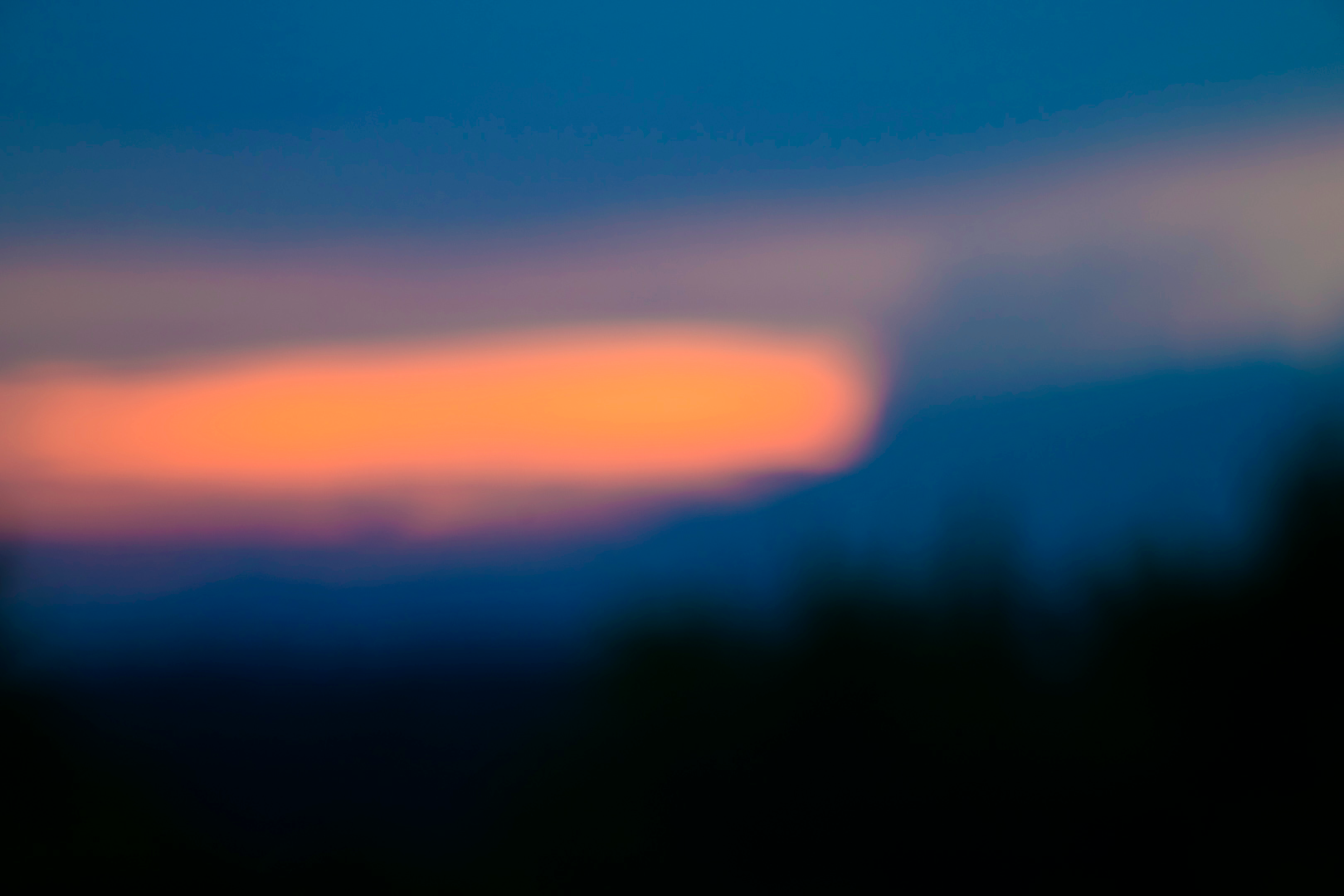
The sun concealed but not absent.
Sometimes the photographs move almost entirely into abstraction. A mountain becomes a blue shape. A cloud becomes a field of orange light. The sun is only a brightening behind a veil. The image is still a record of place, but it is also a record of perception: what remains when the named objects begin to dissolve.
I sometimes feel a kinship with the atmospheric permission in Sally Mann's Southern landscapes, where haze, blur, darkness, and the physical character of the image can carry emotional truth. I am not trying to imitate her process or claim the historical weight of her work. What I recognize is the freedom to let atmosphere be content, and to allow a landscape to remain partly unknowable.
Softness is not always the absence of information. Sometimes it is the information. It can describe humidity, distance, failing light, and the speed with which a scene becomes memory.
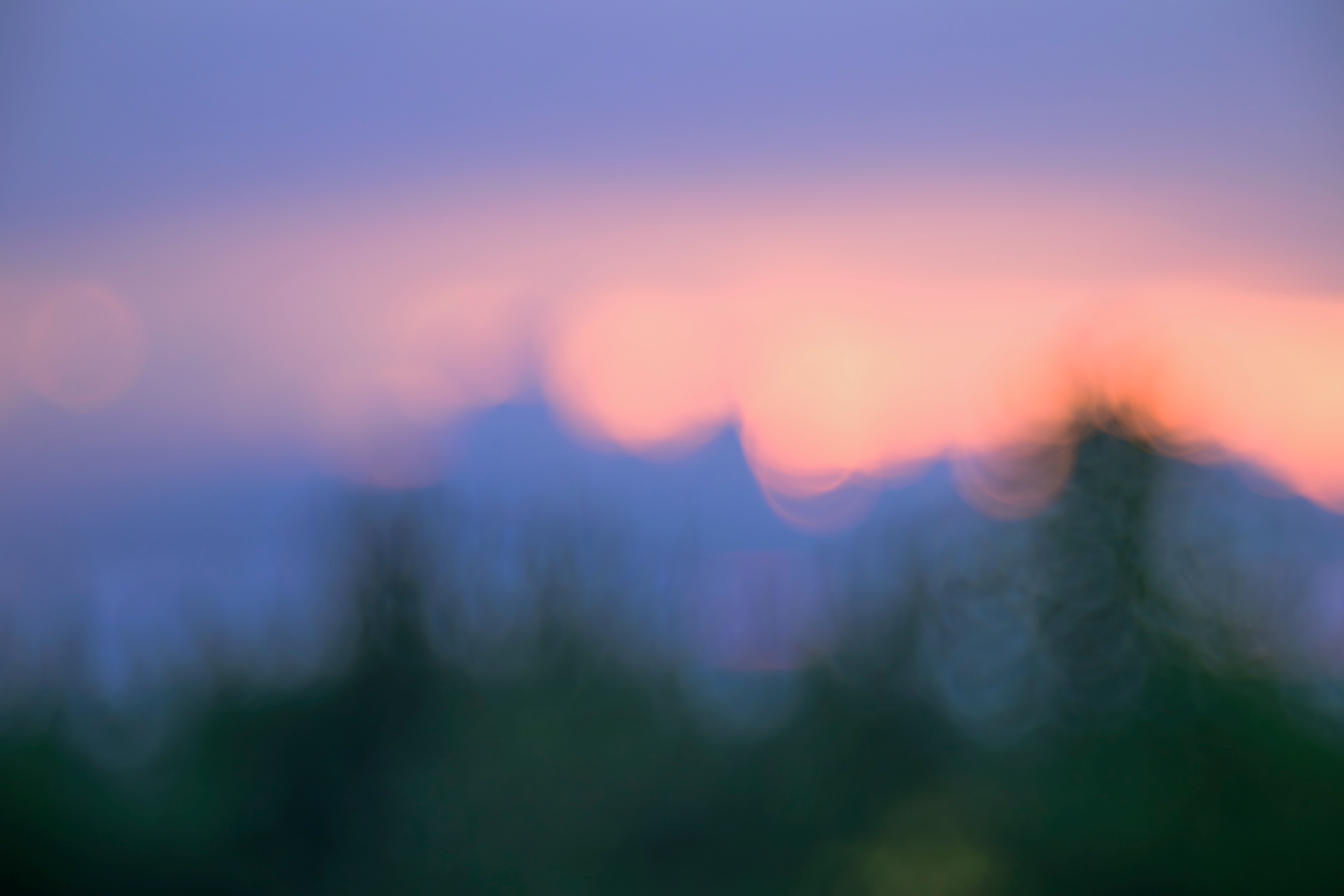
Color becomes the landscape.
The Terrain of One’s Heart
These are blink-and-you-miss-them scenes. A narrow opening of yellow closes. A cloud catches pink light and goes gray. Rain erases a mountain. Mist fills a valley. The goldfinches cross the frame and are gone. The towhee's song continues after the visible light has left the pine.
Returning to one position has taught me that repetition is not sameness. The mountains may appear permanent, but the weather makes them disappear and return. The camera does not stop time so much as admit how little of it can be held.
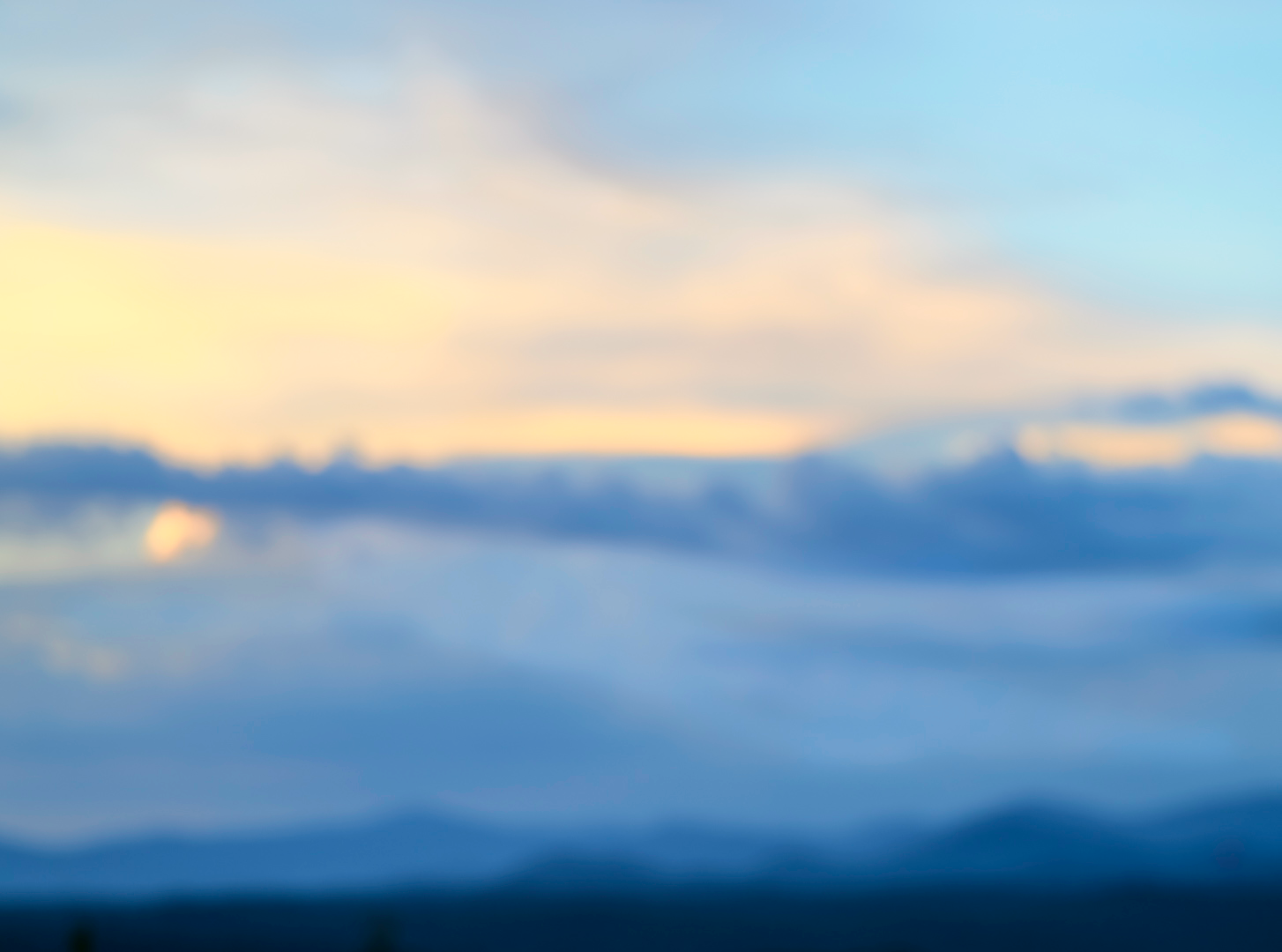
The blue hour.
The Lowcountry and the mountains are not opposites. In both places, horizon, weather, and birds teach the value of staying still. The Lowcountry sky expands outward; this mountain sky builds upward. Both reveal themselves to anyone willing to return to the same place and look again.
To live in the terrain of one's heart may not mean choosing only one terrain. It may mean staying long enough for a place to teach you its clock: the towhee before dawn, the goldfinches at first and last light, rain dimming a distant ridge, a hidden sun turning one seam of cloud pink.
Birds keep time. Mountains give scale. Clouds make and unmake the day.
For this summer, this bowl between Ellijay and Blue Ridge has become one of the terrains of my heart.